A recurring clean should make life easier after the first visit, not leave you wondering whether the bathrooms, floors or kitchen will receive the same care next fortnight. Clear recurring cleaner quality review criteria give households, tenants, property managers and business owners a fair way to assess service standards over time. They also help create the consistency that makes an ongoing cleaning relationship genuinely valuable.
The best reviews are not about looking for faults after every clean. They are about agreeing on what a well-maintained home or workplace looks like, communicating changes early, and making sure the service continues to suit your needs.
Start with the result you expect
Quality is easier to review when the expected outcome is specific. “Clean the house” can mean very different things to a busy family, a tenant with inspections ahead, or an office manager welcoming clients each morning. A recurring service works best when the cleaner knows which areas matter most and how often they need attention.
For most homes, the core expectation is straightforward: kitchen benches and sinks are hygienic, bathrooms are fresh, floors are vacuumed and mopped where required, dust is managed on accessible surfaces, and rubbish is removed. In an office, the priority may be tidy workspaces, clean amenities, presentable entry areas and well-maintained shared kitchens.
A quality review should ask whether those outcomes are being achieved reliably, rather than whether every room has received a deep clean at every visit. Weekly or fortnightly maintenance cleans have a different purpose from a one-off spring clean, end-of-lease clean or after-renovation service. Matching the review to the service scope keeps expectations fair for everyone.
Recurring cleaner quality review criteria that matter
The most useful criteria focus on the things customers notice every day and the standards that protect trust. They should be easy to check without turning a regular service into a complicated inspection.
Consistency from visit to visit
Consistency is the reason many people choose a recurring cleaner. You should not have to repeat the same requests each time or find that one visit is excellent while the next falls short. Look for dependable completion of agreed tasks, a familiar routine and attention to the priorities you have discussed.
Keeping the same cleaner where possible can make a meaningful difference. They become familiar with your home, preferred products, pet considerations, access arrangements and the areas that need extra care. If a substitute cleaner is required, clear notes and good handover processes help maintain the standard.
Detail in high-use areas
Some areas reveal cleaning quality faster than others. Kitchens and bathrooms are used heavily and need hygienic, careful attention. Check whether taps, basins, mirrors, benchtops, cooktops and toilet areas are left clean, dry and presentable. On floors, look beyond the middle of the room to see whether edges, corners and visible marks have been addressed within the agreed service time.
This does not mean every tiny mark is a service failure. Water spots can reappear after a shower, children and pets can undo a tidy room quickly, and some stains need specialised treatment. The key question is whether the cleaner has completed the practical work expected for that visit and flagged anything that needs a different solution.
Respect for your property and routine
A caring cleaning team should work with respect for your space, belongings and schedule. This includes arriving within the agreed time window, following access instructions, using products safely and leaving items in their usual place where practical.
For commercial clients, discretion and security are equally important. Cleaners should understand site access, alarm procedures, confidential work areas and any rules around equipment. For homes, it may be as simple as closing a gate securely, being mindful of sleeping children, or taking care around a pet.
Clear communication when something changes
Even excellent cleaning services occasionally face changes: a cleaner may be unwell, traffic can cause a delay, or a task may take longer than expected because of an unexpected spill or build-up. Quality is not measured by the absence of every disruption. It is measured by how promptly and clearly the issue is communicated and resolved.
A dependable provider confirms changes early, offers practical alternatives and listens when your priorities shift. You may need extra attention before guests arrive, a pause during travel, or a more detailed clean following a busy period. A service that can adapt without confusion helps protect the convenience you signed up for.
Hygiene, training and safe product use
Good cleaning is not only about a visible shine. It involves using suitable products and methods for different surfaces, reducing cross-contamination risks and working safely around people, pets and property. For example, bathroom cloths should not be used in the kitchen, and timber, stone, glass and stainless steel may each need different products or techniques.
You do not need to supervise these details yourself. But you can reasonably expect trained cleaners who understand them, use equipment appropriately and raise concerns before using a product that may not suit a delicate surface. If you have allergies, sensitivities or a preference for particular products, mention this before the service begins and include it in your regular notes.
Review patterns, not one imperfect visit
A fair quality review looks at the pattern across several appointments. One missed skirting board or an overlooked bin should be raised, especially if it affects your experience, but it does not always mean the overall service is poor. A quick, constructive conversation often fixes small issues immediately.
If the same concern happens repeatedly, it is time for a more structured review. Describe what you noticed, identify the room or task involved, and explain what a satisfactory result would look like. “The ensuite mirror is often streaky after the clean” is much more helpful than “the cleaning was not good”.
Photos can be useful for a significant issue, particularly in a commercial property or before a rental inspection, but they should support a respectful conversation rather than replace one. The goal is a practical solution: updated instructions, more time allocated to a priority area, a change in cleaning frequency, or a follow-up clean where appropriate.
Set the right frequency for your space
Cleaning quality and cleaning frequency are closely connected. A fortnightly clean may be ideal for a couple in a low-traffic apartment, while a family home with children, pets and regular visitors may benefit from weekly support. An office with daily staff and client traffic may need several visits each week to stay presentable.
If tasks are regularly left unfinished, the issue may not be effort or care. The booked time may no longer reflect the size of the property, changes in household routines or the level of detail now required. Reviewing the schedule honestly can prevent disappointment and help the cleaner deliver a more complete result.
The same applies to occasional add-on services. Carpet cleaning, window cleaning, curtain cleaning and detailed oven cleaning are usually not part of a standard recurring visit. Scheduling these separately when needed keeps the regular clean focused and ensures specialist tasks receive the time they deserve.
Make feedback part of the service, not a last resort
The strongest recurring cleaning relationships are built on simple, early feedback. Let your cleaner or service provider know what is working as well as what needs adjustment. Positive feedback helps them understand your priorities, while timely requests make it easier to correct a concern before it becomes frustrating.
Keep your review process practical. Check the spaces that matter most to you, confirm whether agreed tasks were completed, and consider communication, reliability and care alongside the visible result. If your needs change, update the scope rather than hoping the cleaner will guess.
A regular clean should give you more than tidy rooms. It should give you confidence that your home or workplace will be cared for, week after week, so you can get back the time and peace of mind that cleaning support is meant to provide.
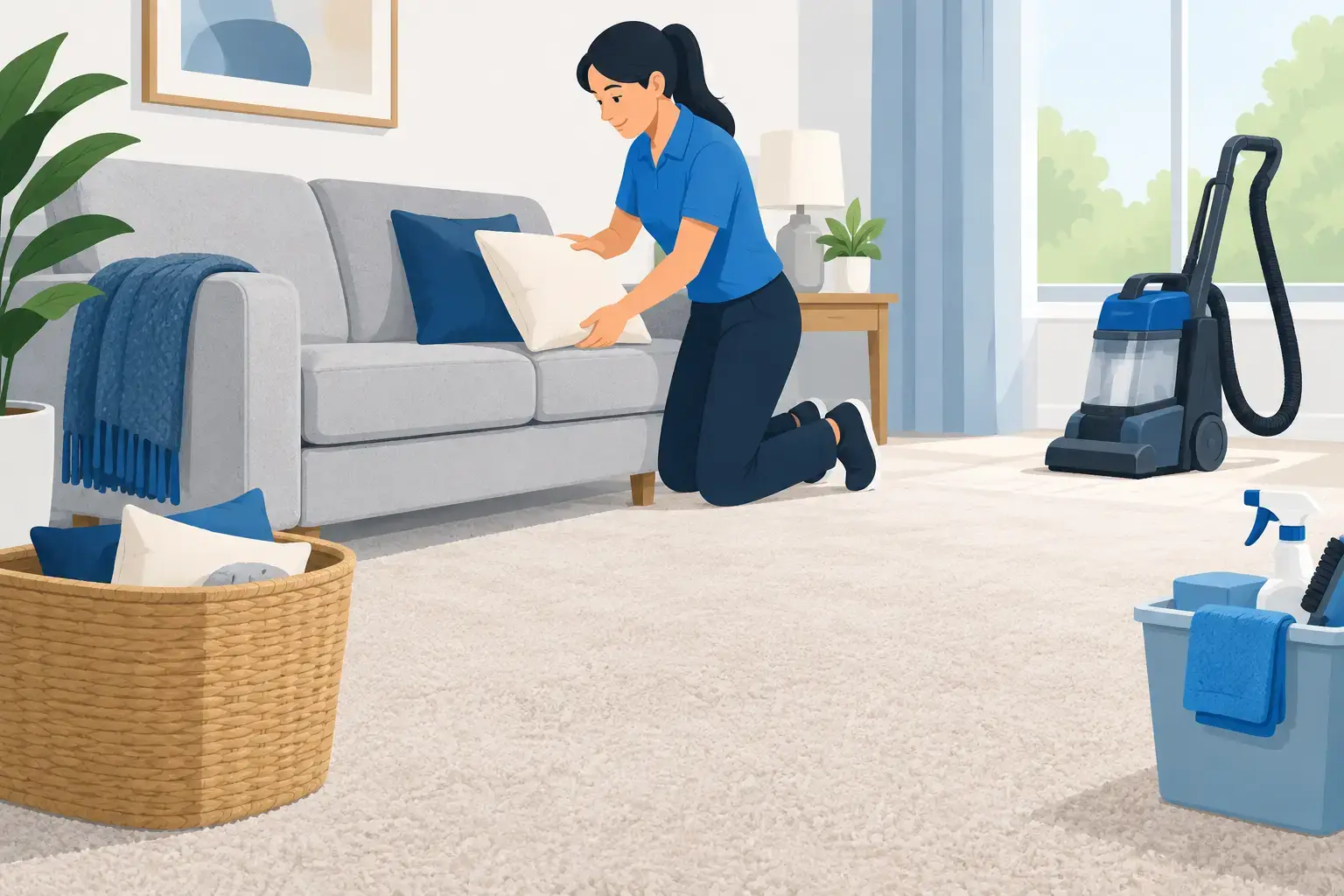
A professional carpet clean can make a room feel lighter, fresher and more comfortable, but the work done before the cleaners arrive has a real effect on the result. This carpet cleaning preparation guide explains what to do, what to leave alone and how to make the appointment easier for everyone involved.
Preparation does not mean spending your weekend deep-cleaning before a cleaning service. It means making the carpet accessible, protecting your belongings and giving your cleaner the clear working space needed to treat high-traffic areas, spots and odours properly. A little organisation can also help keep your appointment on time, particularly in busy homes, apartments and commercial spaces.
Your carpet cleaning preparation guide
Start by looking at the room from the cleaner’s point of view. The more open carpet they can reach, the more complete the clean can be. Pick up loose items such as toys, shoes, pet beds, floor lamps, cables, baskets and small side tables. These items may be easy to move, but doing it yourself helps prevent damage and saves valuable time on the day.
Clear personal items from under beds, sofas and chairs if those areas are to be cleaned. It is also wise to remove fragile décor, electronics and anything of sentimental or financial value from low tables and nearby shelves. Even careful carpet cleaning equipment requires hoses and movement through the room, so a clear path helps create a safer workspace.
If you have a large rug sitting over carpet, decide whether you would like the rug cleaned separately or simply moved aside. Some rugs need different care depending on their fibres, backing and dyes. Let the cleaning team know in advance rather than assuming every rug can be treated the same way.
Vacuum first, unless advised otherwise
Vacuuming removes dry soil, crumbs, pet hair and grit that sit deep in carpet fibres. This allows professional equipment to focus on the embedded dirt and residues that ordinary vacuuming cannot remove. Pay extra attention to entryways, lounge areas, dining spaces and the edges of rooms where dust can collect.
If your booking confirmation says not to vacuum, follow those instructions. Service methods vary, and a professional cleaner may have a specific process in mind. When in doubt, a standard vacuum of the accessible areas is usually a helpful starting point, not a replacement for professional carpet cleaning.
Make a practical plan for furniture
Furniture is often the biggest question before a carpet cleaning appointment. Small, lightweight pieces can generally be moved before the cleaner arrives, giving you a more thorough result across the floor. Larger pieces, such as heavy sofas, beds, wardrobes and entertainment units, may need to remain in place.
Do not strain yourself trying to move furniture that is too heavy or awkward. Aside from the risk of injury, dragging furniture can damage carpet, scratch hard flooring or disturb electrical connections. Ask in advance what your service includes and which items, if any, the cleaning team can move safely.
Where furniture stays in place, cleaners can usually work around it and clean the exposed carpet. This is often the sensible option for fully furnished homes, particularly when the priority is refreshing the main walking areas. If furniture is moved during the service, it may need protective tabs or blocks beneath its legs until the carpet is dry. This helps reduce the chance of marks, rust transfer or dye bleeding onto damp fibres.
Treat stains carefully before the appointment
A spill from last night is different from a coffee mark that has been in the carpet for two years. Point out both. Before the appointment, make a note of any areas that concern you, including pet accidents, food spills, makeup, ink, wine or heavy traffic marks near doors and hallways.
Avoid applying several supermarket products in the hope of getting a faster fix. Different chemicals can leave residue, affect carpet colour or react poorly with professional cleaning solutions. If you have already used a spot cleaner, tell the cleaner what it was if you can. That information can help them choose the most appropriate treatment.
For a fresh spill, blot gently with a clean, white cloth rather than rubbing. Rubbing can push the substance further into the fibres and spread the affected area. Use minimal moisture and avoid bleach or harsh chemicals unless the carpet manufacturer specifically recommends them.
Professional stain treatment can improve many marks, but no responsible cleaner should promise that every stain will disappear. Permanent colour loss, bleach damage, old spills and substances that have penetrated the backing may remain visible. Clear expectations are part of a reliable service.
Prepare access for a smooth service
Carpet cleaning machines, hoses and cleaning products need a clear route from the entry point to the rooms being treated. Move shoes, prams, bikes and other obstacles from hallways where possible. If your property has limited parking, security gates, lift access or visitor parking rules, provide those details before the booking.
For Melbourne apartment residents, arranging lift access and checking building requirements can prevent unnecessary delays. Some buildings have rules about loading zones, service lifts or where equipment can be taken. A quick conversation with building management ahead of time can make the appointment much simpler.
Keep children and pets away from the work area while cleaning is underway. Pets can be unsettled by unfamiliar equipment and noise, while small children may trip over hoses or walk on damp carpet. Setting up a quiet room, arranging a walk with the dog or planning an outing during the appointment can give everyone more space.
If you work from home, consider calls and meetings as well. Carpet cleaning equipment can be noisy, and rooms may be unavailable while they are being treated and drying. Planning around this means less disruption to your day.
Give carpets time to dry properly
One of the most useful parts of carpet cleaning preparation happens after the service: planning for drying time. Drying can vary according to carpet thickness, ventilation, weather, humidity, soiling levels and the cleaning method used. It may take several hours, and in some cases longer.
Open windows when weather and home security allow. Use ceiling fans, portable fans or air conditioning to improve airflow, and avoid closing up the room immediately after the clean. Good ventilation helps the carpet dry more evenly and reduces the chance of musty odours.
Try not to walk on damp carpet unless necessary. If you do need to enter the room, wear clean socks or clean-soled shoes to avoid transferring outside dirt onto freshly cleaned fibres. Keep pets off the carpet until it is dry, especially if they have muddy paws or tend to shed.
Avoid replacing rugs or moving furniture back onto the carpet too soon. Damp fibres need airflow. Placing a heavy item or rug over them can create uneven drying and may leave marks. Your cleaner can advise when it is safe to return the room to normal use.
Preparation for rental properties and workplaces
For end-of-lease carpet cleaning, take photos of existing stains or damage before the service, especially if they were present when you moved in. Keep copies of your entry condition report and advise the cleaner if the property manager has requested a particular service or receipt. Carpet cleaning can improve the presentation of the property, but it cannot repair burns, tears, pet damage or permanent staining.
In offices and commercial spaces, preparation is usually about reducing interruption. Staff should remove personal items from the floor, secure loose cables and clear access around desks where possible. Schedule the service outside busy hours where practical, especially for high-traffic reception areas, meeting rooms and corridors. A clear plan helps protect business equipment and allows the carpet to dry before normal foot traffic resumes.
A cleaner start, without the extra stress
The best preparation is simple: clear the floors, identify problem areas, arrange access and allow time for drying. Your cleaning team can then focus on the work that matters most – restoring a fresher, more comfortable space for your household, tenants, staff or customers.
If life is already busy, focus on the essentials rather than trying to do everything perfectly. A caring, trained team can guide you through the practical details, so your carpet cleaning appointment feels like a step towards a cleaner home, not another job on your list.
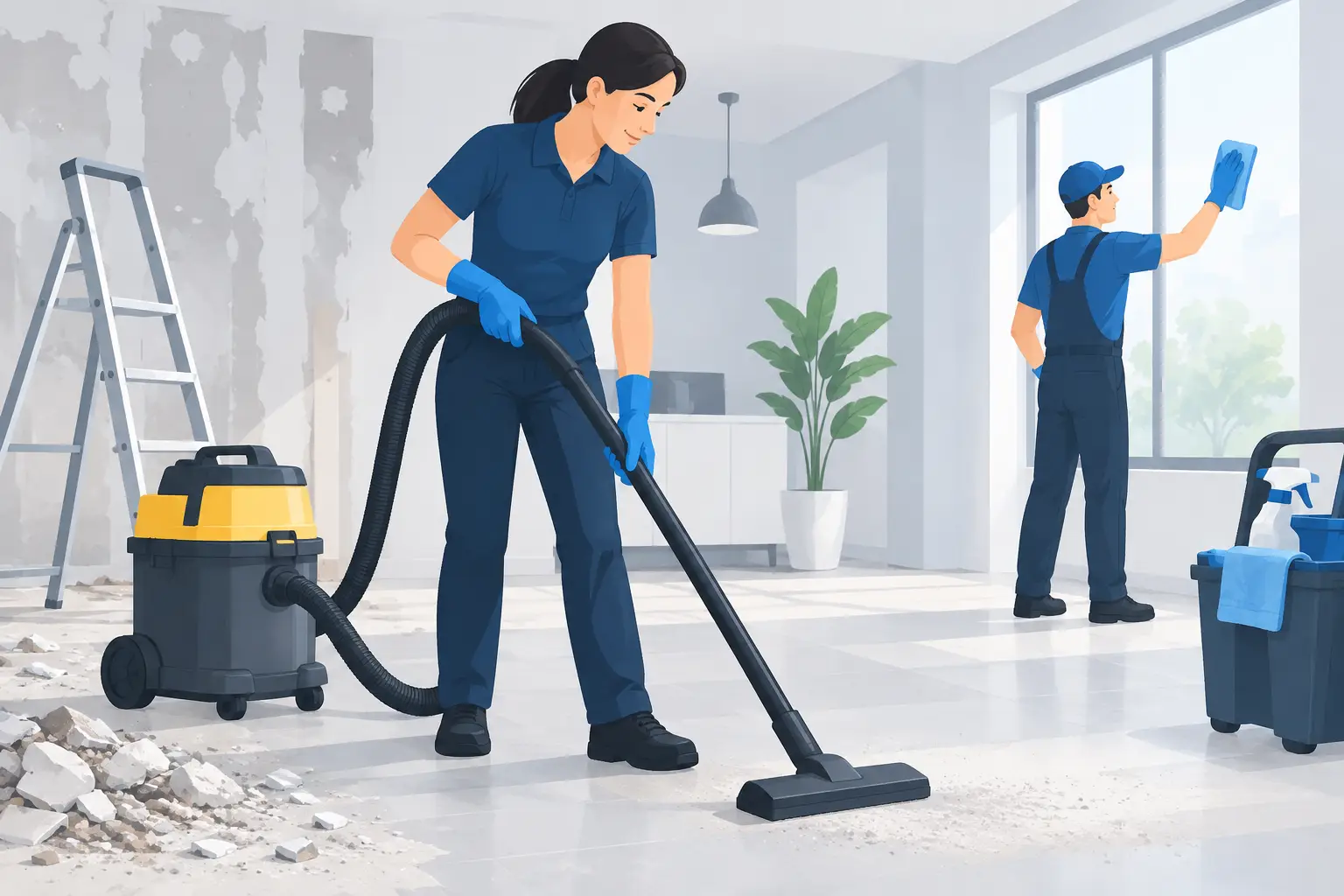
Fresh paint, new flooring and upgraded cabinetry can make a renovation feel complete. Then sunlight hits the room and reveals a fine layer of dust on every ledge, skirting board and surface. Understanding how cleaners remove renovation dust helps you see why an ordinary tidy-up is rarely enough after building work.
Renovation dust is not just visible dirt. It can include plaster, cement, timber particles, grout haze, sawdust, paint residue and fine debris that has travelled well beyond the work area. A professional after-renovation clean is a careful, staged process designed to lift that material away rather than spread it through the home or business.
Why renovation dust needs a different approach
The finest dust settles slowly and reaches places builders may not need to address: inside cupboards, along window tracks, over light fittings, behind doors and on top of wardrobes. It can also cling to textured walls, blinds, upholstery and newly installed surfaces. Wiping too soon or with the wrong cloth can leave streaks, scratch delicate finishes or simply move dust from one spot to another.
There is also a timing issue. If cleaning begins while trades are still cutting, sanding or drilling, new dust can undo completed work in minutes. The best result usually comes once the major work is finished, rubbish has been removed and the area is safe to access. For large projects, a builder’s clean may be needed first, followed by a detailed final clean when all trades have left.
Where silica-containing materials such as concrete, engineered stone or some tiles have been cut, dust should be treated seriously. Cleaning professionals can remove settled dust from safe, accessible areas, but they are not a substitute for licensed asbestos or hazardous-material removal. If there is any concern about asbestos, contamination or unsafe construction debris, the site needs specialist assessment before routine cleaning begins.
How cleaners remove renovation dust, step by step
A reliable clean starts with inspection, not a spray bottle. The cleaning team checks which rooms were affected, identifies delicate new finishes, looks for adhesive residue or paint splashes, and confirms that power, water and access are available. This planning matters because natural stone, timber flooring, glass, stainless steel and new cabinetry all need different products and techniques.
1. Remove building debris before detailed cleaning
Larger offcuts, packaging, tape, protective film and general rubbish are cleared first where included in the scope. This makes every surface accessible and prevents a vacuum or cloth from being dragged across sharp debris. Builders may handle bulk waste separately, so it is worth confirming exactly what will be removed before the clean is booked.
2. Vacuum from high areas to low areas
Professional cleaners use commercial-grade vacuum equipment with suitable filtration and attachments to collect fine particles rather than blow them back into the room. Cleaning begins at the highest practical point: ceiling vents, cornices, light fittings, ledges and tops of cupboards. It then moves down through walls, shelving, benches, skirting boards and floors.
This order is essential. Dust will fall as upper surfaces are cleaned, so vacuuming a floor first can mean cleaning it again later. Narrow attachments help reach window tracks, around hinges, inside drawers and along the edges of flooring where dust often gathers.
3. Wipe hard surfaces with controlled moisture
Once loose dust has been vacuumed, cleaners use clean microfibre cloths and appropriate products to lift the remaining film from hard surfaces. Cloths are changed regularly, because a cloth loaded with plaster dust can leave a dull residue behind. The team works methodically through cabinetry, benchtops, splashbacks, internal doors, switches, power points and skirting boards.
The right amount of moisture depends on the surface. Glass and tiles can usually handle a more thorough wet clean, while timber, unsealed stone and some painted finishes require a lighter touch. This is one reason after-renovation cleaning is not a one-product job. Using a harsh chemical or abrasive pad on a brand-new finish can create damage that is difficult to reverse.
4. Detail the places dust hides
The difference between a room that looks clean and one that feels ready to live or work in is usually in the detailing. Cleaners focus on window sills and tracks, door frames, air-conditioning vents, cupboard interiors, wardrobes, shelves, blinds and the edges of appliances. Bathrooms receive close attention around tiles, taps, shower screens and grout lines, where residue from installation can be especially noticeable.
Window cleaning may be included where renovation dust has settled on internal glass. External windows, high glass and difficult access areas can require separate equipment or a dedicated service. Similarly, curtains, carpets and upholstered furniture may need specialist cleaning if they were exposed during the project.
5. Clean floors last, then check them again
Floors are completed after the high and mid-level work is done. Hard floors are vacuumed carefully before being mopped with a surface-appropriate solution. Carpeted rooms are vacuumed slowly and thoroughly, including edges and corners. Depending on the amount of dust and the flooring type, professional carpet cleaning may be worthwhile to remove fine particles embedded in the pile.
A final inspection catches what normal movement can reveal: dusty footprints, residue along floor edges, marks on glass or a missed drawer. Good cleaners do not rush this stage. They check the rooms in practical light and make sure the surfaces are ready for handover, furnishing or everyday use.
What affects the time and cost of an after-renovation clean?
There is no single cleaning time that suits every renovation. A bathroom refresh may need several hours of detailed work, while a whole-house renovation can require a team over a full day or more. The size of the property matters, but the level of dust, the number of cupboards and windows, the condition of floors and whether the home is furnished can matter just as much.
A staged clean can be the better value option on bigger projects. The first visit deals with the heavier dust and residues after construction, while a final visit closer to move-in removes the lighter dust that settles afterwards. It depends on the builder’s schedule and whether trades will be returning for touch-ups.
When requesting a quote, be clear about the work completed, the rooms affected and any services you need beyond standard surface cleaning. Mention carpet cleaning, window cleaning, curtain cleaning, balcony areas, internal cupboards and post-lease requirements early. Clear information allows the cleaning team to bring the right equipment, allow enough time and set realistic expectations.
Preparing your property for the cleaning team
A little preparation makes the appointment more efficient. Ensure trades have finished their dusty work, remove valuable loose items where possible, and make sure the team can access water, power and the property. If the building has lift bookings, concierge requirements or limited parking, confirm those details beforehand.
It also helps to leave protective films in place until you have checked with the installer. Some films are designed to remain on glass, appliances or cabinetry until handover, and removing them too early may affect warranties or reveal surfaces that still need trade attention. Take photos of any existing damage or incomplete work before the clean, particularly if a builder is still responsible for rectification.
For homes in Melbourne, renovation timing can bring another consideration: wet weather. Mud, leaves and dust can be tracked inside while exterior work is underway, so a final entryway and floor clean may be best booked once landscaping and outdoor access are complete.
A clean finish makes the renovation usable
After-renovation cleaning is about more than making new surfaces shine. It removes the gritty dust that settles into everyday spaces and gives you a proper view of the work you have paid for. A trained, caring cleaning team can handle the final detail work with the care new finishes deserve, leaving you free to enjoy the change rather than spend your first weekend cleaning it.
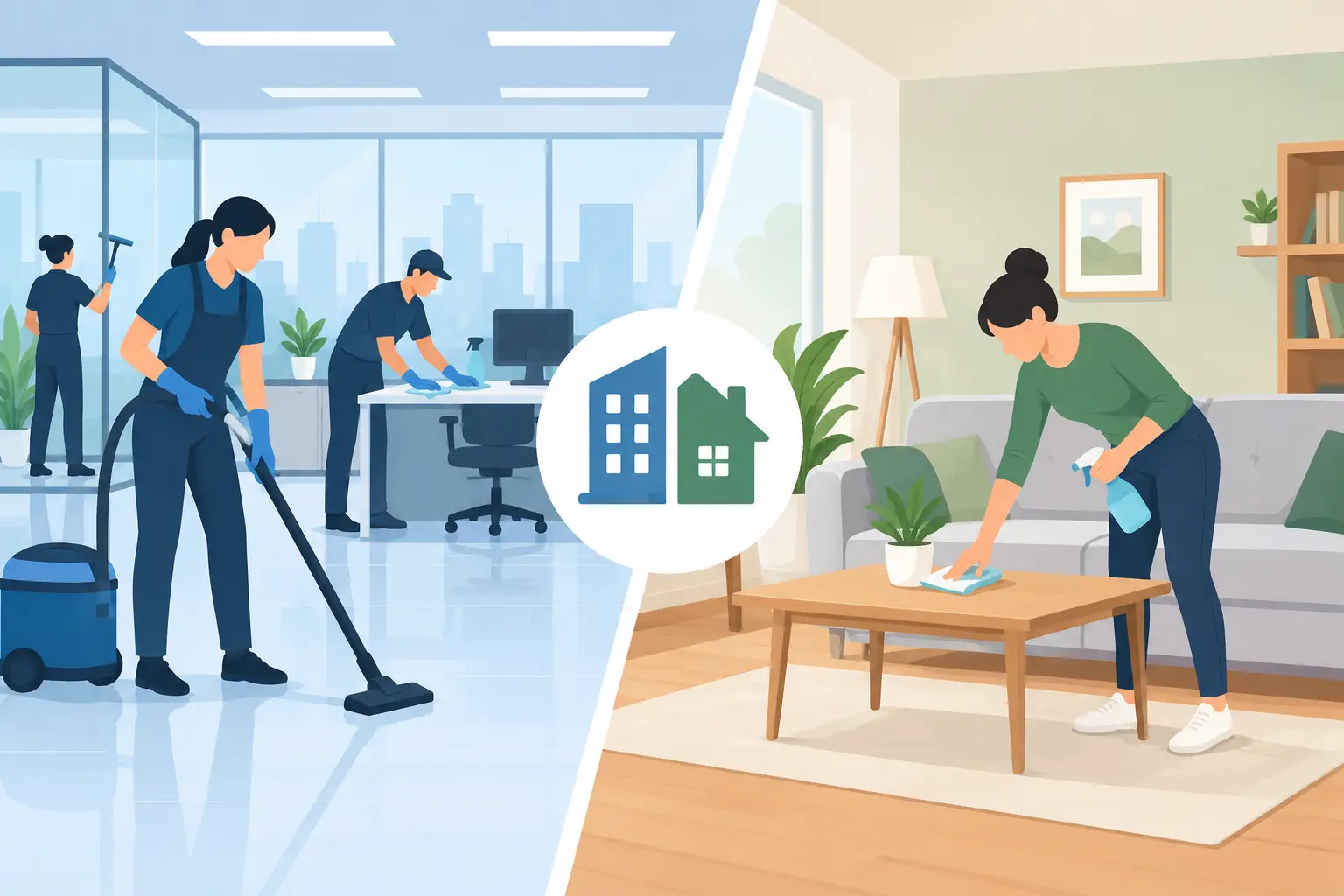
A cleaner may arrive before the first coffee is made, but the decision behind that clean affects far more than tidy desks. When weighing up office cleaning versus in house arrangements, business owners need to consider consistency, staff time, workplace presentation, security and the real cost of keeping standards high week after week.
For some Melbourne workplaces, an internal cleaner is the right fit. For many others, a professional commercial cleaning provider offers a more reliable and easier-to-manage result. The best choice depends on your premises, operating hours and the level of accountability you need.
Office Cleaning Versus In House: The Core Difference
An in-house arrangement means your business employs a cleaner directly, either full-time, part-time or casually. You manage recruitment, payroll, leave, training, supplies, supervision and cover when that person is unavailable. This can provide close control, particularly in a large site with very specific daily requirements.
Outsourced office cleaning means engaging a professional cleaning company to provide trained cleaners under an agreed scope of work. The provider is responsible for staffing, equipment, supplies, quality checks and replacement cover. Your team deals with one service partner rather than the day-to-day administration of a cleaning employee.
Neither model is automatically better. A small office that only needs a light clean once or twice a week may not require a dedicated employee. A large facility with continuous cleaning needs during business hours may decide an in-house team is worthwhile. The detail is in how each option performs in practice.
Compare the True Cost, Not Just the Hourly Rate
The hourly wage of an in-house cleaner is only one part of the cost. Employers also need to allow for superannuation, leave, workers compensation, payroll administration, recruitment, uniforms, equipment, cleaning products and training. There is also the cost of lost productivity when a manager has to solve roster gaps, inspect work or source replacement supplies.
A commercial cleaning quote can appear more straightforward because these responsibilities are bundled into the service. You know what work is included, when it will be completed and who to contact if something needs attention. It also makes budgeting simpler, especially for a recurring weekly or fortnightly service.
That does not mean outsourced cleaning is always the lowest-priced choice. If your business already has facilities staff, owns suitable equipment and needs a cleaner on site for long daily hours, an internal team may achieve value at scale. The question is whether your business has the systems and time to manage that function properly.
Consider the cost of missed cleaning
A cleaning gap can quickly become a workplace problem. Overflowing rubbish, marked glass, unhygienic kitchens and poorly maintained bathrooms affect staff morale and visitors’ impressions. If your in-house cleaner is sick or on leave, who steps in?
A dependable cleaning company should have replacement processes in place, so the standard does not disappear when one cleaner is unavailable. This continuity is particularly valuable for client-facing offices, medical-adjacent workplaces, strata common areas and busy teams that cannot afford disruptions.
Consistency Comes From Systems and People
The strongest argument for an in-house cleaner is familiarity. They know where the mess builds up, which meeting room hosts clients and which areas need extra attention after a busy day. When that person is reliable and well supported, the service can feel highly personal.
The challenge comes when knowledge sits with one employee. Standards can vary without clear checklists, supervision and regular feedback. A new cleaner may need time to learn the site, and a rushed replacement may miss important details.
Professional office cleaning services build consistency through documented scopes, trained staff and quality control. The cleaner should still learn your workplace and preferences, but the process does not rely entirely on one person’s memory. At House Cleaner, recurring clients can also benefit from the familiarity of the same cleaner where possible, supported by a caring team that can provide cover when required.
For either approach, define what “clean” means in your office. Is the kitchen wiped down nightly? Are bins emptied at every visit? Is the boardroom checked before Monday morning? Clear expectations prevent disappointment and make it easier to identify when a standard needs attention.
Flexibility Depends on Your Working Pattern
Offices rarely run on a neat nine-to-five schedule. Hybrid work can make Monday and Tuesday busier than Friday. A deadline may create late nights. An event, renovation or seasonal rush can suddenly increase foot traffic and cleaning needs.
An in-house employee may be able to respond quickly if they are on site and their hours allow it. However, extra work can involve overtime, changed rosters or staff availability issues. It can be difficult to scale up for a one-off deep clean without adding temporary labour to your own workload.
Outsourced office cleaning is often more flexible for changing needs. You can maintain a recurring service for everyday care, then arrange additional work such as carpet cleaning, window cleaning, after-renovation cleaning or a detailed clean before an important inspection. This is useful for offices that need dependable routine support without employing a large permanent cleaning team.
Be specific about access when comparing providers. If cleaning happens after hours, discuss keys, alarm procedures, visitor registers and who has authority to approve changes. Convenience should never come at the expense of site security.
Training, Safety and Compliance Need Attention
Cleaning is skilled work. Using the wrong product on a surface can damage it. Poor manual handling can cause injury. Inadequate procedures around wet floors, electrical equipment, chemicals and rubbish disposal create avoidable risks.
With an in-house cleaner, your business is responsible for ensuring appropriate induction, training, safe work procedures and ongoing supervision. This may suit organisations with established workplace health and safety systems, but it is a serious responsibility rather than a box to tick.
A professional provider should bring trained, vetted and background-checked cleaners, suitable equipment and clear procedures. Ask how cleaners are trained, how incidents are managed and what quality checks are completed. For workplaces handling sensitive information or expensive equipment, ask about confidentiality expectations and security protocols as well.
When an In-House Cleaner May Be the Better Choice
Keeping cleaning in house can make sense when the work is constant, specialised or tightly connected to daily operations. Large premises that require daytime cleaning across multiple shifts, for example, may benefit from a dedicated internal facilities team. The same can apply where cleaners need extensive site-specific knowledge or must respond immediately to operational needs.
It is most likely to work well when you can offer stable hours, provide proper management and have a realistic plan for leave cover. Choosing an in-house model without these foundations can leave one employee carrying an unreasonable workload and your office exposed when they are away.
When Professional Office Cleaning Is the Better Fit
Outsourcing is usually a practical option for small to medium offices, professional suites, retail back offices and businesses that want a predictable standard without taking on employment administration. It works particularly well when cleaning is important but not central to your business.
A professional team can deliver regular cleaning around your schedule, bring the right products and equipment, and provide extra services when the workplace needs more than a standard visit. You gain a single point of contact and more time for your team to focus on customers, staff and the work that drives your business forward.
Before committing, request a clear scope that sets out visit frequency, included areas, consumables, access arrangements and the process for feedback. The cheapest quote is not always the best value if it leaves key tasks unclear or does not provide dependable backup.
A clean office tells staff and visitors that the workplace is cared for. Choose the arrangement that gives your business confidence that bathrooms, kitchens, workspaces and shared areas will be ready every time people walk through the door.
A carpet can look clean from the doorway while holding weeks of grit, pet hair, food crumbs and tracked-in soil deep in its fibres. The best carpet cleaning methods are not simply about making a room smell fresh. They remove the soil that dulls carpet colour, protect the pile and suit how quickly you need the space back in use.
For a busy household, rental property or workplace, the right method depends on the carpet material, the level of soiling and whether drying time is an issue. A light refresh before guests needs a different approach from a deep clean after a muddy winter or a lease exit.
What makes one carpet cleaning method better than another?
There is no single method that suits every carpet. The best result comes from matching the cleaning process to the job rather than choosing the fastest or cheapest option by default.
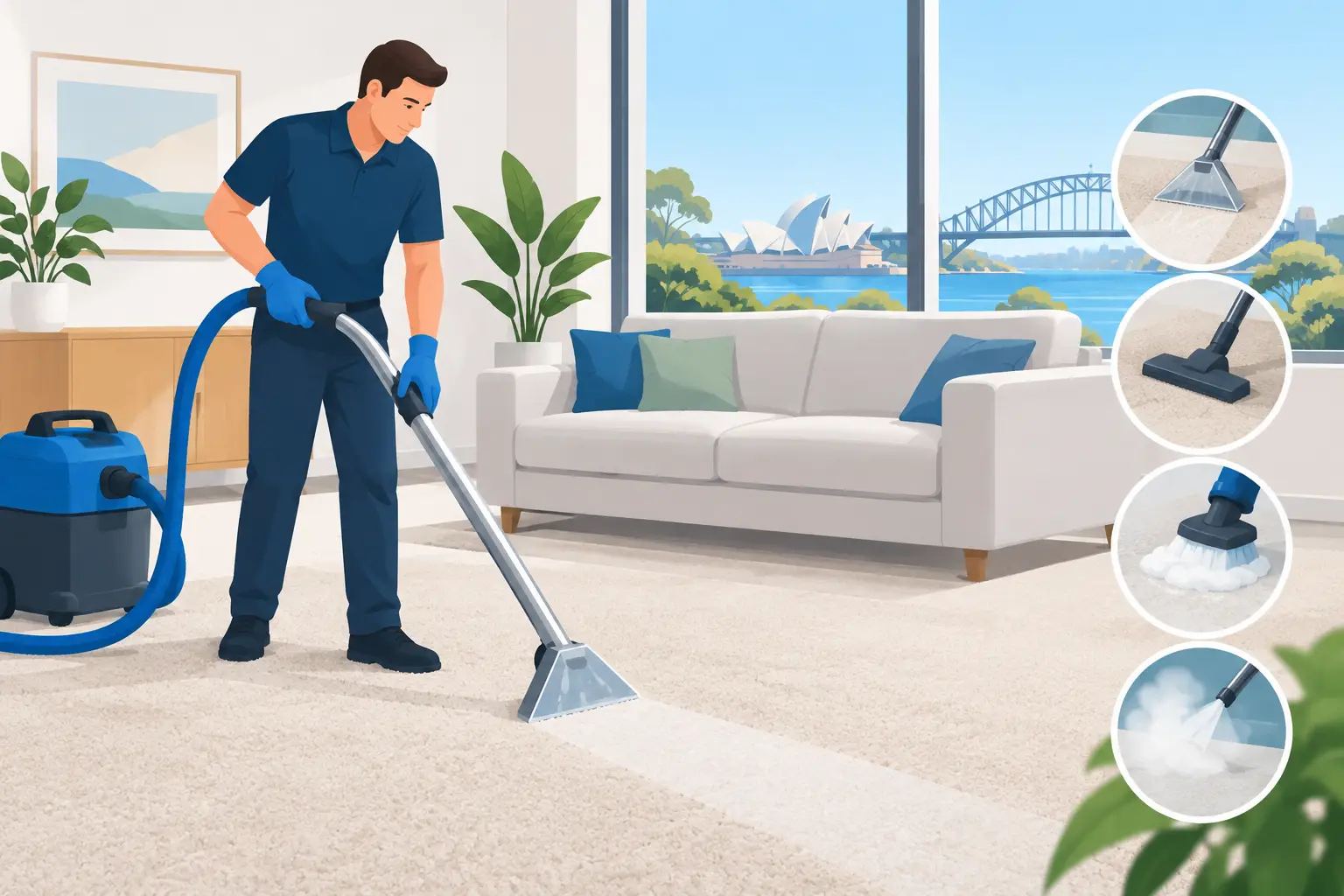
Hot water extraction is generally the strongest choice for embedded dirt and an overdue deep clean. Low-moisture methods can be more practical in an office, apartment or family home where people need to walk on the carpet soon after treatment. Delicate fibres, especially wool, need extra care with moisture, heat and cleaning products.
Before any method begins, carpets should be thoroughly vacuumed. This removes dry debris that can otherwise turn into a muddy residue once moisture is introduced. Professional cleaners also assess stains, fibre type, carpet condition and areas of heavy traffic before selecting products and equipment.
Best carpet cleaning methods for deep and regular care
Hot water extraction, often called steam cleaning
Despite the common name, steam cleaning usually uses hot water and cleaning solution rather than pure steam. The solution is applied under pressure, loosens dirt from the fibres, and is extracted along with moisture and soil using powerful suction.
This is one of the best carpet cleaning methods for homes with children, pets, allergies or high-traffic rooms. It reaches beyond the surface, helping remove built-up grime, lingering odours and the fine particles that make carpet feel flat underfoot. It is also well suited to end-of-lease cleaning and a proper seasonal reset.
The trade-off is drying time. Depending on ventilation, weather, carpet thickness and how heavily the room was soiled, a carpet may need several hours to dry fully. Opening windows where practical, using fans and avoiding heavy furniture until the carpet is dry can help. Good extraction matters because overwetting may leave the carpet damp for too long.
Dry compound cleaning
Dry compound cleaning uses absorbent granules or powder worked into the carpet. The product attracts and captures soil, then is removed through vacuuming. Because it uses very little moisture, carpets are often ready for use much sooner than after hot water extraction.
This method can work well for routine maintenance in offices, apartments and busy households. It is particularly useful where downtime is limited or where the carpet should not be left damp. However, it may not provide the same deep flush as hot water extraction when the carpet has heavy staining, pet accidents or years of embedded soil.
Dry cleaning is often best viewed as a practical maintenance option between deeper professional cleans, rather than a substitute for every situation.
Encapsulation cleaning
Encapsulation is another low-moisture approach. A specialised solution is applied to the carpet and dries into tiny crystals around soil particles. Once dry, the residue is vacuumed away, taking the trapped dirt with it.
It can produce a clean, fresh result with faster drying times and is commonly useful in commercial spaces. It also works well on general traffic-lane soil. As with other low-moisture methods, the outcome depends on proper vacuuming and may be less effective for heavily saturated stains or carpets that have not been cleaned for a long time.
Carpet shampooing
Traditional shampooing creates foam that lifts dirt from the carpet pile. It can improve the appearance of a carpet, but it requires careful rinsing or extraction afterwards. If too much product remains, it can leave a sticky residue that attracts fresh dirt more quickly.
For this reason, shampooing is not usually the first choice for modern carpet care when hot water extraction or encapsulation is available. It may still have a place for particular carpet types or specialist cleaning requirements, but the technique and product selection need to be right.
Methods that need a cautious approach
Bonnet cleaning uses a machine with a rotating absorbent pad to clean the upper part of the carpet. It can quickly improve the look of traffic areas and is sometimes used in commercial settings for appearance maintenance. Its limitation is that it mainly treats the surface, so it is not the best option for a deep residential clean.
Hiring a machine can seem like a straightforward way to save money, but it has risks. Rental equipment may not extract water as effectively as professional machinery, and using too much detergent can leave residue behind. Incorrect stain products can also set a mark, bleach the carpet or damage the backing.
DIY cleaning still has a role for immediate spill response and light upkeep. The key is to blot rather than scrub, work from the edge of the spill towards the centre, and avoid soaking the area. Scrubbing pushes a stain deeper and can roughen the carpet fibres.
How to choose the right method for your carpet
Start with the reason you are cleaning. If your carpet looks dull, feels gritty or has visible traffic lanes, hot water extraction is usually the sensible choice. If the main priority is a quick turnaround in a lightly soiled office or living area, dry compound or encapsulation cleaning may suit better.
Next, consider the fibre. Synthetic carpets are generally more forgiving, while wool and other natural fibres need carefully controlled moisture, temperature and products. A cleaner should identify the carpet before treatment rather than apply the same process to every room.
Stains also affect the decision. Fresh spills respond best to quick blotting and the correct spot treatment. Old stains, pet odours, coffee marks and oily residue may need targeted pre-treatment before the main clean. No responsible cleaner can guarantee that every old stain will disappear, particularly if it has been heat-set, treated with the wrong product or has changed the carpet colour.
Finally, think about timing. For a household with young children or pets, schedule deeper cleaning when rooms can be left clear while the carpet dries. For businesses, low-moisture cleaning outside trading hours can reduce disruption. A good cleaning plan protects both the carpet and your routine.
Keep carpets cleaner between professional visits
Regular vacuuming is the simplest way to extend the life of carpet. Focus on entryways, hallways, around sofas and other traffic areas, where abrasive grit settles first. Using mats at entrances and asking people to remove muddy shoes can make a noticeable difference during Melbourne’s wetter months.
Deal with spills promptly, and avoid reaching for harsh household products before checking whether they are suitable for your carpet. Test any cleaner in a hidden spot first. For recurring concerns such as pet odours or stains in a rental property, professional advice early can prevent a small issue becoming a permanent mark.
Most homes benefit from periodic professional cleaning, while busy family areas, rental properties and commercial spaces may need attention more often. House Cleaner can help assess the carpet, recommend a suitable approach and fit the work around your schedule.
Clean carpet should feel like part of a well-kept home or workplace, not another job waiting on your weekend. Choose a method based on the carpet in front of you, give it the care it needs, and you will enjoy a fresher space for longer.
A greasy oven can be the one detail that makes an otherwise tidy rental feel unfinished at final inspection. So, does bond cleaning include ovens? Usually, yes – a standard oven clean is commonly included in a professional end-of-lease clean. However, the level of cleaning, the condition of the appliance and the provider’s service scope can affect exactly what is covered.
For tenants, the goal is straightforward: return the property in a clean condition that meets the expectations set out in the lease and condition report. For property managers and landlords, a properly cleaned oven helps show that the home has been cared for. Knowing what to expect before booking can prevent last-minute stress and unexpected add-ons.
Does Bond Cleaning Include Ovens as Standard?
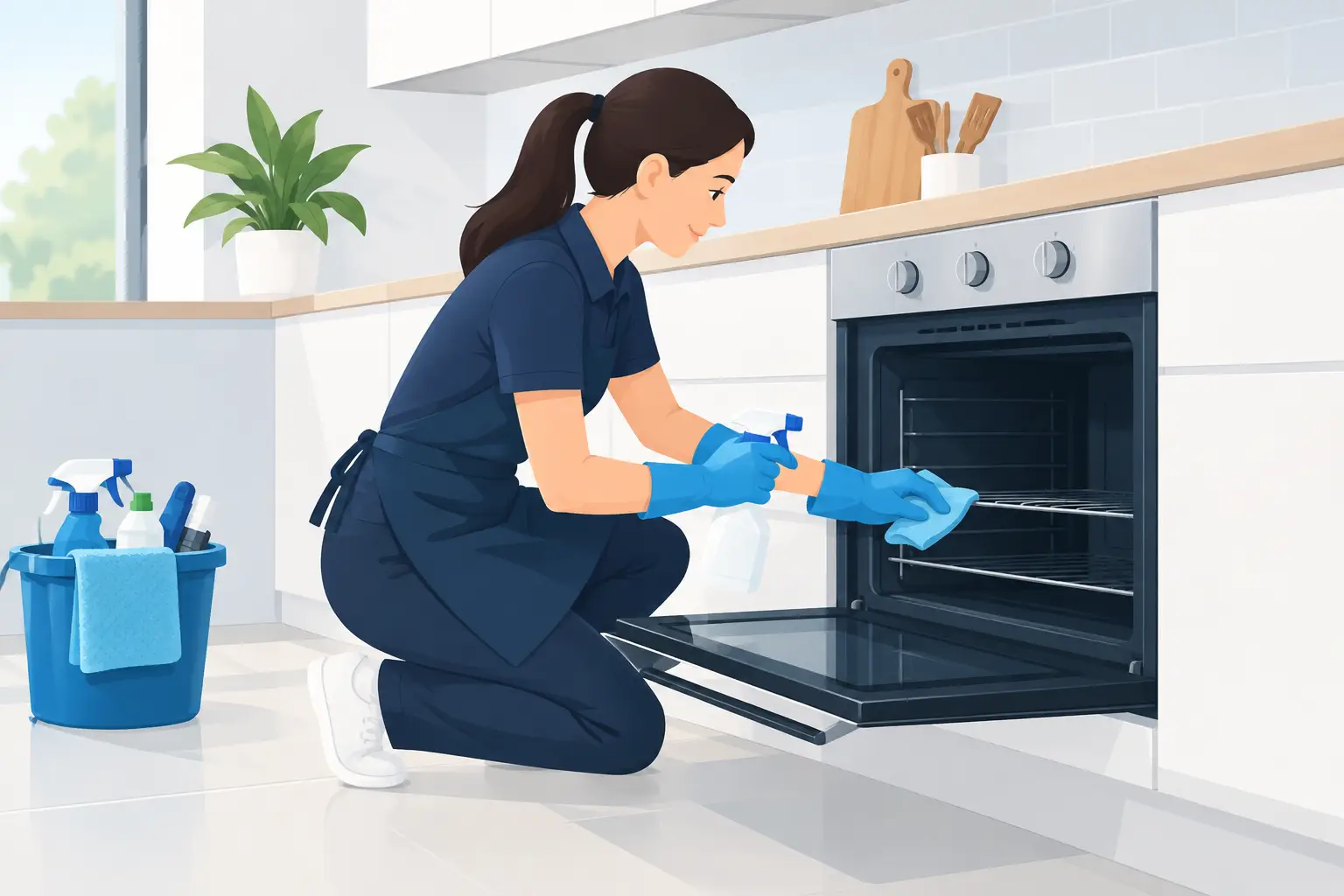
Most comprehensive bond cleaning services include cleaning the inside and outside of the oven, along with the cooktop and rangehood exterior. The oven should be free from visible food residue, grease splatter, burnt-on marks and crumbs. Cleaners will generally wipe the door, controls, racks, trays and the accessible interior surfaces.
That said, “oven cleaning included” does not always mean every removable component, fan housing or heavily carbonised surface will be restored to a brand-new appearance. An oven that has had regular cleaning throughout a tenancy is usually much quicker to bring up to inspection standard than one with years of baked-on grease.
Before you confirm your booking, ask the cleaning company what its end-of-lease service includes. A clear quote should explain whether the oven, stovetop, rangehood filters and dishwasher are part of the standard scope, and whether severe build-up attracts an extra charge.
What a Professional Oven Clean Usually Covers
A bond cleaner works through the appliance methodically, focusing on the surfaces an agent or property manager is likely to inspect. This typically includes the oven cavity, internal glass, outer door, racks, trays, cooktop and surrounding splashback area.
The cleaner may use degreasers and non-abrasive tools suited to the appliance finish. This matters because harsh scouring can scratch glass cooktops, damage protective coatings or leave marks on stainless steel. A professional clean is not just about making the oven look better. It is about removing residue safely while respecting the condition of the appliance.
Rangehoods are often part of the kitchen clean, but filters deserve a specific check. Metal filters can collect a surprising amount of grease, and some need soaking or more intensive treatment. If filters are damaged, missing or unusually greasy, cleaning alone may not solve the issue.
Oven racks and trays
Racks and trays are commonly cleaned as part of the oven service. Light-to-moderate residue can usually be removed effectively. Where trays are permanently stained, warped or coated in thick burnt-on deposits, the result may be a significant improvement rather than complete restoration.
This is where fair expectations matter. Cleaning can remove dirt and grease, but it cannot always reverse corrosion, discolouration from age or existing damage recorded at the start of the tenancy.
Glass doors and hard-to-reach areas
The inside of the oven door is a key inspection point, particularly where grease has built up on the glass. Most cleaners will clean accessible glass surfaces and door edges. Some oven doors have double or triple glass panels that trap residue between layers. Accessing these panels may require disassembly, which is not always included and may not be appropriate without manufacturer guidance.
If you can see marks between the glass, mention it when requesting a quote. It gives the cleaning team the chance to assess whether extra time or a specialised approach is needed.
When Oven Cleaning May Cost Extra
A standard inclusion is designed for an oven in reasonably maintained condition. Extra charges can apply when the appliance needs considerably more labour, stronger products or specialised equipment. This is not about penalising tenants. It allows the cleaner to allocate enough time to do the job properly.
Extra oven cleaning may be needed when there is heavy carbon build-up, thick grease across the cavity and racks, smoke residue, pest contamination, or years of residue that has hardened onto surfaces. A self-cleaning oven can also need careful handling, as its coatings and cleaning cycles may come with manufacturer-specific requirements.
Be wary of a quote that simply says “bond clean” with no detail. A reliable provider will ask practical questions, request photos where necessary and explain any likely additional costs before the work begins. That clarity protects both sides and makes the final invoice easier to understand.
Why the Oven Matters at a Final Inspection
Kitchens receive close attention because grease and food residue are obvious, can cause odours and take time to remove. Even if the benchtops shine, a dirty oven can make the kitchen feel incomplete. It may lead to a request for a return clean or a cleaning deduction if the issue is not resolved.
Your entry condition report is the best reference point. Compare the oven’s current state with its condition at the beginning of the tenancy. If there were stains, chipped enamel or damaged racks when you moved in, make sure these were documented. You are generally responsible for leaving the property reasonably clean, not for repairing pre-existing wear and tear.
For older appliances, the standard is cleanliness rather than perfection. A cleaner cannot make aged enamel look new, but they can remove the grease and grime that should not be there.
How to Prepare Before the Bond Cleaner Arrives
A little preparation helps your cleaning team spend their time on the work that matters most. Empty the oven of cookware, foil, baking paper and loose crumbs. Remove personal items from kitchen drawers and cupboards so cleaners can access the surfaces properly.
If the oven has a fault, such as a broken door seal, cracked glass or loose handle, let the cleaner know before the appointment. The same applies if you have used an oven cleaner recently. Some products leave residue or require a particular rinse process, and advance notice helps avoid damage.
It is also worth checking whether the property has power and hot water available until the clean is complete. These basics make a significant difference to the result, especially in the kitchen and bathroom.
Choosing a Bond Cleaning Service With Confidence
The cheapest quote is not always the most useful one if it leaves major tasks unclear. Look for a provider that explains its inclusions, has trained and vetted staff, and gives you a practical point of contact if your property manager raises a concern after the clean.
A detailed service scope should cover more than the oven. It should address the kitchen, bathrooms, floors, cupboards, skirting boards, internal windows where agreed, and other areas relevant to the property. Carpet cleaning, external windows, blinds, walls and pest treatment may be separate services depending on the lease requirements and the property’s condition.
For Melbourne tenants juggling removalists, keys and inspection times, an organised cleaning team can take a substantial task off the list. House Cleaner approaches end-of-lease work with the same care and reliable standards expected from a professional cleaning partner: clear communication, trained cleaners and attention to the details that affect the handover.
A Quick Checklist Before You Book
Before booking, confirm these points with your cleaner:
Is cleaning inside the oven, including racks and trays, included in the quoted price?
Are the cooktop, rangehood and filters included?
Is there an additional charge for heavy grease or carbon build-up?
What happens if the agent requests a touch-up after inspection?
Are carpets, windows, walls or pest treatment required separately under your lease?
Taking photos of the oven before and after cleaning is also sensible. Keep them with your entry report, exit report and cleaning receipt. Good records can make any conversation with a property manager much simpler.
A clean oven will not guarantee a smooth bond return on its own, but it removes one of the most common kitchen inspection concerns. Book early, be upfront about the appliance condition and choose a cleaner who explains the work clearly. That leaves you with one less job to manage while you focus on settling into your next home.
You book a cleaner to get time back, not to inspect every skirting board after they leave. A clear house cleaning guarantee gives you confidence that, if something has genuinely been missed, there is a fair and practical way to put it right. It is not about expecting perfection in every circumstance. It is about knowing your home, your instructions and your concerns will be treated with care.
For busy Melbourne households, renters, property managers and office managers, that reassurance matters. Cleaning is personal. You are inviting someone into your space and trusting them to deliver the standard you have paid for. A good guarantee turns that trust into a clear service commitment.
What is a house cleaning guarantee?
A house cleaning guarantee is a provider’s promise to respond if the agreed cleaning service has not been completed to a reasonable standard. Usually, this means the customer can report a missed or unsatisfactory area within a set timeframe and the cleaning company will assess the concern and, where appropriate, arrange a return clean or another suitable solution.
The key phrase is “agreed cleaning service”. Guarantees are normally tied to the tasks included in your booking, rather than every possible cleaning need in the property. If you booked a regular clean that covers bathrooms, floors, kitchen surfaces and dusting, it is reasonable to raise an issue with one of those areas. If oven detailing, external windows or wall washing were not included, they may require a separate service.
That distinction protects both sides. Customers know what they can expect, while cleaners have a fair scope of work and enough time to do it properly.
Why a guarantee matters before you book
Price matters, but it should not be the only deciding factor. A very cheap quote can become costly if there is no process for resolving problems, no consistent team and no clear record of what was requested. A guarantee signals that the company is prepared to stand behind its work.
It also encourages better communication from the beginning. When a cleaning team knows the service must meet an agreed standard, they are more likely to confirm priorities, follow checklists and take care around the details that matter to you. For a family, that might mean bathroom hygiene and tidy floors. For a property manager, it may be presentation before an inspection. For a business, it could be clean amenities and a professional workspace each morning.
For recurring weekly or fortnightly cleaning, the benefit grows over time. Keeping the same cleaner where possible means they learn your home, your preferences and the areas that need extra attention. Consistency is often more valuable than a one-off promise of perfection.
What a fair guarantee should include
A reliable guarantee does not need complicated legal language. It should explain, in plain terms, what the company will do and what it needs from you to resolve an issue fairly.
A clear service scope
Before the clean begins, you should be able to see what is included. Regular house cleaning and end-of-lease cleaning are different jobs, with different levels of detail. Carpet cleaning, window cleaning, curtain cleaning and post-renovation cleaning also have their own requirements.
A useful guarantee refers back to the booked scope. This avoids misunderstandings such as expecting a deep clean during a standard maintenance visit, or assuming mould removal is included when the issue requires specialised treatment.
A reasonable timeframe for feedback
Concerns should be raised soon after the service, ideally while the condition of the area is easy to review. Many cleaning businesses set a short notification window. This is not designed to make complaints difficult. It helps the provider investigate while the information is fresh and arrange a prompt response.
If you notice a problem, take a few clear photos and contact the company with the room, task and issue described. “The bathroom vanity was not wiped” is more helpful than “the clean was not good”. Specific information lets the team respond quickly and fairly.
A practical remedy
The most common remedy is a return visit to re-clean the affected area. This is usually the best result because it addresses the problem directly. Depending on the circumstance, the company may offer another appropriate resolution, but a credible guarantee should not rely on vague promises to “look into it”.
A return clean may not always be possible if access cannot be arranged, the concern is reported long after the appointment, or conditions in the property have changed. Even then, you should expect a respectful conversation and a considered response.
Fair conditions and exclusions
A guarantee should be realistic about what cleaning can achieve. Permanent staining, damaged surfaces, built-up grime beyond the booked scope, wear and tear, or issues caused by faulty fixtures cannot always be restored through cleaning alone.
For example, cleaners can remove soap residue from a shower screen, but they cannot repair etched glass. They can clean around a leaking tap, but ongoing water damage needs maintenance. Honest limits are not a weakness in a guarantee. They show the provider is setting expectations responsibly.
How to get the best result from your cleaning service
A guarantee is a safety net, not a substitute for a good booking conversation. The better the information shared before the clean, the more likely the result will match your expectations.
Be upfront about the property’s condition, the number of bathrooms, pets, parking access and any priority areas. If you need a cleaner to focus on an oven, inside cupboards, blinds or balcony glass, mention it before the appointment. These tasks may need additional time or a specialised service.
It also helps to make the home accessible and reasonably ready for cleaning. Clear away valuable items, paperwork and excessive clutter where possible. A cleaner can certainly tidy, but heavy clutter reduces the time available for dusting, mopping and detailed bathroom or kitchen work. If there are fragile items or surfaces that need special products, point them out at the start.
For recurring services, give feedback early. A caring cleaning team wants to understand your preferences, whether that is the way towels are folded, which rooms are used less often or the products you prefer around children and pets. Small adjustments made after the first clean can create a much better long-term service.
When a concern is worth raising
You should feel comfortable speaking up if a booked task was missed, an area was left noticeably unclean, or the result falls short of the agreed standard. Raising a concern is not being difficult. It gives the cleaning company the opportunity to fix the issue and improve future visits.
Start with the facts. Explain what was booked, identify the area and provide photos if helpful. Keep the conversation focused on the service rather than assumptions about the cleaner. Most issues can be resolved faster when everyone has clear information and a shared goal: getting your space to the standard you expected.
If you have a recurring cleaner, do not let a small frustration build into a reason to cancel. A simple note after the appointment can help the team update instructions for next time. Reliable service relationships are built through consistency, but also through open communication when something needs adjusting.
Questions to ask about a house cleaning guarantee
Before confirming a booking, ask what happens if you are unhappy with part of the clean, how soon you need to make contact, and whether the remedy is a return visit. You can also ask whether the guarantee applies differently to regular cleaning, move-in or move-out cleaning, commercial cleaning and specialised services.
Ask how the company records your instructions for future visits. This is especially useful if you want the same cleaner for regular appointments. A provider that keeps notes on your priorities is better placed to deliver a consistent result without making you repeat yourself every fortnight.
Finally, look for the basics behind the promise: trained cleaners, background checks, proper insurance, clear booking details and an accessible customer service team. A guarantee carries more weight when it is supported by organised systems and people who genuinely care about the outcome.
A clean home or workplace should leave you feeling lighter, not wondering whether you will need to chase up loose ends. Choose a cleaning provider that is clear about its standards, listens when you have feedback and treats every booking as the beginning of a trusted relationship.
A full rubbish bin at reception, fingerprints on the glass door and a kitchen bench scattered with yesterday’s mugs can change how people feel about a workplace before the first meeting starts. The right office cleaning frequency keeps these small issues from becoming a distraction, a hygiene concern or an unwelcome first impression.
There is no single schedule that suits every business. A quiet professional office with eight people needs a different approach from a busy Melbourne workplace with shared desks, client appointments and a constantly used kitchenette. The most effective plan matches cleaning visits to how your workplace is actually used, not simply to a calendar.
What determines office cleaning frequency?
Foot traffic is usually the biggest factor. More people means more dust brought in from outside, more rubbish, more marks on floors and more frequent use of bathrooms and shared areas. A small team that works partly from home may find a weekly clean is enough. An office with staff on site every day, regular visitors or hot-desking may need cleaning several times a week.
The layout matters too. Open-plan workspaces can look untidy quickly because activity is visible from almost everywhere. Offices with carpeted meeting rooms, a reception area and enclosed work zones may hold their appearance longer, but they still need regular attention to high-touch surfaces and amenities.
Finally, consider the type of work you do. A client-facing agency, medical-adjacent practice, real estate office or showroom often needs a more polished standard than a back-office operation with limited visitors. This is not about appearances alone. Consistent cleaning supports staff comfort, reduces clutter and helps create a workplace people are happy to spend time in.
A practical office cleaning frequency guide
For most workplaces, cleaning works best when tasks are divided by how quickly they affect hygiene, presentation and day-to-day function. Daily upkeep handles the visible essentials. Weekly cleaning restores the overall workspace. Periodic services protect the areas that ordinary cleaning cannot fully address.
Daily or every workday
Bathrooms, kitchenettes and entry points deserve the closest attention. These are shared spaces where mess, odours and germs build up fastest. Rubbish should be removed before it overflows, bins relined, benches wiped and bathroom supplies checked regularly.
High-touch points also need frequent cleaning, particularly in larger teams or shared workplaces. Think door handles, lift buttons, light switches, taps, fridge handles, shared printers and meeting-room controls. During cold and flu season, increasing attention to these surfaces is a sensible step that supports employees and visitors alike.
A professional cleaner does not always need to attend daily in a smaller office. Staff can manage simple habits such as rinsing their own mugs and clearing desks at the end of the day, while a caring cleaning team handles the deeper hygiene work on scheduled visits. The key is making sure responsibility is clear, rather than hoping someone will take care of it.
Two to three times a week
This schedule suits many active small-to-medium offices. It keeps kitchen and bathroom areas fresh, removes rubbish before it becomes an issue and maintains a presentable reception area for clients. Vacuuming busy walkways, wiping accessible surfaces and tidying shared spaces can also be included at this frequency.
Three visits a week are often worthwhile for workplaces with 15 or more regular staff, frequent meetings or a kitchen that sees plenty of use. It is also a practical middle ground for businesses that need a consistently clean office but do not require an evening cleaning crew every night.
Weekly office cleaning
Weekly service can work well for small teams, hybrid offices and businesses with relatively light visitor traffic. A proper weekly clean should go beyond a quick tidy. It typically includes vacuuming or mopping floors, cleaning bathrooms, wiping kitchen surfaces, removing rubbish and dusting accessible office furniture.
The trade-off is that staff need to maintain the space between visits. If the kitchen regularly becomes messy by Wednesday or bins are full after a day or two, weekly cleaning is likely too infrequent. Moving to twice-weekly visits may cost more than a basic weekly service, but it can save staff time and prevent a gradual drop in workplace standards.
Fortnightly cleaning
Fortnightly cleaning is best reserved for low-occupancy offices, studios used only a few days a week or workspaces where staff already carry out reliable daily upkeep. It can be a sensible option for a small business with limited use of kitchens and bathrooms.
For a full-time office, however, fortnightly service is rarely enough as the only cleaning arrangement. Rubbish, amenities and shared surfaces need attention more often. If a fortnightly visit is the right budget fit, establish a simple internal routine for bins, dishes, wipe-downs and bathroom checks between professional cleans.
Cleaning tasks that need a different timetable
Some tasks should not be tied to the same schedule as vacuuming and bin removal. Carpets, windows, upholstery and detailed floor care all need periodic attention based on use and condition.
Carpets in high-traffic entryways and corridors benefit from regular vacuuming, but professional carpet cleaning is typically needed every six to twelve months. Offices with heavy foot traffic, food and drink near workstations, or visible staining may need it more often. Clean carpet improves the look of the office and helps prevent embedded soil from wearing fibres down prematurely.
Internal glass, entry doors and meeting-room partitions often need cleaning weekly or more frequently when clients are visiting. External window cleaning depends on the building, weather exposure and location. In busy inner-city areas, dust, rain marks and traffic grime can affect the appearance of windows faster than expected.
A deeper office clean is also useful every three to six months. This is the time to address skirting boards, behind and beneath furniture, high dusting, internal cupboards, detailed kitchen cleaning and areas that are easy to miss during regular visits. Scheduling this work before a busy period, board meeting or office event makes it easier to present the workplace at its best.
Signs your current schedule is not working
A cleaning schedule should be reviewed when employees begin doing regular cleaning tasks that fall outside ordinary tidiness. If people are emptying overflowing bins, avoiding the staff fridge, wiping down bathrooms before using them or apologising to visitors for the state of the office, the service frequency needs attention.
Other signs are more subtle. Persistent odours, dull floors, dusty ledges, smudged glass and recurring carpet marks can make an office feel neglected even when it is technically tidy. These issues often indicate that the scope of the clean, not just the number of visits, needs to be adjusted.
Feedback from staff is useful here. A short, practical conversation can identify whether the kitchen needs another visit each week, whether meeting rooms need more attention or whether cleaning is happening at an inconvenient time. A reliable provider should be able to tailor the checklist as the office changes.
Build a schedule your team can maintain
Start by looking at your busiest areas over a normal working week. Count the people using the office, note when visitors arrive and consider which spaces create the most cleaning pressure. Then choose a baseline schedule and reassess after four to six weeks. It is easier to refine a service plan using real experience than to guess from floor size alone.
Consistency matters as much as frequency. Having the same trained cleaner or regular team helps them understand your workplace, notice changes and deliver dependable results. House Cleaner can provide recurring commercial cleaning that fits around your trading hours, whether you need weekly support, multiple visits each week or periodic detailed services.
A clean office should feel effortless to the people who work in it. When your cleaning schedule matches the pace of your workplace, staff can focus on their jobs, visitors feel welcome and the space stays ready for whatever the week brings.
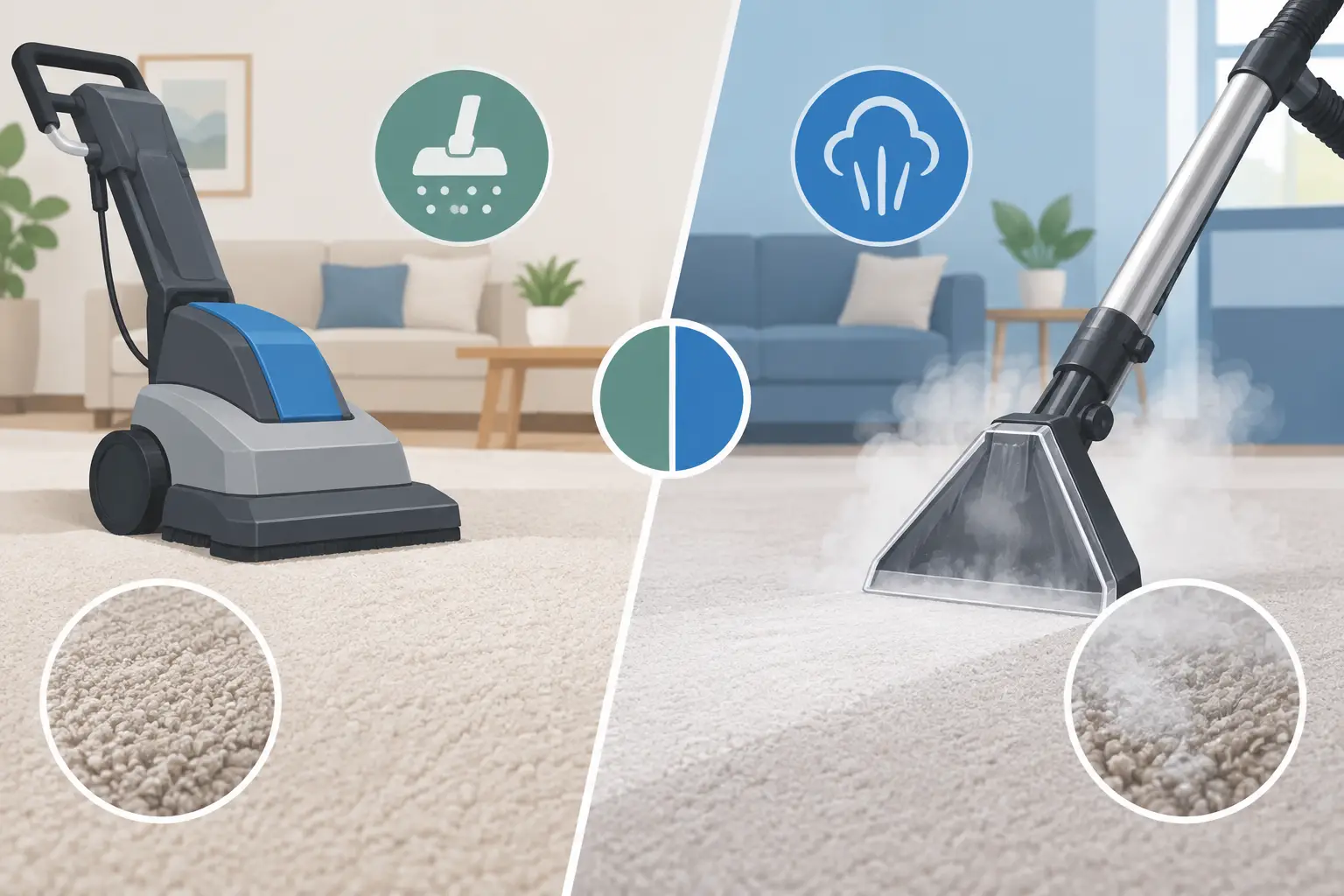
A carpet can look clean on the surface while holding everyday soil, pet hair, spills and fine dust deep in its pile. When it is time for a proper refresh, the choice usually comes down to dry carpet cleaning versus steam. Both methods can deliver excellent results, but the best option depends on your carpet type, the level of soiling, how quickly you need the room back in use and whether there are stubborn stains to address.
For busy households, tenants preparing for an inspection and workplaces that cannot afford long downtime, the right cleaning method is about more than appearance. It is about getting a reliable result without creating unnecessary disruption.
What people mean by dry carpet cleaning
Dry carpet cleaning is a low-moisture method. It does not always mean the carpet is cleaned with no liquid at all. Depending on the system, a technician may use a specialised cleaning solution, absorbent compound or encapsulating product that surrounds and lifts dirt from the fibres.
With compound cleaning, the product is worked into the carpet and then removed with professional vacuum equipment. With encapsulation cleaning, a low-moisture solution helps loosen soil before drying into crystals that are vacuumed away. The common benefit is fast drying – often a matter of hours, and sometimes much sooner depending on ventilation, carpet thickness and humidity.
This makes dry cleaning a practical choice for an office, a busy family room or a rental property where people need to walk on the carpet shortly after the service. It can also suit regular maintenance cleaning, helping prevent dirt from building up over time.
What is steam carpet cleaning?
Despite the name, steam carpet cleaning usually refers to hot water extraction. It uses hot water and a cleaning solution applied under controlled pressure, then extracts the water, dirt and cleaning residue with a powerful vacuum.
The process reaches deep into carpet fibres and is especially useful where carpets have accumulated embedded soil, food spills, muddy footprints or pet-related mess. A skilled cleaner will assess the fibre, use an appropriate pre-treatment where needed and avoid over-wetting the carpet.
Steam cleaning often provides the more intensive clean when a carpet has not been professionally treated for some time. The trade-off is drying time. In suitable conditions, carpets may be dry within several hours, but thick pile, poor airflow, cool weather and heavy cleaning can extend that period. Planning the appointment so windows can be opened or air conditioning can assist with airflow may help.
Dry carpet cleaning versus steam: the key differences
The biggest difference is moisture. Dry carpet cleaning uses minimal moisture and generally allows quicker access to the space. Steam cleaning uses more water but can offer a deeper flush of soil from the carpet.
That does not mean one method is automatically better. A lightly soiled carpet in a meeting room may benefit more from a fast-drying low-moisture clean. A lounge room carpet that has dealt with children, pets and regular foot traffic may need hot water extraction to lift soil that vacuuming and surface treatments cannot remove.
There is also a difference in residue management. Well-performed steam cleaning should extract the cleaning solution thoroughly. Well-performed dry cleaning should remove the compound or crystallised soil effectively. In either case, the quality of the equipment, products and technician matters as much as the method itself. Using the wrong chemical, too much water or poor extraction can leave a carpet feeling stiff, attracting dirt faster or taking longer to dry.
Dry cleaning may be the better fit when time is tight
Low-moisture cleaning is often a sensible choice when you need minimal interruption. Think of an office that must reopen after the weekend, an apartment entryway with constant foot traffic or a household with young children and limited space to avoid damp carpet.
It also works well as part of ongoing carpet care. Regular professional attention, combined with frequent vacuuming, can prevent grit from wearing down fibres. Dirt is abrasive, and every step across a soiled carpet can gradually dull its appearance and shorten its useful life.
However, dry cleaning may not be enough on its own for every heavy stain or deeply soiled carpet. If the carpet has visible traffic lanes, odours or long-standing grime, an intensive hot water extraction service may be recommended instead.
Steam cleaning may be the better fit for deep soil and stains
Hot water extraction is often chosen for a restorative clean. It can be particularly helpful after a busy season, before moving into a property or when carpets have been neglected. Pre-treatment can target common marks such as coffee, soft drink, tracked-in soil and food spills, although no reputable cleaner should promise that every stain will disappear.
Some stains permanently alter carpet dye or fibres. Bleach, certain hair products, pet accidents left untreated and old red wine stains can cause damage that cleaning cannot reverse. An experienced cleaner can explain what is realistic before starting, rather than setting false expectations.
Steam cleaning also requires sensible aftercare. Avoid placing heavy furniture back on damp carpet where possible, and use protective tabs if furniture must be moved. Keep children and pets away until the carpet is dry, particularly if they may transfer dirt back onto the freshly cleaned surface.
Your carpet fibre matters
Before choosing a method, check what the carpet is made from. Synthetic carpets such as nylon and polypropylene are generally durable and commonly suitable for professional hot water extraction or low-moisture methods. Wool and wool blends need more careful handling because excess heat, moisture or unsuitable products can cause shrinkage, browning or texture changes.
This is one reason a quick DIY approach can create more work later. Rental machines can have their place for small spills, but they often lack the extraction power of professional equipment. Over-saturating a carpet can leave it damp for too long and may contribute to odours or issues with the backing.
For delicate, premium or older carpets, ask the cleaning provider how they will assess the fibre and test products where appropriate. The safest method is not necessarily the fastest or strongest one. It is the method that cleans effectively while protecting the carpet.
Consider the reason you are booking a clean
The purpose of the clean should guide the decision. If you are maintaining a tidy home between regular cleaning visits, fast-drying carpet cleaning may be all that is needed. If you are preparing a property for a lease inspection, moving out or welcoming new tenants, the carpet condition may call for a deeper service.
For commercial spaces, timing is often decisive. Low-moisture cleaning can reduce downtime in offices, retail areas and shared workspaces. Yet a periodic steam clean may still be worthwhile for higher-traffic zones, especially near entrances, kitchens and corridors.
A good cleaning team will not treat every carpet the same way. They will consider the fibre, stain type, wear level, room use and drying conditions, then recommend a practical approach. That is how you get value from the service rather than simply choosing the cheapest option on the day.
How to keep carpets cleaner for longer
Professional cleaning works best alongside a simple maintenance routine. Vacuum high-traffic areas at least twice a week, and attend to spills quickly by blotting with a clean white cloth rather than rubbing. Rubbing can push a spill deeper into the fibres and spread the affected area.
Use mats at external doors to catch grit before it reaches the carpet, particularly during Melbourne’s wetter months. If you have pets, regular grooming and prompt accident clean-up can reduce hair, odours and staining. Moving furniture occasionally also helps prevent heavily worn pathways from becoming permanent.
When booking a professional clean, mention any stains, pet issues, delicate rugs or areas of concern beforehand. Clear information helps the cleaner arrive prepared and gives you a better chance of the result you want.
The practical choice between dry carpet cleaning and steam is not about picking a winner. It is about matching the cleaning method to your carpet, your schedule and the level of care the space needs. A trusted professional can help you make that call, so your carpets feel fresher and your home or workplace can get back to normal sooner.