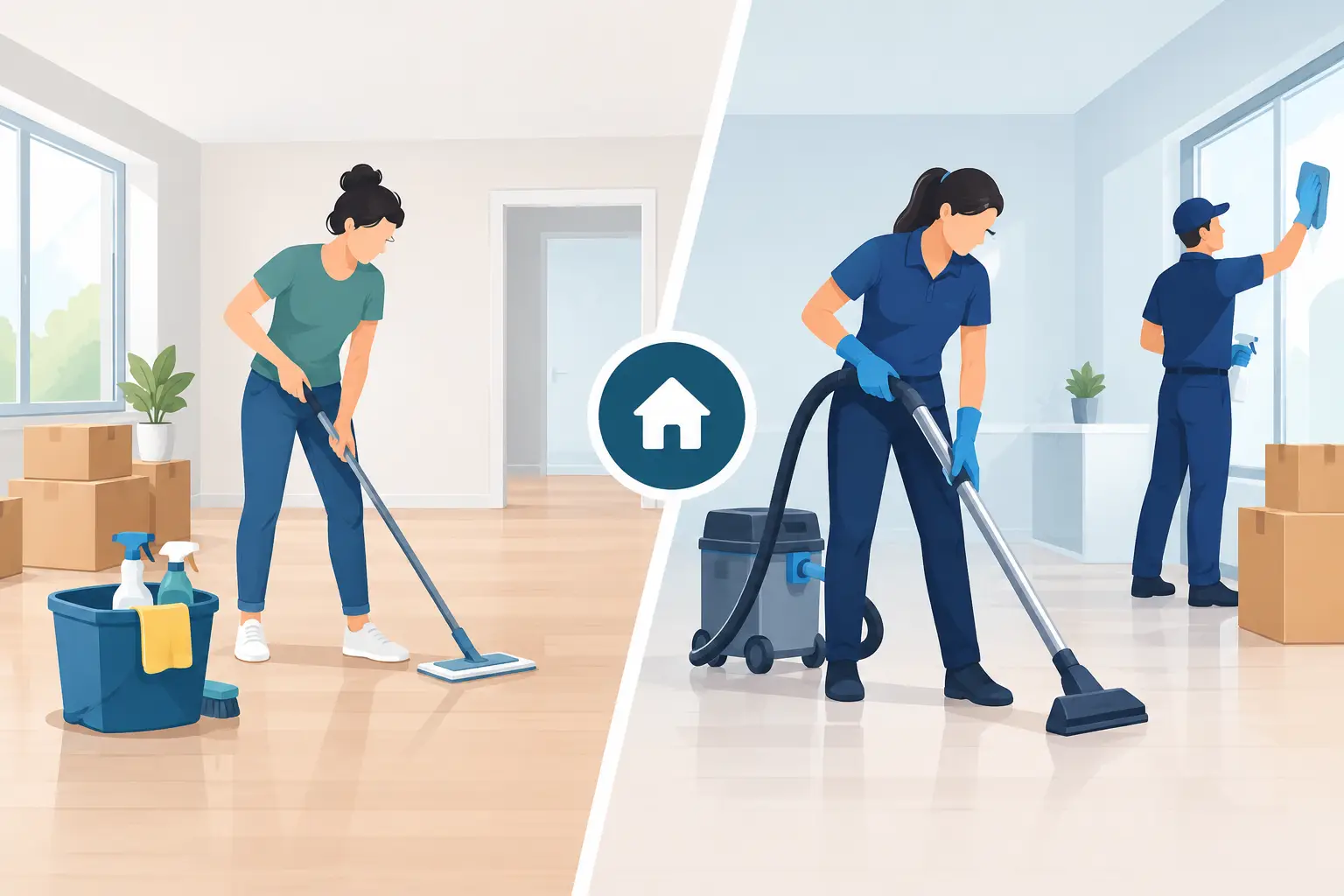
The keys are in your hand, boxes are waiting, and the removalists are booked. Yet before anything goes into a cupboard or wardrobe, there is one job that can shape how your new home feels from day one. This move-in cleaning comparison looks at the real choice between cleaning it yourself and booking professional help – including cost, time, standards and when each option makes sense.
A property can appear tidy at an inspection while still needing attention in the places that matter most: inside cabinets, around taps, beneath appliances, on skirting boards and in bathrooms. Moving house already creates enough decisions. Knowing the level of cleaning you need helps you start in a space that feels properly yours.
Move-in cleaning comparison: what are you really choosing?
This is not simply a choice between spending money or saving money. A DIY clean gives you direct control over every product and every surface, but it also takes time, energy and planning at one of the busiest points in a move. A professional clean trades some of that hands-on control for trained cleaners, equipment, an organised process and more room in your schedule.
The right option depends on the condition and size of the property, the time available before moving day, and your own expectations. A near-new apartment that has been well maintained may only require a focused clean. A family home that has been vacant, has undergone work, or has visible build-up in wet areas will usually need a more detailed approach.
It is also worth separating a move-in clean from a standard weekly tidy. Move-in cleaning is designed to reset an empty property. With cupboards and rooms clear, cleaners can reach areas that are normally hidden by furniture, stored items and daily life.
DIY move-in cleaning: more control, more commitment
Cleaning the property yourself can be a sensible choice when you have sufficient access before the move, the home is in good condition and you genuinely have time to do the work. It can also suit people who prefer to use particular products due to allergies, pets or personal preferences.
The advantage is visibility. You see every shelf, wipe every handle and can decide exactly how far to go. For some people, cleaning a new home is part of settling in. It creates a sense of ownership before the furniture arrives.
The challenge is that an empty home can take longer than expected. There are more exposed surfaces than you might notice during an inspection, and moving logistics have a way of shrinking the available hours. Collecting keys late, waiting on removalists, arranging utilities and unpacking essentials can quickly turn a planned six-hour clean into a rushed task after a long day.
What a thorough DIY clean involves
A proper DIY move-in clean typically means more than vacuuming and wiping benches. Kitchens need attention inside drawers and cupboards, around splashbacks, on rangehood filters and along appliance edges. Bathrooms may need descaling on taps and shower screens, plus cleaning around toilets, drains and exhaust fans.
Bedrooms and living areas call for dusting high and low, including light fittings, skirting boards, internal window ledges and wardrobe shelving. Floors should be vacuumed thoroughly before mopping, particularly along edges and in corners. If the property has carpet, stains, odours or a build-up of dust may require professional carpet cleaning rather than a domestic vacuum alone.
You will also need supplies ready before you start. That includes cloths, gloves, a quality vacuum, mop, bucket, suitable products for different surfaces, a scrub brush and rubbish bags. Buying missing items at the last minute can reduce any apparent saving.
Professional move-in cleaning: time back and a consistent standard
Professional move-in cleaning is often the better fit for busy households, renters moving on a fixed date, families managing children, or anyone entering a property that needs more than a surface refresh. A trained cleaning team works to a clear scope, follows an efficient room-by-room process and comes prepared for the job.
The central benefit is not simply that someone else cleans. It is the ability to arrive at a home that has been prepared for your belongings, while you focus on the practical demands of moving. That can mean collecting keys, supervising deliveries, updating your address or simply taking a breath before unpacking.
A professional service is especially valuable when you cannot inspect the property closely before move-in. This is common where settlement and access happen close together, or when relocating across Melbourne. Rather than hoping there is time to deal with unexpected grime, you can arrange cleaning as part of your moving plan.
What to expect from a professional service
The exact scope should always be confirmed before booking, as every property and service provider is different. A detailed move-in clean often covers kitchens, bathrooms, living spaces, bedrooms, visible fixtures, floors and accessible internal surfaces. Add-on services may be available for carpet cleaning, interior windows, curtains or post-renovation dust.
Clear communication matters. Let the cleaning provider know the property size, number of bathrooms, condition of the home, whether it will be empty, access arrangements and any priority areas. Photos can help where there is noticeable build-up, construction dust, pet hair or marks that need extra attention.
For many customers, trust is as important as the cleaning checklist. Look for a company with trained, vetted staff, straightforward booking, reliable communication and a service approach that respects your new home. House Cleaner provides this kind of practical support for customers who want an organised, dependable clean without adding another task to move day.
Comparing cost without overlooking your time
DIY cleaning usually has the lower upfront cost, particularly if you already own the necessary equipment and products. However, the true cost includes travel to buy supplies, possible equipment hire or replacement products, and the time required to clean to the standard you want.
Professional cleaning costs more upfront, but the value can be strong when it prevents a full weekend of work or reduces the pressure around a tight move. It can also be more economical than taking unpaid time off, paying for extra childcare, or delaying unpacking because the home is not ready.
Think about the work in practical terms. If a detailed clean will take two people most of a day, ask whether that is how you want to spend the final day before a move. There is no single right answer, but it is useful to compare the whole picture rather than the service quote alone.
A practical way to decide
Choose DIY if the property is already clean, you have at least a full day of uninterrupted access, and you are comfortable handling bathrooms, kitchen grease and floor care yourself. It is also a good fit if cleaning is a task you find satisfying rather than stressful.
Consider professional help if time is tight, the property has been vacant for a while, the previous clean is not up to your standard, or the home has several bedrooms and bathrooms. It is particularly helpful after renovations, where fine dust can settle in cupboards, tracks, ledges and vents long after the visible work is finished.
A combined approach can work well too. Book a professional clean for the deep work, then keep a small kit handy for a final wipe after trades, removalists or deliveries. This gives you both a thorough reset and the freedom to deal with any last-minute marks.
Do not leave the clean until after unpacking
Once furniture, boxes and appliances are in place, cleaning becomes slower and more difficult. Cupboards are full, floor edges disappear, and dusty areas behind whitegoods can wait far longer than intended. The best time to clean is when the property is empty and every surface is accessible.
If you are booking professional cleaning, arrange it after any repairs, painting or renovation work and before removalists arrive. If you are doing it yourself, start with high areas and cupboards, then work down to benches, fittings and floors. Keep one clean cloth and all-purpose spray aside for a final pass just before you bring belongings inside.
A move is a fresh start, but it should not begin with someone else’s dust in your drawers or stains on your shower screen. Whether you choose DIY effort, professional support or a little of both, make the cleaning decision early. A properly prepared home gives you one less thing to manage and a far better first night in your new space.
A quote should make booking a cleaner feel easier, not leave you wondering what has been included, what will cost extra, or whether the work will match your expectations. A clear cleaning service quote process gives you a realistic price, defines the scope of the clean and helps the cleaning team arrive ready to get on with the job.
Whether you are fitting regular cleaning around a busy family schedule, preparing to hand back the keys to a rental, or arranging dependable support for an office, the best quote starts with the right details. Here is what to expect and how to get a more accurate estimate from the outset.
What a cleaning quote is really based on
Cleaning is not one-size-fits-all. Two homes with the same number of bedrooms can require very different amounts of work. One may be maintained weekly with clear benches and minimal clutter; the other may need a detailed first clean, pet-hair removal or attention after several busy months.
For this reason, a professional quote considers the time, people, equipment and cleaning products required to achieve an agreed standard. It should reflect the type of service you need rather than rely on a vague flat price that may not suit the property.
For a home clean, the main details usually include the size of the property, number of bathrooms, current condition, preferred frequency and any priority areas. For commercial cleaning, access arrangements, operating hours, floor type, workstations, kitchens and toilets can all affect the scope.
Specialised jobs are assessed differently. An end-of-lease clean may require ovens, inside cupboards, walls and detailed bathroom work. After-renovation cleaning can involve fine dust throughout the property. Carpet, window and curtain cleaning each need their own methods and equipment, so they are normally specified separately rather than assumed to be part of a general clean.
The cleaning service quote process, step by step
A straightforward process protects both you and the cleaner. It means there are fewer surprises on the day and a better chance of getting the result you had in mind.
1. You outline the property and service needed
Most quotes begin with a short set of questions online, by phone or through a booking form. Be ready to share the property type, its size, the number of bedrooms and bathrooms, and whether the service is residential or commercial.
It also helps to say why you need the clean. A fortnightly home clean, a move-out service and a once-off spring clean have different goals. If you are a tenant, mention your vacate date and any requirements from your property manager. If you manage a workplace, explain when the team can access the site and whether cleaning needs to happen outside business hours.
2. The condition and priorities are discussed
A quote is more accurate when the cleaner understands the present condition of the space. There is no benefit in understating the job. Being upfront about built-up soap scum, grease, pet hair, renovation dust or a heavily used office kitchen helps the team allow the right amount of time.
You can also identify what matters most. Perhaps the bathrooms need close attention, the oven is a priority before an inspection, or you need entry areas and meeting rooms looking presentable for clients. Priorities guide the team without creating an unrealistic expectation that every possible task can be completed within a limited booking.
Photos may be useful for unusual areas, extensive cleaning needs or post-renovation work. They are particularly helpful where a site visit is not necessary but there are details that a standard form cannot capture.
3. Optional extras are added clearly
A reliable quote separates regular tasks from additional services. This is where many misunderstandings can be avoided.
For example, a standard house clean may cover kitchens, bathrooms, dusting, vacuuming and mopping, while inside windows, carpet steam cleaning, curtain cleaning, fridge interiors or detailed oven cleaning may be priced as extras. The same principle applies to commercial properties where consumables, high windows, hard-floor treatment or after-hours access can change the cost.
Extras are not a problem when they are transparent. They allow you to choose the level of support that suits your budget and the result you need. Ask for each requested item to be confirmed in the quote rather than relying on assumptions.
4. You receive the price and scope before booking
The written quote should set out what is included, the service date or booking window, the price and any conditions that could affect the final cost. Those conditions might include parking restrictions, difficult access, an unexpected property condition or extra work requested on the day.
This is the right time to check whether the quoted price is fixed or an estimate based on the information provided. A fixed price can provide certainty for a clearly defined job. An hourly arrangement may suit a home where you want the cleaner to focus on a changing list of priorities. Neither option is automatically better – it depends on how predictable the work is.
5. Booking, access and payment are confirmed
Once you accept the quote, the practical details matter. Confirm how the team will enter the property, where they can park, whether anyone will be home and how to handle alarms, keys, pets or building concierge requirements.
Online booking and payment can make this stage simpler, particularly for busy households and office managers. Clear confirmation gives you a record of the arrangement and lets the cleaning team plan the visit properly.
What can change the quoted price?
A professional cleaner aims to honour the agreed quote. Still, a price or time allowance may need to be reviewed if the information supplied does not match the property on arrival. This is not about finding reasons to add costs. It is about making sure the team can complete the requested work safely and to a proper standard.
Common reasons include substantially more rooms than described, severe build-up requiring extra labour, inaccessible areas, excessive clutter, no available parking, or new tasks added during the appointment. For commercial sites, changes to access times or a larger-than-stated workspace can have the same effect.
The fairest approach is communication before extra work begins. If a cleaner sees that the job will take longer than expected, they should explain the issue, outline the available options and seek your approval. You may prefer to extend the service, concentrate on your highest-priority rooms or schedule a follow-up clean.
How to prepare for a more accurate quote
You do not need to clean before your cleaner arrives. That defeats much of the purpose. A little preparation, however, helps your quote reflect the work rather than avoidable delays.
Start by giving an honest description of the property and choosing the service that matches your situation. Mention pets, stairs, parking limitations and any areas that are off limits. If you need specialised work, include it early rather than adding it after the booking has been confirmed.
Before the appointment, putting away loose items, paperwork, clothes and children’s toys gives the team more time to clean surfaces and floors. For a recurring service, the first visit may take longer because it establishes a clean baseline. Future weekly or fortnightly visits can then focus on maintaining the result, often making the service more predictable.
For move-out cleaning, check your lease or property manager’s expectations before requesting a quote. Some properties need carpet cleaning or particular attention to blinds, windows and appliances. Providing that information from the beginning helps avoid a rushed final appointment.
Questions worth asking before you accept
You should feel comfortable asking what the quote covers. Confirm whether cleaning products and equipment are supplied, whether the team is trained and background checked, and what happens if you need to reschedule. If consistency matters for a recurring service, ask whether the same cleaner can be assigned where possible.
It is also reasonable to ask how quality concerns are handled. A dependable provider will have a clear process for listening to feedback and putting things right. The cheapest quote is not always the best value if it is unclear, excludes key tasks or leaves you to manage changing arrangements every visit.
At House Cleaner, the goal is to make the process practical: understand the space, agree on the work, and send a caring cleaning team prepared for the job. A well-prepared quote is more than a number – it is the start of a cleaning arrangement you can rely on, whether you need help once or every fortnight.
The best next step is simple: describe the property honestly, list what matters most and ask for the scope in writing. With the right expectations in place, you can book with confidence and spend your time on everything other than cleaning.