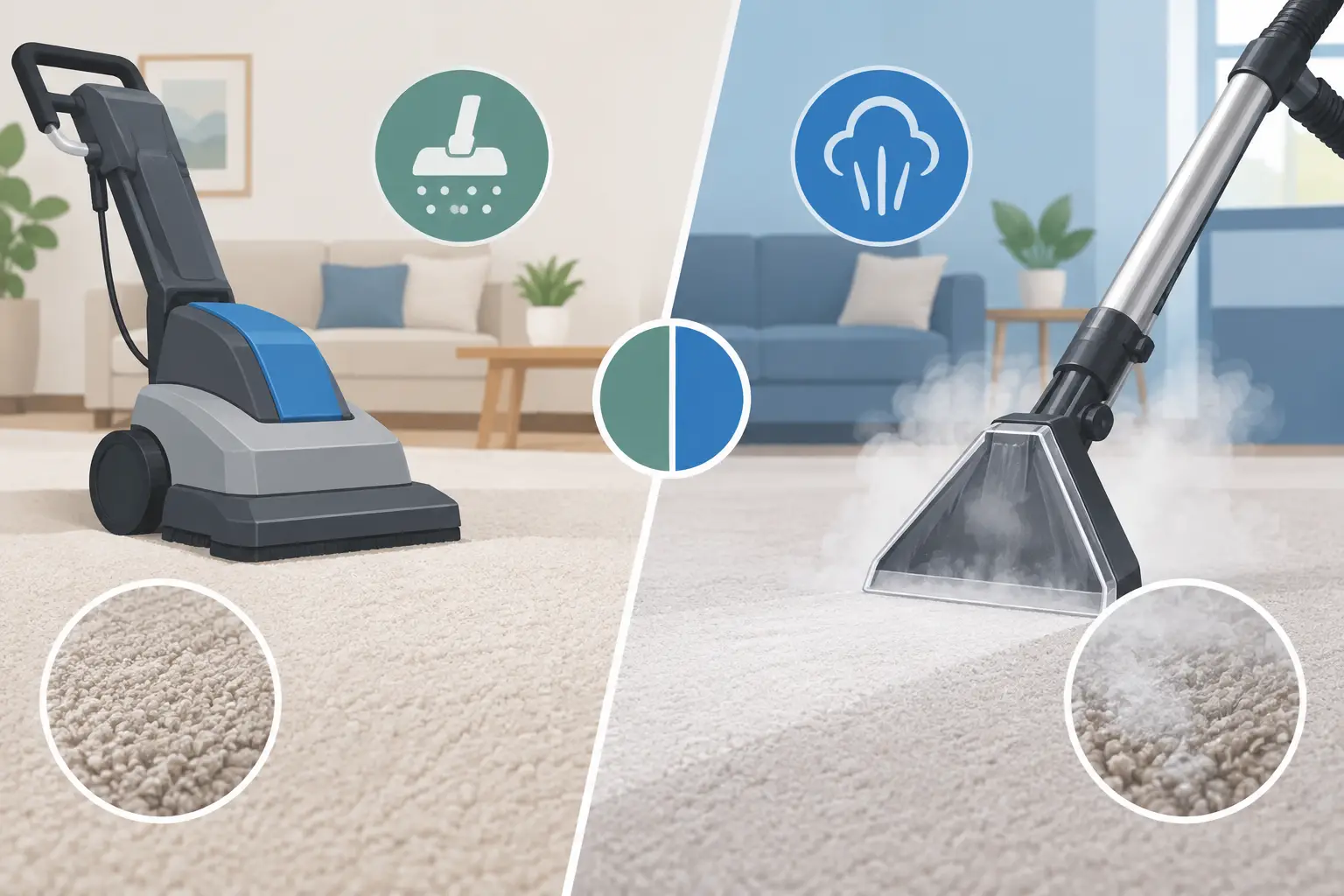
A carpet can look clean on the surface while holding everyday soil, pet hair, spills and fine dust deep in its pile. When it is time for a proper refresh, the choice usually comes down to dry carpet cleaning versus steam. Both methods can deliver excellent results, but the best option depends on your carpet type, the level of soiling, how quickly you need the room back in use and whether there are stubborn stains to address.
For busy households, tenants preparing for an inspection and workplaces that cannot afford long downtime, the right cleaning method is about more than appearance. It is about getting a reliable result without creating unnecessary disruption.
What people mean by dry carpet cleaning
Dry carpet cleaning is a low-moisture method. It does not always mean the carpet is cleaned with no liquid at all. Depending on the system, a technician may use a specialised cleaning solution, absorbent compound or encapsulating product that surrounds and lifts dirt from the fibres.
With compound cleaning, the product is worked into the carpet and then removed with professional vacuum equipment. With encapsulation cleaning, a low-moisture solution helps loosen soil before drying into crystals that are vacuumed away. The common benefit is fast drying – often a matter of hours, and sometimes much sooner depending on ventilation, carpet thickness and humidity.
This makes dry cleaning a practical choice for an office, a busy family room or a rental property where people need to walk on the carpet shortly after the service. It can also suit regular maintenance cleaning, helping prevent dirt from building up over time.
What is steam carpet cleaning?
Despite the name, steam carpet cleaning usually refers to hot water extraction. It uses hot water and a cleaning solution applied under controlled pressure, then extracts the water, dirt and cleaning residue with a powerful vacuum.
The process reaches deep into carpet fibres and is especially useful where carpets have accumulated embedded soil, food spills, muddy footprints or pet-related mess. A skilled cleaner will assess the fibre, use an appropriate pre-treatment where needed and avoid over-wetting the carpet.
Steam cleaning often provides the more intensive clean when a carpet has not been professionally treated for some time. The trade-off is drying time. In suitable conditions, carpets may be dry within several hours, but thick pile, poor airflow, cool weather and heavy cleaning can extend that period. Planning the appointment so windows can be opened or air conditioning can assist with airflow may help.
Dry carpet cleaning versus steam: the key differences
The biggest difference is moisture. Dry carpet cleaning uses minimal moisture and generally allows quicker access to the space. Steam cleaning uses more water but can offer a deeper flush of soil from the carpet.
That does not mean one method is automatically better. A lightly soiled carpet in a meeting room may benefit more from a fast-drying low-moisture clean. A lounge room carpet that has dealt with children, pets and regular foot traffic may need hot water extraction to lift soil that vacuuming and surface treatments cannot remove.
There is also a difference in residue management. Well-performed steam cleaning should extract the cleaning solution thoroughly. Well-performed dry cleaning should remove the compound or crystallised soil effectively. In either case, the quality of the equipment, products and technician matters as much as the method itself. Using the wrong chemical, too much water or poor extraction can leave a carpet feeling stiff, attracting dirt faster or taking longer to dry.
Dry cleaning may be the better fit when time is tight
Low-moisture cleaning is often a sensible choice when you need minimal interruption. Think of an office that must reopen after the weekend, an apartment entryway with constant foot traffic or a household with young children and limited space to avoid damp carpet.
It also works well as part of ongoing carpet care. Regular professional attention, combined with frequent vacuuming, can prevent grit from wearing down fibres. Dirt is abrasive, and every step across a soiled carpet can gradually dull its appearance and shorten its useful life.
However, dry cleaning may not be enough on its own for every heavy stain or deeply soiled carpet. If the carpet has visible traffic lanes, odours or long-standing grime, an intensive hot water extraction service may be recommended instead.
Steam cleaning may be the better fit for deep soil and stains
Hot water extraction is often chosen for a restorative clean. It can be particularly helpful after a busy season, before moving into a property or when carpets have been neglected. Pre-treatment can target common marks such as coffee, soft drink, tracked-in soil and food spills, although no reputable cleaner should promise that every stain will disappear.
Some stains permanently alter carpet dye or fibres. Bleach, certain hair products, pet accidents left untreated and old red wine stains can cause damage that cleaning cannot reverse. An experienced cleaner can explain what is realistic before starting, rather than setting false expectations.
Steam cleaning also requires sensible aftercare. Avoid placing heavy furniture back on damp carpet where possible, and use protective tabs if furniture must be moved. Keep children and pets away until the carpet is dry, particularly if they may transfer dirt back onto the freshly cleaned surface.
Your carpet fibre matters
Before choosing a method, check what the carpet is made from. Synthetic carpets such as nylon and polypropylene are generally durable and commonly suitable for professional hot water extraction or low-moisture methods. Wool and wool blends need more careful handling because excess heat, moisture or unsuitable products can cause shrinkage, browning or texture changes.
This is one reason a quick DIY approach can create more work later. Rental machines can have their place for small spills, but they often lack the extraction power of professional equipment. Over-saturating a carpet can leave it damp for too long and may contribute to odours or issues with the backing.
For delicate, premium or older carpets, ask the cleaning provider how they will assess the fibre and test products where appropriate. The safest method is not necessarily the fastest or strongest one. It is the method that cleans effectively while protecting the carpet.
Consider the reason you are booking a clean
The purpose of the clean should guide the decision. If you are maintaining a tidy home between regular cleaning visits, fast-drying carpet cleaning may be all that is needed. If you are preparing a property for a lease inspection, moving out or welcoming new tenants, the carpet condition may call for a deeper service.
For commercial spaces, timing is often decisive. Low-moisture cleaning can reduce downtime in offices, retail areas and shared workspaces. Yet a periodic steam clean may still be worthwhile for higher-traffic zones, especially near entrances, kitchens and corridors.
A good cleaning team will not treat every carpet the same way. They will consider the fibre, stain type, wear level, room use and drying conditions, then recommend a practical approach. That is how you get value from the service rather than simply choosing the cheapest option on the day.
How to keep carpets cleaner for longer
Professional cleaning works best alongside a simple maintenance routine. Vacuum high-traffic areas at least twice a week, and attend to spills quickly by blotting with a clean white cloth rather than rubbing. Rubbing can push a spill deeper into the fibres and spread the affected area.
Use mats at external doors to catch grit before it reaches the carpet, particularly during Melbourne’s wetter months. If you have pets, regular grooming and prompt accident clean-up can reduce hair, odours and staining. Moving furniture occasionally also helps prevent heavily worn pathways from becoming permanent.
When booking a professional clean, mention any stains, pet issues, delicate rugs or areas of concern beforehand. Clear information helps the cleaner arrive prepared and gives you a better chance of the result you want.
The practical choice between dry carpet cleaning and steam is not about picking a winner. It is about matching the cleaning method to your carpet, your schedule and the level of care the space needs. A trusted professional can help you make that call, so your carpets feel fresher and your home or workplace can get back to normal sooner.