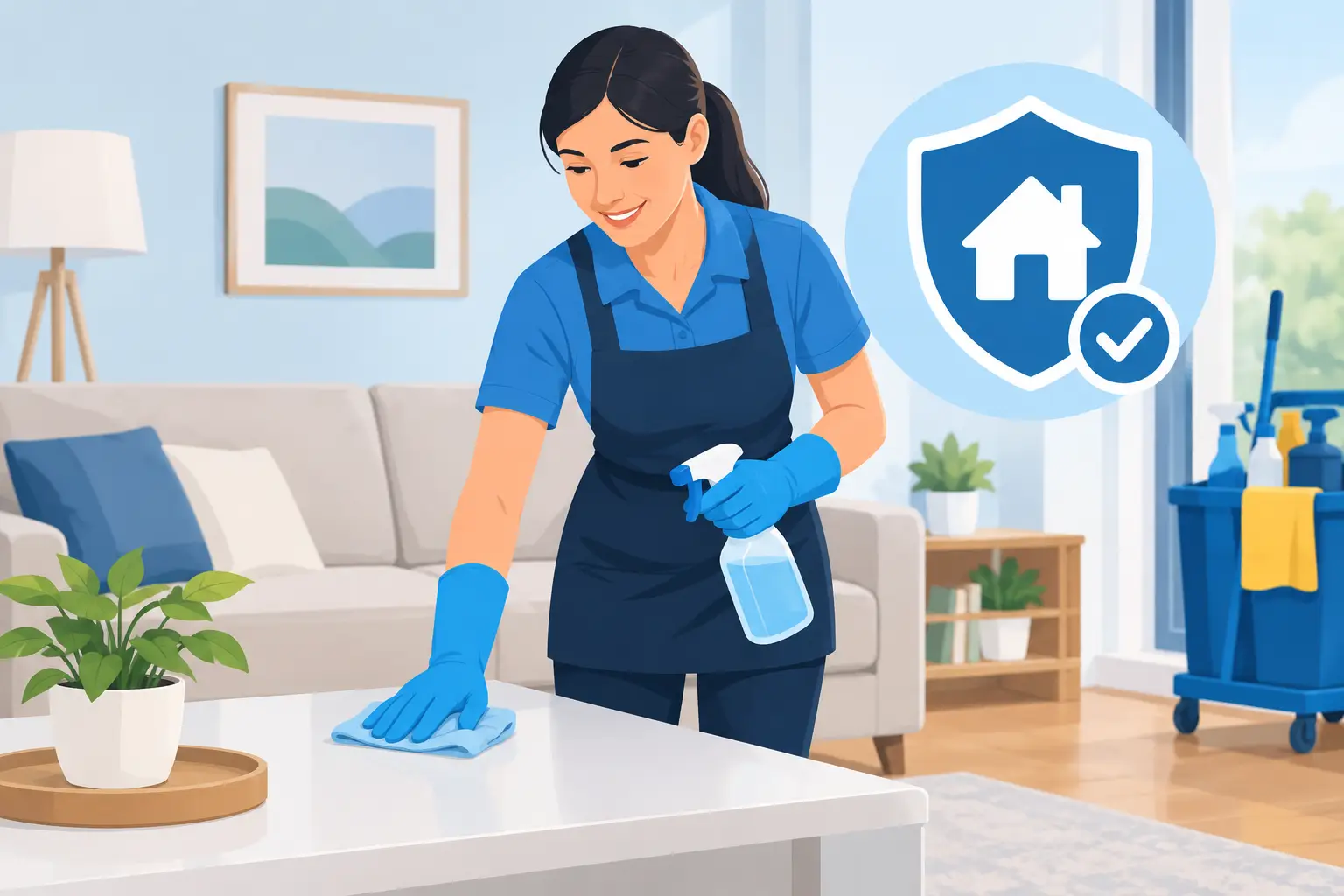
Handing over a key, alarm code or access to your office is a practical decision, but it is also a trust decision. If you are asking why hire insured cleaning staff, the answer is not simply about preparing for the worst. It is about choosing a service that takes responsibility for the spaces, people and belongings in its care.
A professional cleaner can save hours each week, keep a property presentable and take pressure off a busy household or workplace. Insurance adds another layer of reassurance behind that service. It shows that the cleaning provider has thought beyond the job itself and has systems in place should something unexpected happen.
Why hire insured cleaning staff instead of taking a chance?
Cleaning is hands-on work. Staff move through busy rooms, carry equipment, use cleaning products, work around furniture and may be on site while children, pets, visitors or employees are nearby. Even with capable, careful cleaners, accidents can happen.
A spilled product may affect a delicate surface. A vacuum cord could create a trip hazard. An item might be knocked over while a cleaner is working around a crowded room. At a commercial property, a cleaner may be present before staff arrive or after they have left, when security and site access matter just as much as the cleaning result.
An insured cleaning business is better placed to respond responsibly when an incident is covered by its policy. Public liability insurance is commonly relevant where accidental injury or property damage is alleged. Depending on the business structure and its staff arrangements, workers compensation and other appropriate cover may also apply. The exact protection depends on the policy, the event and its terms, so insurance is not a blank cheque or a guarantee that every situation will be covered. It is, however, an essential sign that the provider understands its professional obligations.
For customers, that means less uncertainty. You are not relying solely on a verbal promise from an individual cleaner. You are engaging a business that has made provision for the risks that come with working in other people’s homes and workplaces.
Insurance supports trust, but it is not the only check
It is reasonable to see insurance as a baseline rather than the whole decision. A policy cannot make a cleaner punctual, detail-focused or respectful of your preferences. It does not automatically prove that staff are trained or that the same standard will be delivered every fortnight.
The strongest choice combines appropriate insurance with careful hiring, background checks, training and clear service processes. This is particularly valuable for recurring cleaning, where a cleaner becomes familiar with your home, your priorities and the way you like things done.
Ask how the company selects its team, whether cleaners receive training, and how concerns are handled. Find out whether you can request consistency with the same cleaner for regular visits. These details tell you how the business operates on an ordinary Tuesday, not only how it might respond when something goes wrong.
For a one-off end-of-lease clean or after-renovation service, the scope of work matters too. These jobs can involve more dust, heavier lifting, ladders, windows, carpet equipment or freshly finished surfaces. Confirm that the provider understands the task and has suitable cover and procedures for the work being booked.
What insured cleaners can mean for your home
Your home is personal. Cleaners may work around family photos, electronics, keepsakes, indoor plants, pet areas and rooms that are part of your everyday routine. The right team treats all of it with care, not as just another address on a run sheet.
Insurance gives added confidence when a cleaner is working among the things you value. It can be especially reassuring for households with young children, elderly relatives or pets, where there may be more movement and more to consider during a visit. It also matters in apartment buildings, where a mishap in a shared lift, hallway or car park can affect more than one resident.
That does not mean you need to pack away every item before a professional clean. Your cleaner should be able to work safely in a lived-in home. Still, it is sensible to secure irreplaceable jewellery, cash, sensitive documents and unusually fragile items. Clear communication is useful as well. Let the team know about delicate finishes, areas that are off limits, pets that need particular care, or any hazards around the property.
A caring cleaning team will welcome that information. It helps them plan the visit properly and provide a safer, more considered service.
Protection matters in workplaces too
For business owners and property managers, choosing insured cleaning staff is part of managing the building responsibly. Offices, retail spaces and common areas often have more foot traffic, shared equipment and stricter access arrangements than a private home. A cleaning issue can disrupt staff, tenants or customers and may affect the impression your business makes.
Reliable commercial cleaners work to an agreed scope, whether that includes bathrooms, kitchens, desks, floors, windows or high-touch surfaces. Appropriate insurance sits behind that work and supports the confidence needed to give a provider access outside business hours.
It is worth discussing practical details before the first service: who provides keys or swipe cards, where rubbish should go, which areas contain confidential material, and what to do if a site issue is noticed. A professional provider will not treat these as inconvenient questions. They are part of delivering dependable service.
How to check a cleaning provider with confidence
You do not need to become an insurance expert. A straightforward conversation can reveal a great deal about a cleaning company’s standards. Ask whether it holds current public liability insurance and whether it can provide evidence of cover if needed. If you are arranging a commercial contract, check any insurance requirements set by your building manager or lease.
Then move beyond the paperwork. Ask who will actually attend your property, how the company trains and vets staff, and whether there is a clear point of contact if you need to change instructions. Check how bookings, payments and cancellations work, particularly if you are planning weekly or fortnightly visits.
Be wary of a quote that seems unusually low but comes with no clear business details, no written scope and no answer when you ask about insurance. Lower cost can sometimes suit a simple task, but it may also mean you are accepting more risk and less accountability. The cheapest option is not always the most convenient one when a booking changes, quality slips or a problem needs prompt attention.
For many Melbourne households and businesses, a cleaning service is not a luxury purchase. It is practical support that creates time for work, family, tenants or customers. That support should feel easy to arrange and safe to rely on.
A better standard for regular cleaning
The value of insured, trained staff becomes clearer over time. With repeat visits, cleaners learn the layout of your property, the areas that need extra attention and the routine that works best for you. You gain a consistent result without needing to explain everything from the beginning at every appointment.
House Cleaner approaches regular and one-off services with that longer-term trust in mind. A well-organised provider should make it simple to book, communicate clearly and send people who respect your space. Insurance supports that promise, while capable staff and dependable processes bring it to life.
When you choose a cleaner, look for the quiet signs of professionalism: clear answers, appropriate cover, trained people and a genuine willingness to understand your needs. That is how a cleaning service becomes one less thing to worry about, rather than another risk to manage.
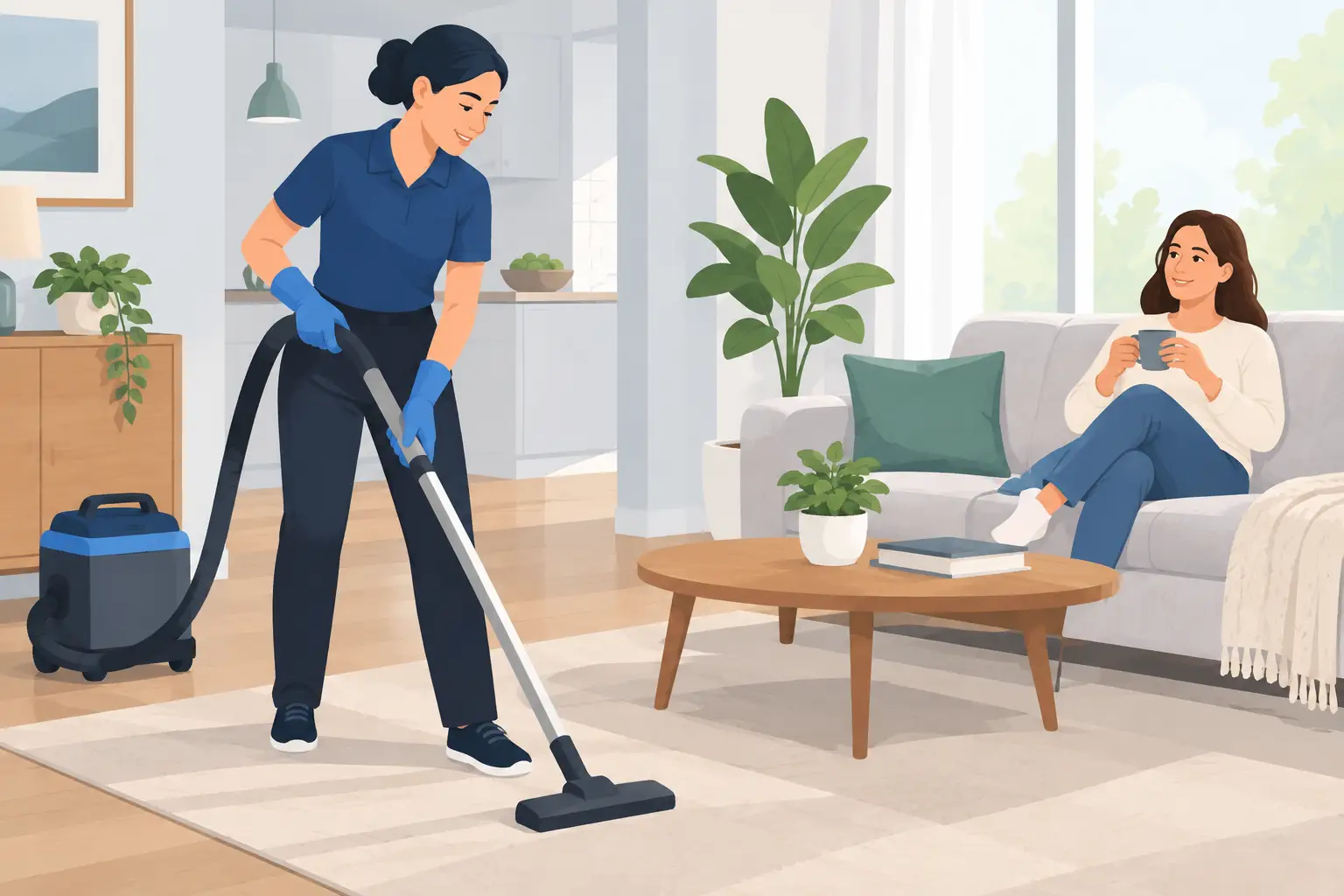
The short answer to “can cleaners work while I’m home?” is yes. Many people are home during a professional clean because they work remotely, care for children, have appointments later in the day, or simply prefer to be there. A good cleaning service will respect your routine and work around you, without making your home feel like a worksite.
Being home can make a first appointment feel more comfortable. You can meet the cleaner, explain what matters most, and see how the service fits into your day. The key is a little planning and clear communication before the visit begins.
Can cleaners work while I’m home without disruption?
They can, particularly when everyone agrees on the plan. Professional cleaners are used to working around households, from busy family mornings to quiet home-office days. They can generally clean one area while you use another, then move through the home in a sensible order.
That said, cleaning does involve vacuuming, moving between rooms and using equipment. If you have an important video meeting, a sleeping baby or a medical appointment at home, let the cleaning team know in advance. They may be able to start in a different room, leave noisy tasks until later, or avoid a particular space at a set time.
For many customers, the easiest arrangement is to work from a study or bedroom while the main living areas, kitchen and bathrooms are cleaned. If you are working from home, headphones and a closed door can make the appointment feel far less intrusive.
Choose the level of contact that suits you
You do not need to follow a cleaner from room to room. In fact, giving the team space to work usually helps them complete the job more efficiently. But you also do not have to disappear for the whole appointment.
A useful middle ground is to greet the cleaner, walk through any priorities, then stay available if questions arise. You might point out a stubborn shower mark, mention that a particular bench surface needs gentle treatment, or explain that one room is not required that day. After that, let the cleaner get on with the work.
If you prefer more privacy, you can set clear boundaries. Close the door to rooms that are off limits, advise which bathroom you will be using, and nominate a place for the cleaner to leave any questions or notes. Clear instructions are not fussy – they help create a service that feels comfortable for everyone.
A first clean may need more discussion
The first visit can take a little more communication than a recurring service. The cleaner is learning the layout of your home, the condition of each space and your preferences. You may want to be home for this appointment so you can establish priorities together.
Once a regular weekly or fortnightly routine is in place, there is often less to discuss. A consistent cleaner who knows your home can follow the agreed plan while you focus on your day. This is one reason many households value having the same cleaner for repeat visits.
Prepare your home, but do not clean before the cleaner arrives
There is no need to scrub the bathroom or vacuum the floors before your appointment. That is what you are booking the service for. A small amount of preparation, however, gives your cleaner better access and helps make the most of the booked time.
Put away loose paperwork, valuables, jewellery and personal items you would rather keep private. Clear dishes from the sink if you want the cleaner to focus on cleaning rather than washing up, and remove clothes, toys or clutter from floors where practical. This is not about presenting a perfect home. It is about allowing the team to clean the surfaces and areas that matter to you.
If there are fragile items, a tricky lock, an alarm, a parking restriction or building access instructions, mention these before the appointment. For Melbourne apartment residents, it is also worth checking whether visitor parking, lift access or concierge arrangements need to be organised in advance.
Privacy, valuables and peace of mind
Inviting someone into your home requires trust. Choose a cleaning provider with trained, vetted and background-checked staff, clear communication and reliable processes. You should feel comfortable asking how the company manages staff selection, service standards and any concerns that may arise.
While a reputable cleaning team will treat your home with care, it is sensible to secure cash, important documents, medications and sentimental valuables. This is good household practice whether you have cleaners, tradespeople, guests or deliveries coming through the door.
Privacy works both ways. If you are home, the cleaner should be able to work without feeling watched or interrupted at every step. Give practical directions at the start, remain approachable, and raise concerns politely if something needs changing. A respectful working relationship leads to better results and a more relaxed experience.
Working from home during a clean
Remote work is one of the most common reasons customers stay home for a cleaning appointment. It can work very well, but timing matters. Vacuuming, bathroom cleaning and kitchen work can create noise, while a cleaner may occasionally need to access the room you are using.
Before the visit, share your meeting times and ask the team to clean your workspace at a quieter point in the appointment. If possible, take calls from one room while the cleaner works in another. For longer meetings, you might schedule the clean outside those hours or use a co-working space for part of the day.
Be realistic about the level of quiet you need. A standard clean is not usually disruptive for an entire morning or afternoon, but it will not be silent. If you need complete concentration for an exam, presentation or confidential call, it may be better to book a time when you can step out.
Children and pets need a simple plan
Children and pets do not stop a cleaner from doing their job, but they do need consideration. Let the team know if a child will be napping or if someone is unwell. Keeping children out of rooms being actively cleaned is the safest option, especially when equipment is in use or floors are still damp.
For pets, decide whether they will stay with you, be placed in a separate room, or be taken out for a walk during the visit. Some pets are relaxed around new people; others can be anxious, territorial or excited by vacuum cleaners. Tell the cleaner about any pet behaviour they should know about, including gates that must remain closed or areas the pet should not enter.
A clear plan protects your pet, your cleaner and the flow of the appointment.
When it may be better to leave the house
There are situations where being out is more practical. An after-renovation clean, end-of-lease clean or detailed deep clean can involve more equipment, more dust removal and longer access to every room. If the home is small, it may be difficult to stay comfortable while the work is underway.
You may also prefer to leave if you find it awkward to have someone cleaning around you, if young children become unsettled, or if you simply want to return to a freshly cleaned home. There is no right answer. The best option is the one that gives you confidence and lets the cleaner work safely and efficiently.
If you plan to be away, make access arrangements clear. Confirm keys, alarms, parking, building entry and the best way to contact you. A dependable provider will explain its process so you know exactly what to expect.
How to make the appointment run smoothly
The most successful cleans are built on straightforward expectations. Confirm the areas to be cleaned, any special requests, the approximate arrival window and whether you will be home. If something changes on the day, send a message as early as possible.
Be specific about priorities rather than assuming they are obvious. For example, say that the bathroom and kitchen need extra attention this week, or that you would prefer the cleaner not to move paperwork on your desk. If a task is outside the usual service, ask about it before the appointment so the team can allow the right time and equipment.
House Cleaner understands that every household runs differently. Whether you are at home, in the office or out for the day, a caring cleaning team should make the process feel organised, respectful and easy.
A clean home should give you time back, not create another thing to manage. Set the boundaries that make you comfortable, communicate what you need, and let the professionals take care of the cleaning while you get on with your day.