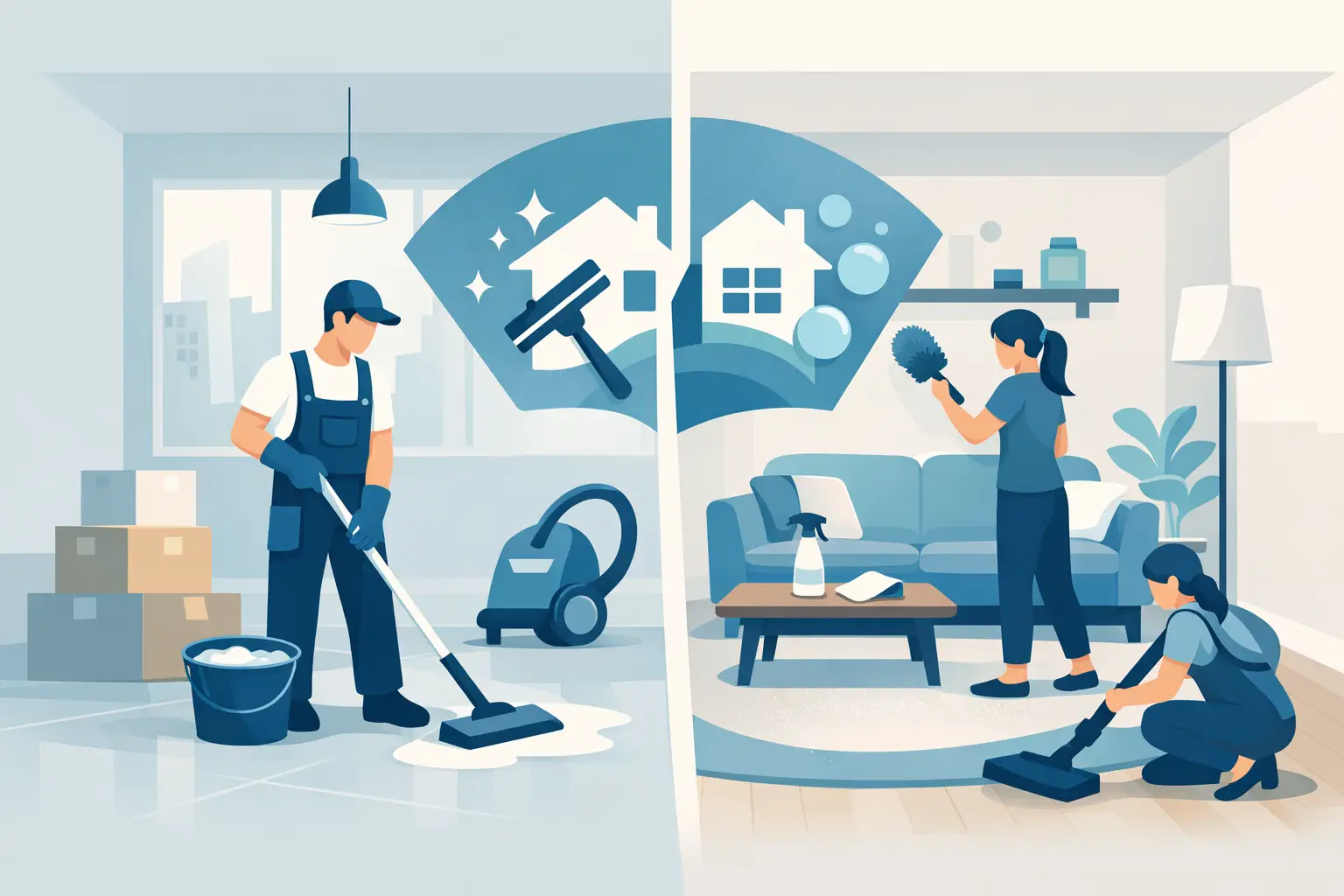
A weekly clean can keep a home pleasant, but it is not designed to satisfy an end-of-lease condition report. That is the central difference in bond cleaning vs regular cleaning. One service maintains your home around day-to-day life; the other is a detailed, property-focused clean completed when every room will be inspected.
For renters, choosing the right service can affect how confidently you hand back the keys. For homeowners, it can prevent paying for an intensive move-out clean when recurring support is all that is needed. The answer is not that one type of cleaning is better. It depends on the condition of the property, the purpose of the clean and the standard you need to meet.
What is regular cleaning?
Regular cleaning is the practical service that helps a home stay clean, comfortable and manageable between busy weeks. It is commonly booked weekly or fortnightly and focuses on the areas that gather everyday dust, crumbs, fingerprints and clutter.
A typical regular clean includes vacuuming and mopping floors, dusting accessible surfaces, cleaning bathrooms and kitchens, emptying rubbish bins, and tidying the presentation of key rooms. It is designed around normal household use. Someone may still be cooking, working from home, raising children or welcoming guests while the service continues in the background.
The value is consistency. With a familiar cleaning routine and, where possible, the same cleaner for repeat visits, you do not have to spend each weekend catching up on bathrooms, floors and kitchen mess. Regular cleaning also makes larger cleaning jobs less overwhelming because grime is not being allowed to build up for months.
That said, regular cleaning does have limits. It will not usually include inside ovens, detailed window tracks, wall spot cleaning throughout the property, deep rangehood degreasing, carpet stain treatment or cleaning behind large furniture and appliances. These tasks take more time, more equipment and a different level of attention.
What is bond cleaning?
Bond cleaning, often called end-of-lease cleaning or vacate cleaning, is a detailed clean carried out when a tenant is moving out of a rental property. Its purpose is to return the home to a clean condition that meets the expectations set out in the entry condition report, lease agreement and property manager’s final inspection requirements.
Unlike a maintenance clean, bond cleaning addresses the places that are easy to overlook while living in a home. Think accumulated grease inside the oven, soap residue on shower screens, dust in skirting boards, marks on walls, grime in cupboard interiors and debris caught in tracks, vents and corners.
In Australia, the exact standard can vary by state, lease terms and the property’s condition when you moved in. A tenant is generally expected to leave the premises reasonably clean and in a comparable condition to the start of the tenancy, allowing for fair wear and tear. Cleaning cannot reverse age-related wear, damaged surfaces or issues that were already recorded on the entry report. It can, however, ensure that dirt, neglect and overlooked areas do not complicate the handover.
Bond cleaning vs regular cleaning: the key differences
The clearest difference is the objective. Regular cleaning supports a clean home while you live or work in it. Bond cleaning prepares an empty or nearly empty property for inspection after a tenancy ends.
The scope is also much broader with a bond clean. A regular cleaner may wipe the outside of kitchen cabinetry and clean visible benchtops. A bond clean usually involves cleaning cupboard shelves and drawers, tackling built-up grease, addressing splashbacks in detail and cleaning the oven according to the service agreement. Bathrooms receive more than a surface refresh, with close attention given to grout, fittings, screens, basins, toilets and exhaust areas.
Time matters too. A recurring clean is planned to fit within a scheduled visit and prioritises the rooms that make the greatest difference to everyday comfort. Bond cleaning can take substantially longer because each room needs to be assessed from an inspector’s perspective. The size of the property, the number of bathrooms, pets, smokers, the length of the tenancy and the level of build-up will all affect the work required.
Finally, the property itself is usually prepared differently. Regular cleaning often happens around furniture, appliances and household belongings. Bond cleaning is most effective when rooms are emptied, cupboards are cleared and access is available to all surfaces. Trying to complete a full vacate clean around boxes, beds and packed wardrobes can leave important areas inaccessible.
What a thorough end-of-lease clean may cover
A proper bond-cleaning scope should be clear before the booking, rather than assumed. In most homes, the focus includes detailed kitchen cleaning, bathrooms, bedrooms, living areas, floors, internal cupboards, doors, skirting boards, accessible light fittings and internal windows where included.
Some services are separate because they require specialised equipment, additional time or a different trade. Carpet steam cleaning, external window cleaning, blind or curtain cleaning, pest treatment, high-pressure washing and mould remediation may not automatically be included in a standard bond-cleaning quote. Your property manager may also request invoices for particular services, especially carpet cleaning where it is permitted under your lease and relevant tenancy rules.
Ask for the scope in writing and compare it with your entry condition report. This is more useful than choosing based on price alone. A lower quote can become frustrating if it excludes the oven, windows, garage, balcony or another part of the property that your agent expects to be cleaned.
When regular cleaning is the smarter choice
If you are staying in the property and want more time back in your week, regular cleaning is usually the better fit. It is ideal for busy families, professionals, older households, apartment residents and anyone who would rather come home to clean floors and bathrooms without doing the work themselves.
It also works well before hosting visitors, after a hectic period at work or as a reset after school holidays. However, be upfront about heavier tasks. If the oven has not been cleaned in a year or the shower has stubborn soap scum, a deep-cleaning add-on may be more realistic than expecting a standard fortnightly visit to cover it all.
For commercial spaces, the same principle applies. Ongoing office cleaning maintains a professional environment, while a vacate or post-renovation clean is designed for a more intensive handover or reset.
How to prepare for bond cleaning
Good preparation protects your time and helps cleaners focus on actual cleaning instead of sorting through belongings. Remove all personal items from cupboards, drawers, wardrobes, the fridge and storage areas. Take rubbish away, defrost the freezer if needed and ensure water and electricity remain connected for the appointment.
Before the clean, photograph the property and review your entry report. Make a note of pre-existing damage, fair wear and tear, and any areas your property manager has specifically raised. If repairs are required, arrange them separately. Cleaning teams can remove dirt and residue, but they cannot repair chipped tiles, damaged blinds, broken fittings or worn carpet.
It is also wise to confirm access arrangements. Let the cleaner know about parking, lifts, keys, gates, pets and any site restrictions. Clear communication at this stage reduces stress on moving day, when schedules can change quickly.
Choosing a cleaning service with confidence
Whether you need a fortnightly clean or a full end-of-lease service, look for a provider that explains what is included, listens to the condition of your property and gives you a clear process. Trained, vetted cleaners and straightforward booking help make a demanding task feel more manageable.
At House Cleaner, the focus is on dependable service that fits the job at hand, from recurring household cleaning to detailed move-in and move-out support. Sharing your property size, timing and specific concerns upfront makes it easier to arrange the right level of care.
A clean handover starts well before inspection day. Keep your entry report close, clear the property properly and book the service that matches the result you need. That small amount of planning can make the final walk-through feel far less stressful.