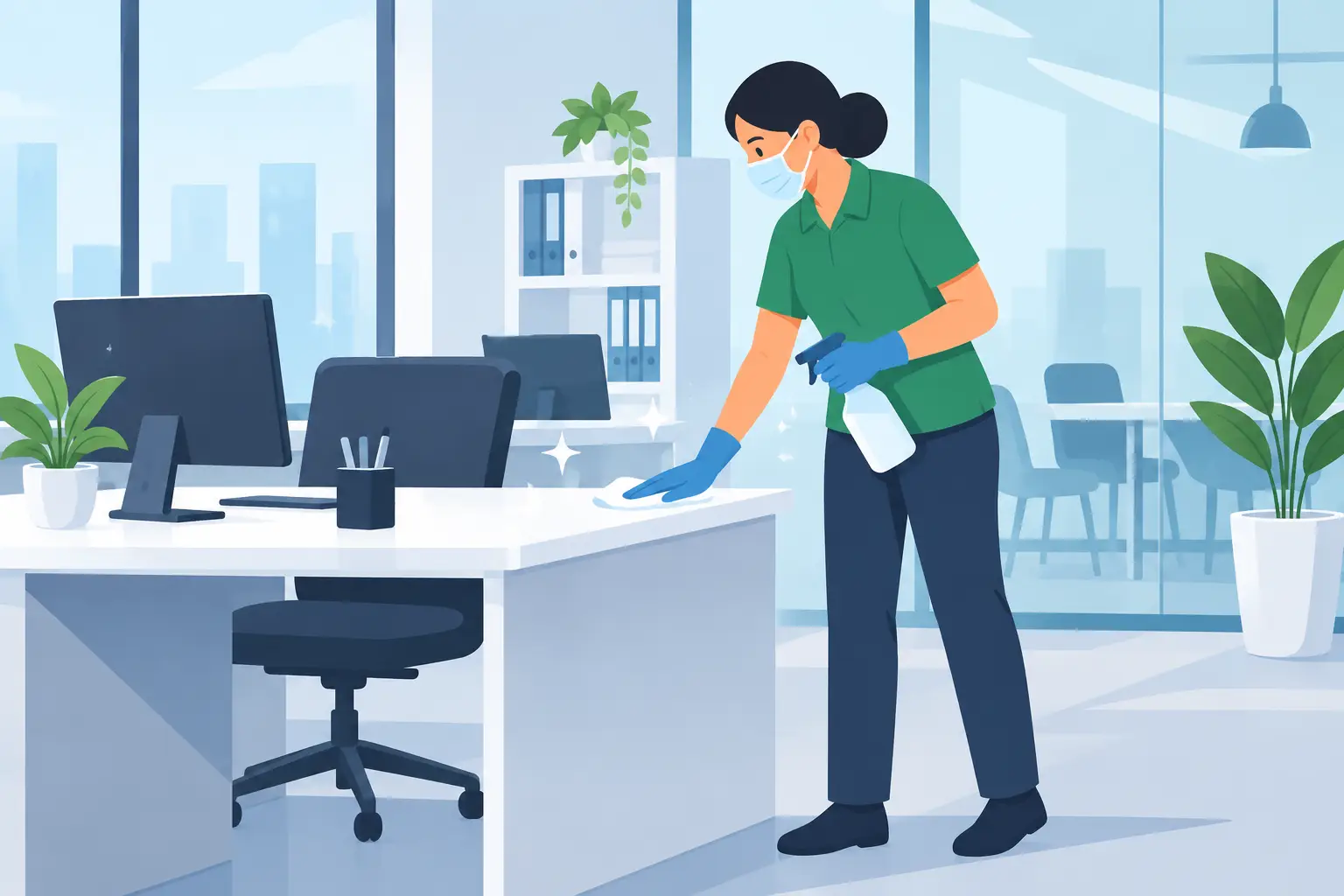
The meeting room table can look perfectly clean at 9 am, yet have been touched by dozens of hands before lunch. Shared keyboards, kitchen benches, lift buttons, tap handles and bathroom fittings all carry the normal traffic of a busy workplace. That is where office sanitising benefits become practical rather than just a nice extra: they help create a workplace people can use with greater confidence every day.
For Melbourne businesses, regular office sanitising is not about chasing a spotless appearance alone. It supports the health, comfort and professional standards that staff, visitors and clients notice. The right approach also needs to fit the way your workplace operates, whether you run a small studio, a client-facing practice or a larger office with rotating teams.
What office sanitising actually adds to cleaning
Cleaning and sanitising work together, but they are not the same job. Cleaning removes visible dirt, dust, crumbs, spills and general build-up from surfaces. Sanitising uses suitable products and processes on cleaned high-touch surfaces to reduce germs to safer levels.
A desk may need a proper wipe to remove coffee marks and dust before it is sanitised effectively. Similarly, a sanitising spray is not a replacement for vacuuming carpets, emptying rubbish bins or cleaning bathrooms thoroughly. A reliable commercial cleaning plan covers both the presentation of the office and the hygiene of the surfaces people touch most.
This distinction matters because workplaces can become inconsistent when sanitising is left to whoever has a spare minute. Staff may wipe down their own workstation, but shared zones often receive less attention. A planned service gives those areas the same dependable standard each visit.
The everyday office sanitising benefits for your team
Fewer hygiene concerns around shared surfaces
Most office activity involves shared equipment and common areas. Think of the printer touchscreen, kitchen fridge handle, kettle, boardroom remote, door handles and bathroom taps. These are touched repeatedly by different people, including visitors and delivery drivers.
Routine sanitising gives special attention to these points of contact. It can help reduce the transfer of germs across the workplace, particularly during periods when colds, flu and other seasonal illnesses are circulating. No cleaning service can promise that people will not get sick, but a consistently clean environment is a sensible part of a wider workplace hygiene plan.
Greater comfort and confidence at work
People notice when an office feels cared for. A clean bathroom, fresh kitchen and tidy desk area send a quiet but clear message that the business respects the people who work there. That can be especially meaningful in shared offices, where staff may have different expectations about cleaning and personal hygiene.
Confidence also matters for visitors. Clients entering a reception area with marked glass, overflowing bins or a neglected coffee station may question the care taken in other parts of the business. Regular sanitising, combined with detailed cleaning, helps the space feel ready for meetings rather than merely functional.
Better support for focus and productivity
Untidy, poorly maintained spaces create small distractions throughout the day. Someone has to clear the kitchen bench before making tea, find an empty meeting room that is ready for use, or deal with a spill near the photocopier. These tasks may seem minor, but they pull attention away from work and can become a source of frustration.
A regular cleaning and sanitising routine keeps common spaces usable. Staff can arrive, settle in and focus on their responsibilities instead of wondering whether the kitchen or bathroom has been looked after. For busy teams, that predictability is often more valuable than an occasional intensive clean.
A more professional client experience
For businesses that welcome customers, suppliers or job candidates, the office is part of the service. The standard of the reception desk, meeting room and amenities can influence how professional and organised your business appears.
Sanitising is mostly invisible when it is done well, but the outcome is not. Freshly maintained shared areas, clean touchpoints and pleasant amenities help visitors feel at ease. This is particularly useful for medical-adjacent offices, property agencies, consultancies, showrooms and any business where face-to-face trust matters.
Where a sanitising routine delivers the most value
Not every surface needs the same level of attention. The most effective office sanitising plans focus on how people actually move through the space. High-touch zones should be addressed frequently, while lower-use areas can be included in a regular broader cleaning schedule.
In most offices, priorities include entry handles and intercoms, reception counters, switches, shared desks and keyboards, meeting room equipment, kitchen appliances, bathroom fittings and communal touchscreens. The cleaning team should also consider the features specific to your premises, such as locker doors, swipe-card readers or hot-desking stations.
Frequency depends on foot traffic, office size and the type of work you do. A small office where each person has a dedicated desk may need a different approach from a busy shared workspace with daily visitors. Weekly or fortnightly professional cleaning can provide a dependable baseline, while high-traffic areas may benefit from more frequent attention or simple staff-led wipe-downs between services.
How to build a practical office hygiene plan
A workable plan starts with a realistic view of the office, rather than a one-size-fits-all checklist. Walk through the space at a busy time of day and identify where people queue, eat, meet and share equipment. Those patterns tell you far more than the floor plan alone.
Next, separate daily responsibilities from professional cleaning tasks. Staff can help by clearing dishes, disposing of rubbish, reporting spills promptly and keeping personal desks manageable. A trained cleaning team can then carry out the deeper, more consistent work, including detailed bathroom cleaning, floor care, dust removal and sanitising of shared touchpoints.
Clear communication is essential. If there are areas containing confidential paperwork, sensitive equipment or restricted access, explain these requirements before service begins. The best recurring arrangement is one where the cleaning team understands your workplace standards and can deliver the same quality without needing to be managed each visit.
House Cleaner works with commercial clients who want that consistency, with trained and vetted cleaners who can support regular office cleaning around your operating hours. A recurring service can be adjusted as your team grows, moves premises or starts using spaces differently.
Sanitising is not a substitute for good workplace habits
Professional cleaning makes a major difference, but it works best alongside everyday habits. Encourage staff to wash hands properly, cover coughs and sneezes, avoid coming into the office when unwell where possible, and keep food preparation areas tidy. Provide suitable hand soap, paper towel or hand-drying facilities, and make it easy to report a spill or maintenance issue.
It is also worth avoiding harsh products used too often or incorrectly. Strong-smelling chemicals can be unpleasant in enclosed offices and may not be suitable for every surface. A professional cleaner can select appropriate products and methods for the materials in your workplace, from laminate desks and glass partitions to stone benches and electronics.
Choosing the right level of service
The aim is not to sanitise every centimetre of the office constantly. It is to maintain the areas that affect hygiene, comfort and presentation at a frequency that makes sense for your team. An office with five employees and limited visitors will have different needs from a customer-facing business with a constantly busy reception area.
Look for a cleaning partner that asks practical questions about your premises, access times and priorities. Consistent cleaners, clear service expectations and easy booking make it simpler to maintain standards over time. This is often more effective than reacting only when the office starts to look neglected.
A well-sanitised office gives staff one less thing to think about. When the shared spaces are clean, cared for and ready for use, your team can get on with the work that matters.