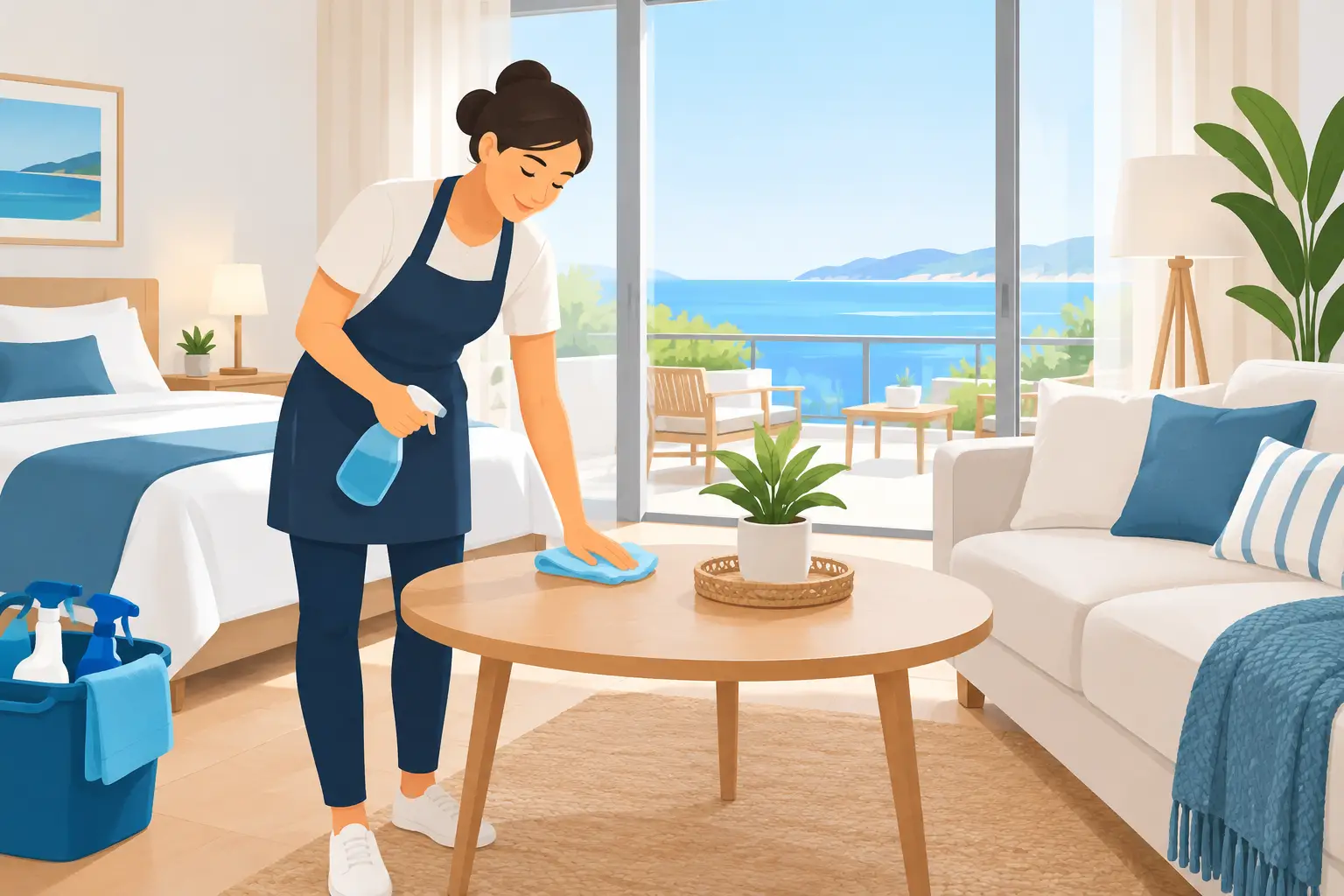
A five-star stay can be undone before a guest has put down their bags. A stray hair in the shower, crumbs in a drawer or a bin that has not been emptied sends a clear message: this property has not been cared for. Reliable holiday rental cleaning protects your guest reviews, your booking calendar and the standard of your property between every stay.
For hosts and property managers, a holiday rental is not cleaned in the same way as an occupied home. It needs to look freshly prepared, feel hygienic and be ready within a fixed turnover window. That calls for an organised process, careful checks and cleaners who understand that the small details are often the ones guests notice first.
What holiday rental cleaning should include
A proper holiday rental turnover begins with a full reset of the property. The previous guest should leave no trace, while the next guest should walk into a clean, welcoming space that feels ready for their arrival.
In the kitchen, this means more than wiping the benchtops. Appliances, splashbacks, sinks, cupboard fronts, handles and dining surfaces all need attention. Cleaners should check the fridge, microwave, dishwasher and toaster for spills, crumbs or forgotten food. Rubbish should be removed, bins sanitised and new liners fitted.
Bathrooms require close attention because they are a major factor in guest satisfaction. Toilets, showers, screens, taps, basins, mirrors and floors should be cleaned and disinfected. Soap residue on glass, water marks around taps and hair in the drain can make an otherwise clean bathroom feel neglected. Fresh toilet paper, hand soap and clean towels complete the reset.
Bedrooms and living areas should be dusted, vacuumed and checked from a guest’s point of view. Bed linen needs to be changed, beds neatly made and cushions arranged. Cleaners should inspect under beds, behind doors and around furniture, where dropped items and dust often collect. High-touch areas such as light switches, remotes, door handles and railings also deserve regular sanitising.
For a consistent standard, a turnover service should cover these essentials:
- Cleaning and sanitising kitchens, bathrooms and high-touch surfaces
- Vacuuming and mopping all appropriate floors
- Changing bed linen and replacing towels where supplied
- Removing rubbish and checking for guest belongings
- Restocking agreed consumables, such as toilet paper, tea, coffee and basic toiletries
- Reporting damage, maintenance issues or missing inventory promptly
The exact scope depends on the property and the service you promise guests. A compact inner-city apartment may need a fast, detailed turnaround, while a larger family home may include multiple bathrooms, outdoor entertaining areas and more linen. What should not change is the quality check before the property is marked ready.
Why turnover timing matters
Holiday rental cleaning works to a deadline. Guests may check out at 10 am and the next arrival may be due from 3 pm, leaving little room for missed instructions or delayed communication. If the property is not ready, hosts face unnecessary stress and guests may begin their stay frustrated.
A dependable cleaning team plans around this reality. They confirm access arrangements, understand the required completion time and work through a clear checklist rather than relying on memory. This matters even more during busy weekends, school holidays and major Melbourne events, when back-to-back bookings can leave no margin for error.
Speed matters, but rushing is not the answer. The aim is an efficient clean that still catches the details: fingerprints on the balcony door, smudges on a mirror, a stained cushion or an empty hand-soap dispenser. A cleaner who simply moves quickly may finish on time but leave behind issues that lead to complaints. The right service balances pace with care.
Linen can make or break the guest experience
Fresh, crisp linen is one of the clearest signs that a property has been prepared properly. Sheets should be changed after every stay, towels should be clean and dry, and beds should be made consistently. If you manage several properties or frequent bookings, linen handling can quickly become one of the most demanding parts of the job.
Some hosts supply enough linen for the cleaner to change beds on site, while others use a separate laundry arrangement. Either approach can work, provided there is a reliable system for collecting used items, checking for stains and damage, and ensuring the correct sizes are available for each room. Running short on fitted sheets or bath towels on a turnover day creates problems that are difficult to solve at the last minute.
It is also worth keeping spare protectors, pillows and a basic linen reserve at the property or in a clearly managed storage area. This gives your team a practical backup when an item is damaged or cannot be used.
The difference between a turnover clean and a deep clean
A turnover clean keeps the property ready between guests. It focuses on hygiene, presentation and resetting each room. However, even the best routine service will not replace periodic deeper work.
A deep clean tackles the areas that gradually build up grime: oven interiors, rangehood filters, skirting boards, window tracks, grout, behind furniture, inside cupboards and detailed upholstery or carpet care. How often it is needed depends on the property, the number of bookings, whether pets are allowed and the type of guests you attract.
For many holiday rentals, scheduling a deeper clean every few months is sensible, with extra attention after a long peak season. Properties near the beach may need more frequent cleaning of sand, tracks and outdoor areas. A home used by larger groups may need closer inspection of walls, dining chairs and appliances. Treating deep cleaning as planned maintenance is usually less costly and less disruptive than waiting until the property looks tired.
Presentation is part of the clean
Guests judge a property within seconds, often before they have explored the rooms. A clean entry, a tidy outdoor area and an inviting living space set the tone. Cleaning staff should return furniture to its intended position, straighten blinds, check that lamps are working and make sure the property smells fresh without being overwhelmed by strong fragrances.
This is not about adding unnecessary styling. It is about removing the signs of the last stay and presenting the home as advertised. If guests expect a balcony, courtyard or barbecue, these areas need to be included in the agreed cleaning plan. Dusty outdoor furniture or an unclean barbecue can affect the guest experience just as much as an untidy kitchen.
Build a system that protects your property
The most successful hosts do not rely on verbal instructions alone. They document what good looks like for each property. A room-by-room checklist helps cleaners work consistently, particularly where a home has specific features, access requirements or stored supplies.
Keep instructions practical. Note where linen is stored, which cupboards are private, how rubbish is handled, where consumables are kept and what must be photographed or reported. If a cleaner finds damage, a missing remote or a maintenance concern, there should be a simple process for letting the host or property manager know straight away.
Inventory checks are also useful. You do not need to count every teaspoon after every booking, but regular checks of key items can prevent awkward surprises. Focus on items guests rely on: remotes, keys, Wi-Fi details, hairdryers, kitchen basics, smoke alarm condition and sufficient supplies for the booking.
Professional cleaning support is especially valuable when you manage more than one property, live away from the rental or have limited time between bookings. A trained, vetted team brings consistency and accountability to a task that has a direct impact on reviews. House Cleaner can support Melbourne hosts with practical, reliable cleaning tailored to the needs of each property and turnover schedule.
Choosing the right cleaning partner
Before engaging a cleaner, be clear about what you need from the service. Ask how they manage short turnaround times, whether they follow a property-specific checklist and how they report damage or maintenance issues. Confirm who supplies cleaning products, linen and consumables, as assumptions in these areas often cause avoidable problems.
Reliability should carry as much weight as price. A lower quote does not help if the cleaner cancels on a busy Friday, misses key tasks or cannot communicate when something goes wrong. Look for a service with trained staff, clear booking arrangements and a consistent approach to quality.
A good working relationship also improves over time. When the same team becomes familiar with your property, they learn its layout, standards and common trouble spots. That familiarity makes each turnover more efficient while helping maintain the care guests expect.
Your holiday rental is part of a guest’s time away, whether they are visiting family, travelling for work or taking a weekend break. Giving them a properly cleaned, well-prepared home is one of the most practical ways to earn their trust before they have even unpacked.