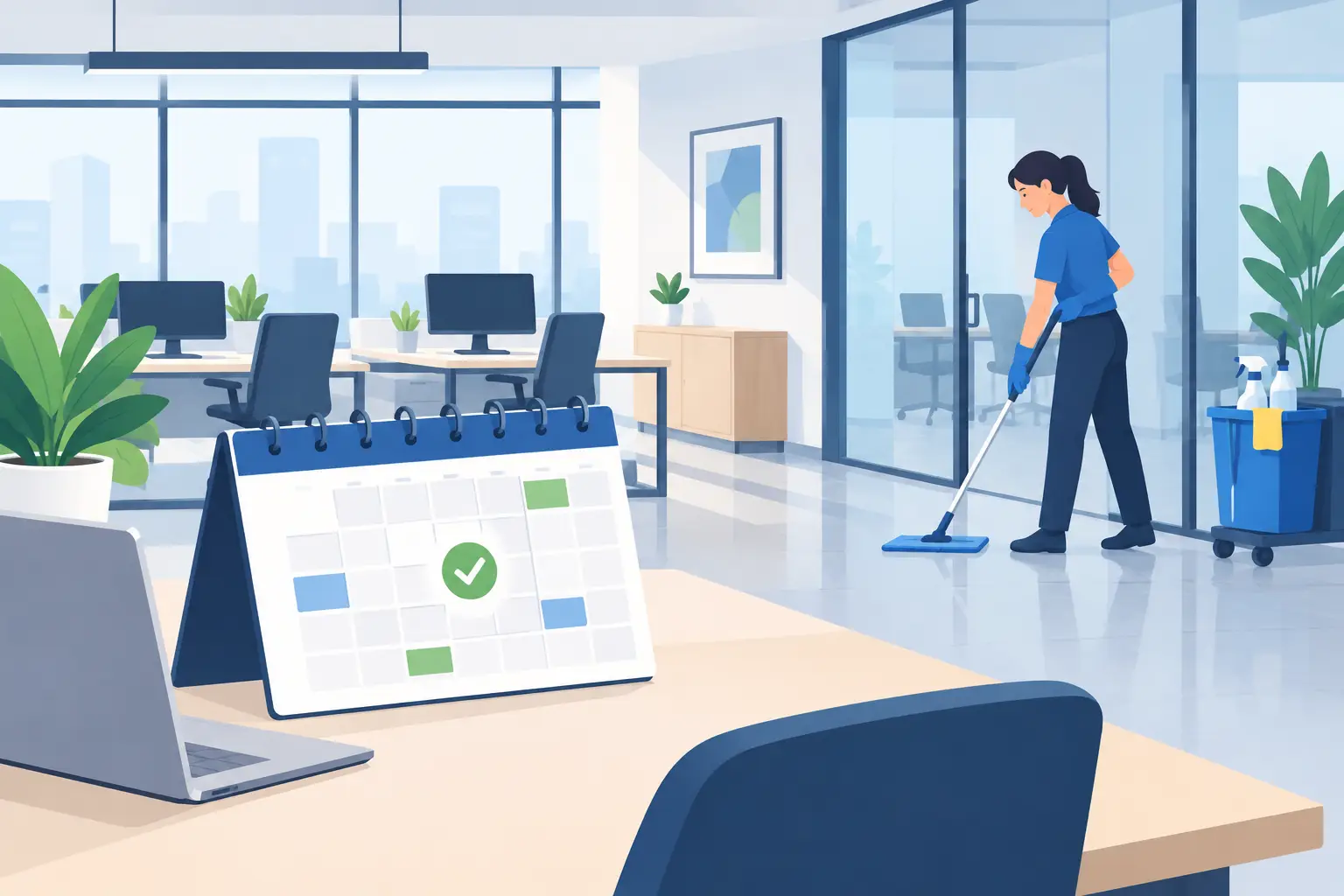
The best office cleaning schedule is usually the one no one notices. Rubbish is removed before it overflows, bathrooms are fresh at the start of the day, and desks, floors and shared spaces stay presentable without interrupting your team. Knowing how to schedule office cleaning means balancing hygiene, budget, building access and the way your workplace actually operates.
For a small office, a regular evening clean may be all that is needed. A busy workplace with client traffic, shared kitchens and multiple bathrooms may need several visits a week, plus occasional deeper cleaning. The right plan should support your staff and visitors, not force your business to work around the cleaner.
Start with the way your office is used
Before choosing days or times, look at the reality of your workplace. Count more than desks. Consider how many people are in the office on a normal day, whether employees hot-desk, how often clients visit, and which areas receive the heaviest use.
The kitchen, bathrooms, reception, meeting rooms and entry areas normally set the cleaning standard for the whole office. A modest team can create a high volume of dishes, bins and spills if staff regularly eat lunch onsite. Likewise, a reception area may need more attention than a large back-office space if it is the first thing visitors see.
It also helps to identify your busiest periods. If Monday mornings involve client meetings or Friday afternoons are quiet, those patterns should influence the cleaning timetable. A schedule based only on square metres can miss what makes an office feel clean and well cared for.
Separate daily needs from periodic work
Some tasks need regular attention because they affect hygiene, odour or appearance straight away. Others can be scheduled fortnightly, monthly or as required. Separating these jobs prevents overpaying for unnecessary work while making sure essential areas are never overlooked.
Your recurring office clean may include:
Emptying rubbish and recycling bins
Vacuuming or mopping floors in high-traffic areas
Cleaning and sanitising bathrooms
Wiping kitchen benches, sinks and shared surfaces
Tidying reception and meeting spaces
Periodic work can include detailed dusting, internal window cleaning, carpet cleaning, curtain cleaning or a more thorough kitchen clean. These services are valuable, but they do not always need to be part of every visit.
How to schedule office cleaning at the right frequency
There is no single frequency that suits every workplace. A good starting point is to match cleaning visits to foot traffic and shared facilities, then adjust once you see how the office performs between cleans.
A small office with a few staff members and limited visitor traffic may be comfortable with weekly cleaning. This is often enough when staff keep their own desks tidy and the kitchen is lightly used. For many professional offices, two or three cleans a week provide a better balance, particularly where bathrooms, kitchens and client-facing areas need to remain consistently fresh.
Daily cleaning is generally suited to high-traffic offices, medical or customer-facing environments, larger teams, or workplaces where presentation is central to the customer experience. It can also make sense during busy seasons, after a major event, or when more staff are attending the office than usual.
Fortnightly service can work for low-occupancy spaces, but it requires everyone onsite to take more responsibility for bins, dishes and spills in between. If the office begins to look tired several days before the next visit, increase the frequency rather than asking cleaners to complete an unrealistic amount of work in one session.
Choose a time that protects productivity
After-hours cleaning is popular because it allows cleaners to work efficiently without moving around active meetings, phone calls or focused work. A morning clean before staff arrive can also work well, especially if you want bathrooms and reception areas freshly prepared for the day.
However, after-hours access is not always practical. Some offices have security restrictions, shared building rules or alarms that require a staff member to be present. In those cases, daytime cleaning can be effective if it is planned around quieter periods and the scope focuses on low-disruption tasks.
For example, a cleaner may service bathrooms, empty bins and tidy common areas during a mid-afternoon lull, while noisy vacuuming or detailed floor care is reserved for after hours. Be clear about which activities cannot happen during meetings or customer appointments. A reliable cleaning provider will build those preferences into the service plan.
Confirm access and security before the first visit
Cleaning schedules often fail for simple operational reasons: no one has arranged a key, an alarm code has changed, parking is unavailable, or building management limits lift access after a certain time. Confirm these details before the first service, then keep them current whenever your office arrangements change.
Decide who will be the primary contact and who can be called if there is an access issue. If cleaners are attending outside business hours, provide clear instructions for entry, alarm procedures, restricted areas and how the premises should be secured on departure. This protects your office, your team and the cleaning staff.
Set a clear scope, not just a cleaning day
A recurring booking becomes dependable when everyone understands what is included. Rather than simply asking for the office to be cleaned, outline the rooms, priorities and any areas that require special care. This is especially useful in workplaces with boardrooms, storage areas, staff-only spaces or expensive equipment.
Be specific about consumables as well. Some businesses supply bin liners, hand soap, paper towel and toilet paper, while others ask the cleaning team to manage these items. Neither approach is wrong, but it should be agreed upfront so bathrooms and kitchens do not run short unexpectedly.
It is also wise to discuss desks and personal belongings. Many offices prefer cleaners not to move papers, laptops or private files. A practical policy is to clean shared desks only when they are clear, while staff remain responsible for putting confidential material away before each visit. This keeps cleaning thorough without compromising privacy or creating frustration.
Build flexibility into your recurring booking
Your office will not look the same every week. Team events, visitor days, seasonal workloads, renovations and staff changes can all affect what your space needs. A fixed cleaning day is helpful, but the service should be easy to adjust when circumstances change.
Let your cleaner know ahead of time about functions, extra guests or periods when parts of the office will be closed. You may need an additional visit after an event, a deeper clean following renovation work, or carpet cleaning before an important client presentation. Planning these jobs early gives you better choice of times and avoids last-minute pressure.
For Melbourne offices, consider practical access issues as well. CBD parking, building loading zones and lift bookings can affect the most efficient service window. A professional provider can help organise a realistic arrival time rather than making promises that do not suit the building.
Review the schedule after the first few visits
A cleaning plan should improve through use. After the first two or three visits, walk through the office before staff arrive or at the end of the day. Check the areas that matter most: bathrooms, kitchen surfaces, floors, bins, entry points and meeting rooms.
If one area is consistently needing attention between visits, explain what you are seeing. The solution may be a small change to the checklist, a different cleaning day or a more suitable frequency. Equally, if an area is barely used, the service can be adjusted to focus your budget where it has the most impact.
Consistent cleaners make this process easier. When the same trusted team becomes familiar with your workplace, they understand your priorities, notice changes and can maintain a reliable standard without repeated instructions. House Cleaner provides trained, vetted cleaners and recurring service options designed to make that consistency straightforward.
A well-planned office cleaning schedule gives your team one less thing to manage. Choose a frequency that reflects real use, make access simple, and keep communication open. The result is a workplace that feels ready for staff, clients and whatever the week brings.