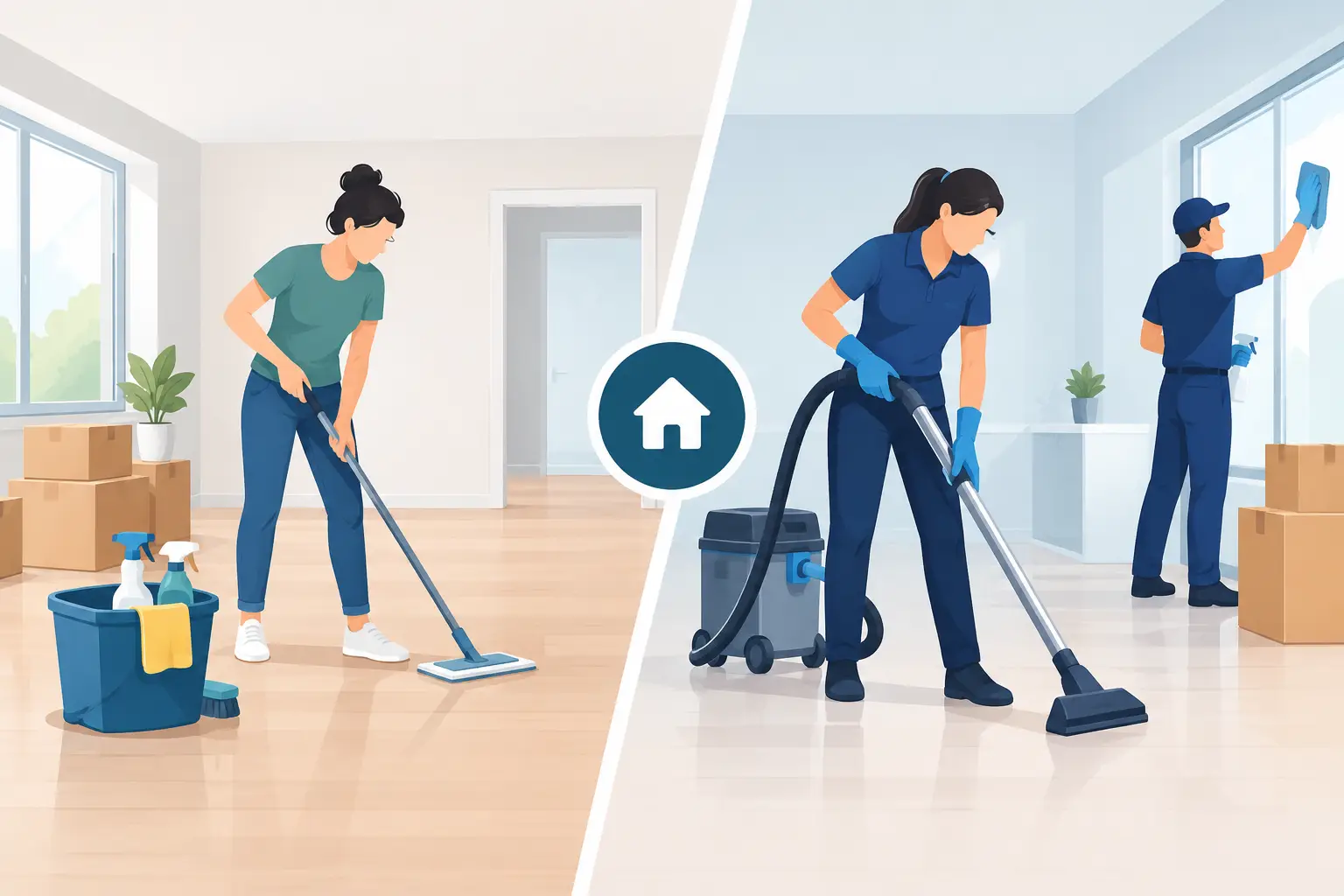
The keys are in your hand, boxes are waiting, and the removalists are booked. Yet before anything goes into a cupboard or wardrobe, there is one job that can shape how your new home feels from day one. This move-in cleaning comparison looks at the real choice between cleaning it yourself and booking professional help – including cost, time, standards and when each option makes sense.
A property can appear tidy at an inspection while still needing attention in the places that matter most: inside cabinets, around taps, beneath appliances, on skirting boards and in bathrooms. Moving house already creates enough decisions. Knowing the level of cleaning you need helps you start in a space that feels properly yours.
Move-in cleaning comparison: what are you really choosing?
This is not simply a choice between spending money or saving money. A DIY clean gives you direct control over every product and every surface, but it also takes time, energy and planning at one of the busiest points in a move. A professional clean trades some of that hands-on control for trained cleaners, equipment, an organised process and more room in your schedule.
The right option depends on the condition and size of the property, the time available before moving day, and your own expectations. A near-new apartment that has been well maintained may only require a focused clean. A family home that has been vacant, has undergone work, or has visible build-up in wet areas will usually need a more detailed approach.
It is also worth separating a move-in clean from a standard weekly tidy. Move-in cleaning is designed to reset an empty property. With cupboards and rooms clear, cleaners can reach areas that are normally hidden by furniture, stored items and daily life.
DIY move-in cleaning: more control, more commitment
Cleaning the property yourself can be a sensible choice when you have sufficient access before the move, the home is in good condition and you genuinely have time to do the work. It can also suit people who prefer to use particular products due to allergies, pets or personal preferences.
The advantage is visibility. You see every shelf, wipe every handle and can decide exactly how far to go. For some people, cleaning a new home is part of settling in. It creates a sense of ownership before the furniture arrives.
The challenge is that an empty home can take longer than expected. There are more exposed surfaces than you might notice during an inspection, and moving logistics have a way of shrinking the available hours. Collecting keys late, waiting on removalists, arranging utilities and unpacking essentials can quickly turn a planned six-hour clean into a rushed task after a long day.
What a thorough DIY clean involves
A proper DIY move-in clean typically means more than vacuuming and wiping benches. Kitchens need attention inside drawers and cupboards, around splashbacks, on rangehood filters and along appliance edges. Bathrooms may need descaling on taps and shower screens, plus cleaning around toilets, drains and exhaust fans.
Bedrooms and living areas call for dusting high and low, including light fittings, skirting boards, internal window ledges and wardrobe shelving. Floors should be vacuumed thoroughly before mopping, particularly along edges and in corners. If the property has carpet, stains, odours or a build-up of dust may require professional carpet cleaning rather than a domestic vacuum alone.
You will also need supplies ready before you start. That includes cloths, gloves, a quality vacuum, mop, bucket, suitable products for different surfaces, a scrub brush and rubbish bags. Buying missing items at the last minute can reduce any apparent saving.
Professional move-in cleaning: time back and a consistent standard
Professional move-in cleaning is often the better fit for busy households, renters moving on a fixed date, families managing children, or anyone entering a property that needs more than a surface refresh. A trained cleaning team works to a clear scope, follows an efficient room-by-room process and comes prepared for the job.
The central benefit is not simply that someone else cleans. It is the ability to arrive at a home that has been prepared for your belongings, while you focus on the practical demands of moving. That can mean collecting keys, supervising deliveries, updating your address or simply taking a breath before unpacking.
A professional service is especially valuable when you cannot inspect the property closely before move-in. This is common where settlement and access happen close together, or when relocating across Melbourne. Rather than hoping there is time to deal with unexpected grime, you can arrange cleaning as part of your moving plan.
What to expect from a professional service
The exact scope should always be confirmed before booking, as every property and service provider is different. A detailed move-in clean often covers kitchens, bathrooms, living spaces, bedrooms, visible fixtures, floors and accessible internal surfaces. Add-on services may be available for carpet cleaning, interior windows, curtains or post-renovation dust.
Clear communication matters. Let the cleaning provider know the property size, number of bathrooms, condition of the home, whether it will be empty, access arrangements and any priority areas. Photos can help where there is noticeable build-up, construction dust, pet hair or marks that need extra attention.
For many customers, trust is as important as the cleaning checklist. Look for a company with trained, vetted staff, straightforward booking, reliable communication and a service approach that respects your new home. House Cleaner provides this kind of practical support for customers who want an organised, dependable clean without adding another task to move day.
Comparing cost without overlooking your time
DIY cleaning usually has the lower upfront cost, particularly if you already own the necessary equipment and products. However, the true cost includes travel to buy supplies, possible equipment hire or replacement products, and the time required to clean to the standard you want.
Professional cleaning costs more upfront, but the value can be strong when it prevents a full weekend of work or reduces the pressure around a tight move. It can also be more economical than taking unpaid time off, paying for extra childcare, or delaying unpacking because the home is not ready.
Think about the work in practical terms. If a detailed clean will take two people most of a day, ask whether that is how you want to spend the final day before a move. There is no single right answer, but it is useful to compare the whole picture rather than the service quote alone.
A practical way to decide
Choose DIY if the property is already clean, you have at least a full day of uninterrupted access, and you are comfortable handling bathrooms, kitchen grease and floor care yourself. It is also a good fit if cleaning is a task you find satisfying rather than stressful.
Consider professional help if time is tight, the property has been vacant for a while, the previous clean is not up to your standard, or the home has several bedrooms and bathrooms. It is particularly helpful after renovations, where fine dust can settle in cupboards, tracks, ledges and vents long after the visible work is finished.
A combined approach can work well too. Book a professional clean for the deep work, then keep a small kit handy for a final wipe after trades, removalists or deliveries. This gives you both a thorough reset and the freedom to deal with any last-minute marks.
Do not leave the clean until after unpacking
Once furniture, boxes and appliances are in place, cleaning becomes slower and more difficult. Cupboards are full, floor edges disappear, and dusty areas behind whitegoods can wait far longer than intended. The best time to clean is when the property is empty and every surface is accessible.
If you are booking professional cleaning, arrange it after any repairs, painting or renovation work and before removalists arrive. If you are doing it yourself, start with high areas and cupboards, then work down to benches, fittings and floors. Keep one clean cloth and all-purpose spray aside for a final pass just before you bring belongings inside.
A move is a fresh start, but it should not begin with someone else’s dust in your drawers or stains on your shower screen. Whether you choose DIY effort, professional support or a little of both, make the cleaning decision early. A properly prepared home gives you one less thing to manage and a far better first night in your new space.
The school bags are on the floor, dinner is underway, someone has spilt juice near the sofa, and the bathroom needs attention before visitors arrive. The best cleaners for busy parents are not necessarily the ones with the strongest scent or the longest list of uses. They are the ones that make a genuinely busy home easier to manage safely, quickly and consistently.
For most families, the right answer is a combination of a small, reliable home-cleaning kit and professional support for the jobs that keep slipping down the list. That approach protects your limited evenings and weekends without lowering the standard of your home.
What busy parents should look for in a cleaner
A cleaner needs to earn its place in a family home. It should be simple to use, suited to the surface you are cleaning, and safe when used exactly as directed. A cupboard full of half-used sprays rarely saves time. In fact, it often creates more decisions when you are already rushing.
Look for products with clear instructions, a practical spray or pour bottle, and a specific purpose. A good all-purpose cleaner can handle everyday bench tops, sealed hard surfaces and wipe-downs. A separate bathroom cleaner deals with soap scum and grime, while a quality glass cleaner makes mirrors and shower screens easier to maintain. Dishwashing liquid and a disinfectant used where it is genuinely needed will cover many other household jobs.
Fragrance is a personal choice, not proof that a product cleans better. If anyone in your household is sensitive to strong scents, choose lower-fragrance options and make sure rooms are ventilated while cleaning. Always read the label, keep products away from children, and never mix cleaning chemicals. Mixing products can create harmful fumes, even when each cleaner is safe on its own.
The best cleaners for busy parents solve repeat problems
The most effective cleaning routine focuses on the messes that return every day. Think sticky kitchen benches, crumbs under the dining table, toothpaste on the vanity, fingerprints on glass and muddy marks near the front door. These are the areas that can make an otherwise tidy home feel chaotic.
Keep the essentials close to where they are used. A microfibre cloth and all-purpose cleaner in the kitchen, plus a bathroom cloth and cleaner stored safely out of reach, make quick resets far more likely. You are not setting aside an hour for cleaning. You are giving yourself two minutes after breakfast or while the bath runs.
Microfibre cloths are one of the most useful tools in any family cleaning kit. They lift dust and marks effectively with less product, can be washed and reused, and work on many surfaces. Have enough on hand that you are not searching for a clean cloth when a spill happens. A good mop with washable pads and a vacuum that is easy to grab will also save more time than complicated specialty products.
For carpet spots, act quickly rather than scrubbing hard. Blot the spill with a clean cloth, follow the directions of a carpet-safe spot cleaner, and avoid soaking the area. Deep stains, pet odours and overall carpet refreshes may need professional carpet cleaning, particularly before a rental inspection or after a busy winter indoors.
Build a cleaning kit you will actually use
The goal is not to own every cleaner available. It is to have a short set of dependable supplies that covers daily life. For most busy households, that means:
an all-purpose cleaner for sealed household surfaces
a bathroom cleaner suited to showers, toilets and basins
a glass cleaner for mirrors and glass doors
dishwashing liquid, disinfectant and a carpet spot cleaner for specific jobs
microfibre cloths, a scrub brush, a mop and a vacuum that are easy to reach
Check the surfaces in your home before choosing products. Natural stone, unsealed timber, delicate tiles and some painted finishes may need gentler care than standard spray cleaners provide. Using the wrong product can dull a finish or leave permanent marks, which turns a quick job into an expensive repair.
If you use disinfectant, reserve it for high-touch areas and times when hygiene matters most, such as after illness, around the toilet, or when handling raw food spills. Cleaning first removes visible dirt. Disinfecting works best on a surface that has already been cleaned, so there is no need to use it on every surface every day.
Use a reset routine, not a perfect-house routine
Parents do not need another unrealistic standard to meet. A practical routine should make the home feel calm enough to live in, even during the busiest weeks. Small resets prevent the work from becoming overwhelming.
A daily ten-minute reset can cover dishes, bench tops, the dining area and a quick bathroom wipe. Choose the time that matches your household, whether it is immediately after dinner or before the school run. Getting children involved with age-appropriate tasks, such as putting toys into a basket or taking clothes to the laundry, can reduce the load without turning every evening into a battle.
Then set aside a separate time for jobs that do not need daily attention, such as vacuuming bedrooms, mopping floors, changing sheets and cleaning the shower. If that time disappears repeatedly because of work, sport, appointments or family plans, it is a sign that cleaning support may be more useful than a more ambitious roster.
When professional cleaning is the better choice
There is a point where buying another product does not solve the real problem: lack of time. A professional cleaner can take recurring cleaning off your mental list, rather than simply giving you more tools to use after everyone else is asleep.
Weekly or fortnightly cleaning works particularly well for families who want a consistent baseline. A trained cleaner can maintain bathrooms, kitchens, floors and dusting while you handle the small daily messes that come with children. The house does not need to be perfect before they arrive. A clear pick-up of personal items helps them focus their time on cleaning, but the service exists to make life easier, not create extra preparation.
Trust and consistency matter when inviting someone into your home. Look for a provider with trained, background-checked staff, straightforward booking and payment, and a clear process for recurring visits. Keeping the same cleaner where possible is valuable because they learn your home, your priorities and the details that matter to your family.
For Melbourne parents balancing work, school schedules and weekend commitments, House Cleaner can provide regular home cleaning as well as deeper support for carpets, windows, end-of-lease work and post-renovation clean-ups. The right service should feel dependable from booking through to the finished result.
Save the deep jobs for the right moment
Some jobs are easy to postpone because they are not urgent, yet they build up quickly. Shower screens, oven interiors, skirting boards, blinds, windows and carpets are common examples. They often need more time, the right equipment or specialist products than a quick weekday reset allows.
Booking a one-off deep clean can be a sensible choice before a birthday gathering, after a renovation, when a new baby arrives or when life has simply been too full for a while. It is not a failure to need help. It is a practical way to restore the home to a manageable point, then maintain it with lighter routines or recurring visits.
The best cleaning arrangement is the one that gives your family more usable time and fewer arguments about chores. Choose simple products for everyday spills, protect your home by using them correctly, and let reliable professional help carry the work that does not belong on your already crowded to-do list.
A quote should make booking a cleaner feel easier, not leave you wondering what has been included, what will cost extra, or whether the work will match your expectations. A clear cleaning service quote process gives you a realistic price, defines the scope of the clean and helps the cleaning team arrive ready to get on with the job.
Whether you are fitting regular cleaning around a busy family schedule, preparing to hand back the keys to a rental, or arranging dependable support for an office, the best quote starts with the right details. Here is what to expect and how to get a more accurate estimate from the outset.
What a cleaning quote is really based on
Cleaning is not one-size-fits-all. Two homes with the same number of bedrooms can require very different amounts of work. One may be maintained weekly with clear benches and minimal clutter; the other may need a detailed first clean, pet-hair removal or attention after several busy months.
For this reason, a professional quote considers the time, people, equipment and cleaning products required to achieve an agreed standard. It should reflect the type of service you need rather than rely on a vague flat price that may not suit the property.
For a home clean, the main details usually include the size of the property, number of bathrooms, current condition, preferred frequency and any priority areas. For commercial cleaning, access arrangements, operating hours, floor type, workstations, kitchens and toilets can all affect the scope.
Specialised jobs are assessed differently. An end-of-lease clean may require ovens, inside cupboards, walls and detailed bathroom work. After-renovation cleaning can involve fine dust throughout the property. Carpet, window and curtain cleaning each need their own methods and equipment, so they are normally specified separately rather than assumed to be part of a general clean.
The cleaning service quote process, step by step
A straightforward process protects both you and the cleaner. It means there are fewer surprises on the day and a better chance of getting the result you had in mind.
1. You outline the property and service needed
Most quotes begin with a short set of questions online, by phone or through a booking form. Be ready to share the property type, its size, the number of bedrooms and bathrooms, and whether the service is residential or commercial.
It also helps to say why you need the clean. A fortnightly home clean, a move-out service and a once-off spring clean have different goals. If you are a tenant, mention your vacate date and any requirements from your property manager. If you manage a workplace, explain when the team can access the site and whether cleaning needs to happen outside business hours.
2. The condition and priorities are discussed
A quote is more accurate when the cleaner understands the present condition of the space. There is no benefit in understating the job. Being upfront about built-up soap scum, grease, pet hair, renovation dust or a heavily used office kitchen helps the team allow the right amount of time.
You can also identify what matters most. Perhaps the bathrooms need close attention, the oven is a priority before an inspection, or you need entry areas and meeting rooms looking presentable for clients. Priorities guide the team without creating an unrealistic expectation that every possible task can be completed within a limited booking.
Photos may be useful for unusual areas, extensive cleaning needs or post-renovation work. They are particularly helpful where a site visit is not necessary but there are details that a standard form cannot capture.
3. Optional extras are added clearly
A reliable quote separates regular tasks from additional services. This is where many misunderstandings can be avoided.
For example, a standard house clean may cover kitchens, bathrooms, dusting, vacuuming and mopping, while inside windows, carpet steam cleaning, curtain cleaning, fridge interiors or detailed oven cleaning may be priced as extras. The same principle applies to commercial properties where consumables, high windows, hard-floor treatment or after-hours access can change the cost.
Extras are not a problem when they are transparent. They allow you to choose the level of support that suits your budget and the result you need. Ask for each requested item to be confirmed in the quote rather than relying on assumptions.
4. You receive the price and scope before booking
The written quote should set out what is included, the service date or booking window, the price and any conditions that could affect the final cost. Those conditions might include parking restrictions, difficult access, an unexpected property condition or extra work requested on the day.
This is the right time to check whether the quoted price is fixed or an estimate based on the information provided. A fixed price can provide certainty for a clearly defined job. An hourly arrangement may suit a home where you want the cleaner to focus on a changing list of priorities. Neither option is automatically better – it depends on how predictable the work is.
5. Booking, access and payment are confirmed
Once you accept the quote, the practical details matter. Confirm how the team will enter the property, where they can park, whether anyone will be home and how to handle alarms, keys, pets or building concierge requirements.
Online booking and payment can make this stage simpler, particularly for busy households and office managers. Clear confirmation gives you a record of the arrangement and lets the cleaning team plan the visit properly.
What can change the quoted price?
A professional cleaner aims to honour the agreed quote. Still, a price or time allowance may need to be reviewed if the information supplied does not match the property on arrival. This is not about finding reasons to add costs. It is about making sure the team can complete the requested work safely and to a proper standard.
Common reasons include substantially more rooms than described, severe build-up requiring extra labour, inaccessible areas, excessive clutter, no available parking, or new tasks added during the appointment. For commercial sites, changes to access times or a larger-than-stated workspace can have the same effect.
The fairest approach is communication before extra work begins. If a cleaner sees that the job will take longer than expected, they should explain the issue, outline the available options and seek your approval. You may prefer to extend the service, concentrate on your highest-priority rooms or schedule a follow-up clean.
How to prepare for a more accurate quote
You do not need to clean before your cleaner arrives. That defeats much of the purpose. A little preparation, however, helps your quote reflect the work rather than avoidable delays.
Start by giving an honest description of the property and choosing the service that matches your situation. Mention pets, stairs, parking limitations and any areas that are off limits. If you need specialised work, include it early rather than adding it after the booking has been confirmed.
Before the appointment, putting away loose items, paperwork, clothes and children’s toys gives the team more time to clean surfaces and floors. For a recurring service, the first visit may take longer because it establishes a clean baseline. Future weekly or fortnightly visits can then focus on maintaining the result, often making the service more predictable.
For move-out cleaning, check your lease or property manager’s expectations before requesting a quote. Some properties need carpet cleaning or particular attention to blinds, windows and appliances. Providing that information from the beginning helps avoid a rushed final appointment.
Questions worth asking before you accept
You should feel comfortable asking what the quote covers. Confirm whether cleaning products and equipment are supplied, whether the team is trained and background checked, and what happens if you need to reschedule. If consistency matters for a recurring service, ask whether the same cleaner can be assigned where possible.
It is also reasonable to ask how quality concerns are handled. A dependable provider will have a clear process for listening to feedback and putting things right. The cheapest quote is not always the best value if it is unclear, excludes key tasks or leaves you to manage changing arrangements every visit.
At House Cleaner, the goal is to make the process practical: understand the space, agree on the work, and send a caring cleaning team prepared for the job. A well-prepared quote is more than a number – it is the start of a cleaning arrangement you can rely on, whether you need help once or every fortnight.
The best next step is simple: describe the property honestly, list what matters most and ask for the scope in writing. With the right expectations in place, you can book with confidence and spend your time on everything other than cleaning.
The final week of a tenancy is rarely quiet. There are boxes to pack, utilities to transfer, keys to return and an agent’s final inspection to prepare for. Melbourne rental property cleaning gives tenants a clear way to tackle the work without leaving the hardest jobs until the last night.
A clean property can support a smoother handover, but the goal is not to make an older home look brand new. Your responsibility is generally to return it in a reasonably clean condition, allowing for fair wear and tear. The entry condition report, the length of your tenancy and the condition of the property when you moved in all matter. Keeping that distinction in mind helps you spend time where it counts.
Start with the condition report, not the cleaning cupboard
Before buying products or booking a cleaner, read your entry condition report and look through any photos from move-in day. Compare each room honestly. A marked wall, worn carpet path or ageing sealant may have been present when you arrived, while fresh grease on an oven or dust built up on blinds will usually be yours to address.
Take current photos before you begin, particularly if there is pre-existing damage, mould caused by a maintenance issue, or fixtures that do not work. Let the property manager know about repairs rather than trying to disguise them with a rushed clean. Cleaning and maintenance are different jobs, and confusing the two can create unnecessary disputes.
Then check your rental agreement for any specific requirements. Some agreements require a professional carpet clean if pets were kept at the property or if the carpet was professionally cleaned before the tenancy. Do not assume every rental has the same terms.
Build your Melbourne rental property cleaning plan by room
A room-by-room plan prevents the common mistake of polishing visible surfaces while forgetting the places inspectors routinely check. Work from high areas to low ones, and from dry jobs to wet jobs. That way, dust and debris are not landing on a floor you have already cleaned.
Kitchen: focus on grease, crumbs and cupboards
The kitchen often takes the longest because grease settles beyond the benchtop. Empty cupboards and drawers, then vacuum or wipe out crumbs before using a mild cleaner. Pay attention to handles, splashbacks, the rangehood exterior and the top of upper cabinets, where grease and dust can form a sticky layer.
The oven needs time, not aggressive scrubbing. Remove racks where possible, use an appropriate oven product according to its instructions, and allow it to work before wiping. Clean the door glass, seals and trays as far as the appliance design permits. Avoid harsh abrasives on glass cooktops or delicate surfaces, as scratches can cause a bigger problem than a remaining mark.
Finish by wiping the sink, taps and drain area, cleaning inside the dishwasher if included, and checking behind movable appliances only where it is safe to do so. Do not pull out a heavy fridge or stove if it risks damage to flooring, plumbing or yourself.
Bathroom and laundry: allow products time to work
Soap scum, mineral deposits and mildew need dwell time. Apply a suitable bathroom cleaner to the shower, bath, basin and tiles, then move to another task while it works. Return to scrub gently, rinse well and dry fixtures to reduce streaks.
Inspect shower screens, tracks, grout, exhaust fans, toilet bases and the space behind taps. These are easy to overlook when cleaning in a hurry. If there is mould, treat it carefully with the right product and ventilation. Persistent mould connected to leaks, poor ventilation or building issues should be reported rather than treated as a purely cosmetic problem.
In the laundry, wipe inside and around the trough, clean lint or detergent residue from accessible areas, and remove rubbish from cupboards. Check that no belongings are left behind, including washing powder on shelves or pegs in outdoor areas.
Bedrooms and living areas: do the detail work
Dust ceilings fans, light fittings where safely accessible, skirting boards, window ledges and the tops of doors. Wipe switches and handles, taking care not to soak electrical fittings. Vacuum upholstered surfaces if they belong to the property, and make sure wardrobes are empty and clean inside.
For hard floors, vacuum first and then mop with a product suited to the surface. Too much water can damage timber, laminate and some vinyl flooring. On carpet, vacuum slowly in more than one direction, including edges and corners. Spot treatment can help with small marks, but test products discreetly first and avoid over-wetting the carpet.
Walls deserve a measured approach. Light marks may lift with a soft damp cloth, but vigorous rubbing can remove paint or leave shiny patches. If a wall needs repainting because of damage beyond normal wear, speak with the property manager rather than making an unapproved repair.
Windows, outdoor spaces and final touches
Clean internal window glass, tracks and ledges, then wipe mirrors until they are clear and streak-free. External windows can be difficult or unsafe to access, especially in apartments and multi-storey homes. Do not lean from windows or attempt work at height. A professional window cleaning service is the safer option when outside glass is part of the agreed scope.
Sweep balconies, courtyards and entryways, remove all personal items and clear loose leaves where practical. Put bins out if collection day is near, but do not leave rubbish behind in wheelie bins, cupboards, the letterbox or the garage. Finally, check light globes, remotes, keys and garage fobs against the property manager’s handover instructions.
When a professional clean is worth it
A DIY clean is realistic for many tenants, particularly when the property has been regularly maintained and there is enough time before handover. It can also be the more affordable choice if you already have the equipment and are confident with detailed cleaning.
Professional help is often worthwhile when time is tight, the property is large, the oven and bathrooms need intensive work, or you are moving out of an apartment with carpet, blinds and difficult-to-reach windows. It can also reduce the pressure of coordinating cleaners, removalists and key return on the same day.
Choose a service that understands end-of-lease expectations and can clearly explain what is included. Carpet cleaning, exterior windows, wall washing and heavy mould treatment may be separate services, so ask before booking. Keep receipts and any service records for your tenancy file. House Cleaner provides practical cleaning support for tenants who need a dependable, organised team for a move-out clean.
Give yourself a buffer before the final inspection
Aim to finish cleaning at least a day before the property is due back. That buffer gives you time to let floors dry, check rooms in natural light and correct small misses. Open every cupboard, look behind doors, inspect the oven again and walk through with your mobile phone camera as if you were documenting the home for the first time.
A simple final walk-through catches more than another hour of random scrubbing. Make sure all belongings are removed, taps are off, appliances are empty, rubbish is gone and keys are ready for return. If you find something that cannot reasonably be resolved before handover, communicate early and keep the conversation in writing.
Moving house is demanding enough. A calm, methodical clean helps you leave the property with confidence, protect your time and start the next chapter with one less task hanging over you.
A cleaner home or workplace should not require a string of phone calls during your lunch break. Digital booking for cleaning services gives busy households, tenants and business owners a practical way to arrange help when it suits them, with the details recorded clearly from the beginning.
For many people, the real benefit is not simply booking online. It is knowing what has been requested, when the cleaner is due to arrive, what the service includes and how an ongoing schedule will work. That clarity matters when you are handing over the care of your home, rental property or office to someone else.
Why digital booking for cleaning services matters
Cleaning needs are often time-sensitive. A tenant may need an end-of-lease clean before keys are returned. A family may need regular help after a change in work hours. A property manager may be preparing an apartment for new occupants, while an office manager needs cleaning arranged outside business hours.
An online booking process gives customers the freedom to make arrangements outside standard office hours. You can review service options, nominate preferred times and provide useful information without trying to remember every detail on a call. It also reduces the risk of misunderstandings about the property, the required clean or the frequency of visits.
For recurring clients, digital booking can be especially useful. Weekly or fortnightly cleaning is easier to manage when the agreed schedule, service requirements and contact details are all kept in one organised process. Rather than restarting the conversation every time, customers can build a dependable routine around their household or workplace.
That said, online convenience should not replace genuine support. Some jobs need a discussion before they can be priced or scheduled properly. After-renovation cleaning, large commercial premises and heavily soiled carpets can require more detail than a standard booking form can capture. A good cleaning provider makes digital booking straightforward while still being available to clarify the work.
Start with the right type of clean
The fastest booking is not always the best booking if the service does not match the job. Before choosing a date, consider why you need cleaning and what condition the space is in.
A general house clean is often suitable for ongoing care of kitchens, bathrooms, living areas and bedrooms. It works well for busy professionals, families and apartment residents who want the home kept at a comfortable standard. A deeper clean may be more appropriate if regular cleaning has been missed, guests are arriving or the property needs extra attention in neglected areas.
Move-in and move-out cleaning is different again. Renters and landlords usually need a more detailed service focused on preparing the property for its next stage. Window cleaning, carpet cleaning and curtain cleaning may also need to be added depending on the condition of the home and the expectations of the lease or property manager.
For workplaces, booking needs are often shaped by access, staff numbers and operating hours. A small office may need regular cleaning of bathrooms, kitchens, desks and common areas. A larger commercial space may require a tailored scope, a specific cleaning window and clearer site instructions. Providing this information early helps the cleaning team arrive prepared.
What to include when booking online
A useful digital booking system should ask for enough information to support a reliable service, without making the process feel like paperwork. The details you provide help the cleaning team plan the right amount of time, bring appropriate equipment and allocate trained staff.
Be clear about the size and type of property. The number of bedrooms, bathrooms, workstations or common areas makes a real difference to the time required. Include the areas that matter most to you, such as shower screens, kitchen appliances, internal windows, carpeted rooms or high-traffic entryways.
Access instructions are equally important. Let the provider know whether someone will be home, whether keys need to be collected, if there is building access or parking information, and whether there are any pets on site. In Melbourne apartment buildings and busy commercial locations, these practical details can prevent avoidable delays.
It also helps to flag anything unusual. This could include renovation dust, mould concerns, heavy build-up in a bathroom, fragile surfaces or rooms that should not be entered. Being upfront does not make the job harder to book. It allows the cleaner to arrive with realistic expectations and the right approach.
Trust should be built into the process
Booking online is convenient, but customers should never feel they are booking into the unknown. Cleaning is a personal service. Cleaners may be working in private homes, around family routines, or in offices containing equipment and documents. Trust needs to be visible in the way a company operates.
Look for clear information about trained, vetted and background-checked cleaners. A professional provider should also explain how payment is handled, what happens if you need to change an appointment and how concerns are managed. These details are not small print when someone is entering your property. They are part of the service promise.
Consistency matters most with recurring cleaning. Many customers prefer the same cleaner for repeat visits because that person becomes familiar with the home, priorities and preferred finish. It saves time, creates confidence and means you do not need to explain the same requests at every appointment.
At House Cleaner, that ongoing relationship is treated as part of reliable service, not an afterthought. The aim is to provide a caring cleaning team that understands your needs and helps make regular cleaning feel less like another task to manage.
Digital payment brings clarity too
Online payment is another practical benefit when it is handled clearly. Customers can confirm how the service will be paid for, avoid searching for cash on the day and keep a record of the booking. For business clients and property managers, this can also make administration simpler when several properties or regular appointments are involved.
The key is transparency. Before confirming, you should understand what the quoted service covers, whether specialist work has been included and how changes may affect the price. Carpet cleaning or external window cleaning, for example, may be priced differently from a standard house clean. A clear booking process makes these distinctions easier to see before the appointment is locked in.
Make recurring cleaning work around real life
A recurring clean should fit your routine, not create another obligation. Weekly cleaning can be a sensible choice for busy family homes, shared households, high-use offices or properties with pets. Fortnightly visits may suit smaller homes, couples who are often away, or customers who maintain the home between appointments.
There is no single right frequency. It depends on the number of people using the space, how much time you have, the type of cleaning required and the standard you want to maintain. Starting fortnightly and adjusting after a few visits is often a sensible approach.
When booking regular cleaning, set priorities from the outset. You may want bathrooms and floors completed every visit, while internal windows, oven cleaning or skirting boards are addressed less often. A dependable cleaning team can work with those preferences so the service stays useful rather than becoming a rigid checklist.
A better booking experience starts with clear expectations
Digital booking works best when both sides have a shared understanding of the job. Customers should be able to choose a suitable service, enter accurate details, arrange a time and feel confident about who will be coming to their property. In return, the cleaning provider should communicate clearly, respect access arrangements and deliver the standard that was promised.
Whether you are preparing for a move, trying to keep on top of a busy household or organising regular office cleaning, a well-planned booking is the first step towards less stress. Take a moment to describe what you need properly, then let a trusted cleaning team take the work off your hands.
A missed cleaning appointment can throw off far more than a tidy kitchen. For a busy family, it can mean spending the weekend catching up on chores. For a property manager, it can delay a handover. For an office, it can leave staff and visitors with the wrong impression. A proper cleaner reliability review helps you look beyond a low quote and choose a cleaning team you can genuinely depend on.
Reliability is not simply about a cleaner arriving on time once. It is about consistent standards, clear communication, respectful access to your property and a service that fits into your routine without creating extra work for you. Whether you need weekly home cleaning, a fortnightly apartment clean or ongoing commercial support, these are the details that make the difference.
What does cleaner reliability really mean?
Many people judge a cleaning service by the final result alone. A sparkling bathroom and freshly vacuumed floors matter, of course, but reliability includes what happens before, during and after the visit.
A reliable cleaner confirms the booking, arrives within the agreed time window and follows the scope of work. They treat your home or workplace with care, use suitable products and communicate if something needs attention. If an unexpected issue arises, such as traffic delays or a staff illness, the company should contact you promptly and offer a practical solution.
Consistency matters most for recurring services. The first clean is often more detailed because the cleaner is getting to know the property. After that, you should not have to repeat the same instructions every fortnight or wonder whether key areas will be overlooked. A dependable provider keeps clear notes, follows your priorities and works to an established standard.
A cleaner reliability review should start with trust
When you allow someone into your home, office or rental property, trust is not an optional extra. It is a basic requirement. Look for a company that explains how its cleaners are selected, trained and vetted rather than making broad promises without detail.
Background checks and careful recruitment provide reassurance, particularly if cleaners will be working while you are out. Training is equally valuable. It helps ensure staff understand safe cleaning practices, appropriate product use and the expectations around privacy, security and respectful behaviour in a customer’s space.
It is also worth asking whether the business employs or manages its cleaning team directly. Clear accountability makes a difference if you need to change instructions, raise a concern or arrange access. You should know who to contact and feel confident that your feedback will be acted on.
The value of having the same cleaner
For regular home cleaning, a familiar cleaner can make the service feel simpler and more personal. They learn how you like rooms presented, where you keep supplies and which areas need extra attention. You spend less time explaining the basics, and the standard is more likely to remain consistent.
There can be occasional exceptions due to annual leave, illness or scheduling changes. What matters is how the company handles them. A reliable provider should advise you in advance where possible and send a trained replacement who has access to relevant cleaning notes and instructions.
Check how bookings and communication are handled
A cleaning company can have excellent staff but still cause frustration if its booking process is disorganised. Convenient online booking and payment can save time, but the real test is whether the process remains clear after you book.
You should receive confirmation of the date, time, service type and any agreed extras. If you have selected a move-out clean, carpet cleaning, window cleaning or after-renovation service, the scope should be easy to understand. This reduces the chance of assumptions on either side.
Reliable communication is particularly important for access arrangements. Some clients leave keys in a lockbox, while others arrange entry through a building concierge, property manager or office contact. A professional team will confirm these details, respect security procedures and avoid leaving you to chase them on the day.
If you need to reschedule, ask about the notice period and the process. Fair policies are important, but so is a helpful approach when life changes unexpectedly. The goal is not to find a service that promises every request can be accommodated. It is to find one that responds promptly and honestly.
Look for consistency, not unrealistic promises
A quote that seems unusually cheap can be appealing, especially for a one-off clean. However, a very low price may leave little room for trained staff, proper supervision, insurance, reliable scheduling or adequate time to complete the work properly.
The best option is not always the most expensive one either. A cleaner reliability review should focus on whether the service offers transparent inclusions and realistic timing. If a three-bedroom home requires a detailed clean, it is reasonable to ask how long the visit is expected to take and what tasks are covered.
Be clear about your priorities from the start. Some households value detailed bathrooms and kitchen cleaning above everything else. Others need help managing dust, pet hair or the weekly build-up around busy family life. Commercial clients may place more emphasis on bathrooms, entry areas, bins and shared kitchen spaces. A reliable team will listen, set workable expectations and explain any limits before the service begins.
Signs a provider takes quality seriously
You do not need a complicated checklist to assess service quality. Look for practical signs that the company has a system in place. These include clear service descriptions, trained cleaners, straightforward payment arrangements, booking confirmations and a way to provide feedback.
It also helps when a business offers a range of cleaning services. A provider that can support regular house cleaning as well as end-of-lease, windows, carpets or post-renovation work may be better placed to help as your needs change. That said, always confirm that the specific service you need is included in the quote rather than assuming every task is covered.
Read reviews with the right questions in mind
Customer reviews can be useful, but a five-star rating on its own does not tell the full story. Read the comments for patterns. Do customers mention punctuality, friendly communication, consistent results and the ability to resolve issues? Those details are often more meaningful than general praise.
Pay attention to how a business responds when a customer has a concern. No service company can prevent every problem. Cleaners can be delayed, customers can forget to mention a priority area and unexpected maintenance issues can appear during a visit. A dependable company acknowledges concerns, communicates respectfully and works towards a fair outcome.
It is sensible to weigh reviews against your own requirements. A glowing review for a once-off spring clean may not tell you whether a company is dependable for fortnightly visits. Likewise, a business praised for office cleaning may have different processes for homes. Look for feedback that matches the service you are booking.
Give your cleaner the information they need
Reliability works best as a partnership. Even the most experienced cleaning team needs accurate instructions about your property. Let them know about parking, building access, pets, fragile items, alarms and rooms that should not be entered.
For a first visit, share your highest priorities in plain language. You might ask for extra attention to shower screens, skirting boards, kitchen benches or pet hair on upholstery. If you have preferred products or surfaces that require special care, mention them before the appointment rather than after the work is complete.
For recurring cleaning, keep instructions current. A new baby, a changed work-from-home schedule, a pet or a renovation can all alter what you need from the service. Small updates help your cleaner deliver the right result without guesswork.
Choosing dependable cleaning support in Melbourne
For Melbourne households and businesses, dependable cleaning is about more than having a presentable space. It is about getting time back, knowing your property is treated with care and having a team you can contact when plans change.
House Cleaner focuses on this kind of practical support through trained, vetted cleaners, simple booking and recurring options designed to suit busy homes and workplaces. The right cleaning relationship should feel organised from the first enquiry, not uncertain until the job is finished.
Before booking, ask a few direct questions about vetting, arrival times, replacement cleaners, communication and what is included. The answers will tell you far more about reliability than a headline price ever could. When cleaning support is truly dependable, it becomes one less thing competing for your time and attention.
A cheap cleaning quote can become expensive quickly if it leaves out the oven, bathrooms, equipment, supplies or the time needed to finish the job properly. Professional cleaning costs are not just about an hourly rate. They reflect the condition of the space, the scope of work and the reliability you need from the people entering your home or workplace.
For busy households, renters, property managers and business owners, the goal is not simply to pay less. It is to arrange cleaning that saves time, delivers a consistent result and does not create extra work through unclear expectations.
What affects professional cleaning costs?
The size of your property is a starting point, but it is rarely the whole story. A tidy two-bedroom apartment may take less time than a small house with several bathrooms, pets, built-up grime or cluttered surfaces. Cleaners need clear access to the rooms and enough time to complete the agreed tasks to a proper standard.
The type of service also changes the price. A regular house clean usually focuses on maintaining kitchens, bathrooms, floors, dusting and general presentation. A deep clean involves more detailed attention to areas that are not covered every week, such as skirting boards, inside cupboards or accumulated soap residue. Move-out, after-renovation and end-of-lease cleaning require a more intensive approach again, often with a checklist and more labour.
Specialist services are generally priced separately because they require particular equipment, products or skills. Carpet cleaning, window cleaning, curtain cleaning and oven cleaning can be valuable additions, but they should be clearly itemised rather than assumed to be included in a standard visit.
In Melbourne, access can also affect a quote. Limited parking, apartment lifts, stairs, difficult loading areas and large commercial premises all influence the time a team needs on site. These details are practical, not minor, particularly for one-off cleaning where the job needs to be completed within a set window.
Condition matters more than most people expect
A home does not need to be perfect before a cleaner arrives. That is why you are booking help. However, the level of build-up matters. Grease that has been sitting in a kitchen for months, mould in a bathroom, renovation dust or heavy pet hair will take longer to remove than ordinary weekly mess.
Being honest about the condition of the property helps you receive a more accurate quote. It also lets the cleaning team bring the right products and allow sufficient time. A realistic booking is far more likely to end with a result you are happy with.
Typical ways cleaning services are priced
Professional cleaners may charge by the hour, by the job or through a recurring service rate. Each approach can be fair when the scope is clear.
Hourly pricing can suit smaller or flexible jobs where you want a cleaner to work through priorities within an agreed time. For residential cleaning, market rates can vary widely depending on whether supplies, insurance, supervision and GST are included. A lower hourly figure may not represent the final amount if there are booking fees, minimum hours or additional charges for particular tasks.
Fixed quotes work well for clearly defined services such as a move-in clean, an office clean with a set schedule or an after-renovation job. The advantage is certainty: you know what is included and what you will pay, provided the information supplied about the property is accurate.
Recurring weekly or fortnightly cleaning often offers better value than a one-off visit. The first appointment may need extra time to bring the home up to a maintainable standard. Once that baseline is established, the same regular cleaner can work efficiently, understand your priorities and maintain the result from visit to visit.
Why the lowest quote is not always the best value
A quote is only comparable when the service details match. One provider may include bathroom sanitising, vacuuming, mopping, products and equipment, while another may charge extra for some of those basics. One may send a different person each time, while another invests in trained, vetted cleaners and continuity for repeat clients.
Reliability has value too. A missed clean before an inspection, a client meeting or a family gathering can be more frustrating than a slightly higher, dependable rate. For regular customers, knowing who is coming and having a simple way to manage bookings and payments removes much of the stress that cleaning support is meant to solve.
Ask what is included before you book
A good quote should make the expected work easy to understand. Before confirming a service, check whether the price covers cleaning products and equipment, how many cleaners will attend, the estimated duration, and whether there is a minimum booking period.
It is also worth asking about tasks that are commonly treated as extras. These can include inside the oven, inside the fridge, interior windows, balcony cleaning, wall spot cleaning, carpet steam cleaning and detailed blind or curtain cleaning. If you are arranging a vacate clean, confirm whether the quote aligns with your property manager’s requirements and whether carpet cleaning is needed under your lease.
For commercial cleaning, clarify the frequency, areas to be cleaned, washroom consumables, rubbish removal, secure access arrangements and whether work will happen during or outside business hours. An office that needs daily attention has different needs from a small workplace that needs a thorough fortnightly clean.
How to get a more accurate cleaning quote
The quickest way to avoid surprises is to provide useful information upfront. Share the number of bedrooms and bathrooms, the type of property, your preferred service, the condition of the space and any priority areas. Photos can be particularly helpful for renovation cleaning, windows, carpets or a home that needs a first deep clean.
Mention practical access details as well. Let the provider know about parking, lifts, stairs, pets, security instructions and any rooms that will not need cleaning. If you have a deadline, such as a handover date or an inspection, include it from the beginning.
You can also decide what matters most. Some customers want a full-home clean every fortnight. Others prefer regular kitchen and bathroom cleaning, with rotating detailed tasks during each visit. A clear priority list helps the team use the booked time where it makes the biggest difference.
Choosing value for ongoing cleaning
For ongoing service, the best arrangement is one that fits your household or workplace rather than an unrealistic checklist. A compact apartment may be well maintained with a fortnightly visit. A busy family home with children and pets may benefit from weekly support, especially in high-use areas.
Consistency is often the deciding factor. When the same cleaner or familiar team returns, they learn where items belong, which products suit your surfaces and what a good clean looks like to you. That familiarity can reduce the time spent explaining preferences at every appointment and help maintain a dependable standard.
House Cleaner approaches recurring service with this practical focus: trained, background-checked cleaners, straightforward online booking and a commitment to consistency where possible. The right service should feel like dependable support, not another task you need to manage.
A clearer quote leads to a better clean
Professional cleaning is an investment in time, comfort and peace of mind. The right cost depends on your property, the detail required and how regularly you need help, so a tailored quote is usually more useful than a headline price.
Choose a provider that explains the scope clearly, listens to your priorities and gives you confidence that the job will be done with care. When expectations are set before the visit, you can spend less time thinking about cleaning and more time enjoying a space that is ready for life and work.
A new set of keys should feel exciting, not like the start of a weekend spent scrubbing someone else’s cupboards. Understanding move-in cleaning inclusions helps you book the right service, set clear expectations and arrive at a home that feels fresh, hygienic and ready for your belongings.
Whether you are moving into a family home, apartment or investment property, the condition of the property can vary widely. A place may look tidy during an inspection but still have dust in wardrobes, grease around the cooktop or residue left in the bathroom. A professional move-in clean focuses on the areas that matter most before you unpack.
What are move-in cleaning inclusions?
Move-in cleaning inclusions are the rooms, surfaces and detailed tasks covered by a cleaning service before you settle into a property. It is generally a more thorough service than a regular weekly or fortnightly clean because the home is empty or mostly empty, allowing cleaners to reach areas normally hidden by furniture and personal items.
The exact scope depends on the size and condition of the property, as well as the service you book. A well-maintained home may only need a detailed refresh. A vacant property that has been sitting for some time, or has recently had repairs completed, may need extra attention to remove built-up dust, marks and grime.
The most reliable approach is to discuss the condition of the property before the appointment. This gives your cleaning team the chance to recommend the right level of service and allows you to request priority areas, such as kitchen cupboards or shower screens.
The kitchen: where detail makes the biggest difference
The kitchen is often the first room people want cleaned properly before moving in. Even a clean-looking kitchen can hold crumbs in drawers, fingerprints on cabinet doors and grease around appliances.
Typical move-in cleaning inclusions for a kitchen cover wiping benches, splashbacks, cupboard fronts, drawers and accessible internal cupboard surfaces. Cleaners will generally wipe the sink and taps, clean the cooktop, remove light grease from surrounding surfaces, and vacuum and mop the floor. Switches, handles and visible marks on walls may also be attended to where suitable.
The oven is worth discussing separately. Oven cleaning can be a more intensive task, particularly when there is baked-on grease or carbon build-up. Some services include a standard oven clean, while others price it as an add-on. The same applies to inside the fridge, dishwasher or rangehood filters. If these details matter to you, ask for them to be clearly included in your quote rather than assuming they are covered.
Bathrooms and toilets: cleaning for a fresh start
Bathrooms require more than a quick wipe before you bring in towels and toiletries. A move-in clean typically includes cleaning and sanitising the toilet, basin, taps, vanity, shower and bath. Mirrors are polished, tiled surfaces are wiped, and floors are vacuumed and mopped.
Shower screens and tiles may need extra work where soap scum, hard-water marks or mould are present. In many cases, these issues can be improved significantly with a professional clean, but permanent staining, damaged grout and heavily etched glass may not return to a new appearance. A caring cleaning team will be clear about what can realistically be achieved rather than promising a result the surface cannot deliver.
Bathrooms are also a good place to request attention to exhaust fans, cabinet interiors and the areas behind toilet bases. These small details can make the room feel genuinely clean rather than simply presentable.
Bedrooms, living areas and shared spaces
In bedrooms and living spaces, the goal is to remove the dust and marks left behind before your furniture arrives. Common inclusions are dusting accessible surfaces, wiping skirting boards, cleaning light switches and door handles, removing cobwebs, and vacuuming or mopping floors.
Wardrobes are particularly valuable to include in a move-in clean. Wiping shelves, hanging rails and drawer interiors before clothes are unpacked saves time and avoids transferring dust or residue to your belongings. Window sills, tracks and accessible internal glass can also be cleaned, depending on the agreed scope.
For carpets, vacuuming is usually part of a standard move-in clean. However, vacuuming does not remove deep stains, pet odours or embedded dirt. If the carpets need a more complete refresh, professional carpet cleaning may be the better option. It is especially worth considering if the property has been vacant, has had pets, or shows visible spots in high-traffic areas.
What is often excluded or needs to be requested?
A detailed cleaning service is thorough, but it is not the same as restoration work, rubbish removal or a builder’s clean. Being specific before booking avoids surprises on the day.
The following tasks commonly need to be added, quoted separately or confirmed in advance:
Inside oven cleaning, fridge cleaning and rangehood filter cleaning
Deep carpet steam cleaning or treatment for stains and odours
Exterior window cleaning, high or difficult-to-access windows, and flyscreens
Heavy mould treatment, wall washing or removal of stubborn marks
Rubbish removal, pest control and repairs to damaged fixtures or surfaces
After-renovation cleaning is also different from a standard move-in clean. Fine construction dust can settle throughout a property and may require specialised equipment, extra time and multiple passes. If painters, tradespeople or installers have recently been through the home, mention this when requesting a quote.
How to prepare for a move-in clean
The best time to schedule a move-in clean is after the previous occupants have left and before removalists deliver your furniture. An empty home gives cleaners better access to floors, cupboards, wardrobes and corners, and it gives you a clean base from day one.
If possible, collect the keys early enough to allow for cleaning before move-in day. Let the cleaning team know how they will access the property, whether there is parking nearby, and if building management has lift booking requirements. This is particularly helpful in Melbourne apartment buildings, where loading zones and lift times can affect the schedule.
Before the appointment, walk through the home and make a short list of priorities. You may be most concerned about the inside of kitchen cupboards, the shower, pet hair in carpets or dusty window tracks. Sharing these priorities helps the team focus their time where it will make the greatest difference to your move.
It is also sensible to take condition photos before cleaning if you are renting or managing a property. Cleaning can improve the presentation of a home, but it should not be expected to hide existing damage, worn finishes or maintenance issues that need to be recorded separately.
Choosing the right level of cleaning
A move-in clean is not one fixed checklist for every property. The right service depends on how clean the home already is, how soon you are moving, and whether you need specialised work such as carpet, window or curtain cleaning.
For a relatively clean apartment, a detailed clean of the kitchen, bathroom, wardrobes and floors may be enough. For a larger house, a home that has been vacant for months or a property with visible grime, a more comprehensive service may be the better investment. The value is not only in appearance. Starting with properly cleaned surfaces can make unpacking easier, reduce stress and help your new home feel like yours sooner.
House Cleaner provides dependable cleaning support for people who need a practical, well-organised service around a busy move. When you book, be open about the property’s condition and the outcome you want. Clear expectations give your cleaners the information they need to deliver first-class results.
A clean home gives your move room to breathe
Moving has enough moving parts without adding cupboard wiping, bathroom scrubbing and floor mopping to the list. Confirm the move-in cleaning inclusions that matter to you, allow enough time before the removalists arrive, and begin your next chapter in a home that feels cared for from the moment you walk through the door.
The best office cleaning schedule is usually the one no one notices. Rubbish is removed before it overflows, bathrooms are fresh at the start of the day, and desks, floors and shared spaces stay presentable without interrupting your team. Knowing how to schedule office cleaning means balancing hygiene, budget, building access and the way your workplace actually operates.
For a small office, a regular evening clean may be all that is needed. A busy workplace with client traffic, shared kitchens and multiple bathrooms may need several visits a week, plus occasional deeper cleaning. The right plan should support your staff and visitors, not force your business to work around the cleaner.
Start with the way your office is used
Before choosing days or times, look at the reality of your workplace. Count more than desks. Consider how many people are in the office on a normal day, whether employees hot-desk, how often clients visit, and which areas receive the heaviest use.
The kitchen, bathrooms, reception, meeting rooms and entry areas normally set the cleaning standard for the whole office. A modest team can create a high volume of dishes, bins and spills if staff regularly eat lunch onsite. Likewise, a reception area may need more attention than a large back-office space if it is the first thing visitors see.
It also helps to identify your busiest periods. If Monday mornings involve client meetings or Friday afternoons are quiet, those patterns should influence the cleaning timetable. A schedule based only on square metres can miss what makes an office feel clean and well cared for.
Separate daily needs from periodic work
Some tasks need regular attention because they affect hygiene, odour or appearance straight away. Others can be scheduled fortnightly, monthly or as required. Separating these jobs prevents overpaying for unnecessary work while making sure essential areas are never overlooked.
Your recurring office clean may include:
Emptying rubbish and recycling bins
Vacuuming or mopping floors in high-traffic areas
Cleaning and sanitising bathrooms
Wiping kitchen benches, sinks and shared surfaces
Tidying reception and meeting spaces
Periodic work can include detailed dusting, internal window cleaning, carpet cleaning, curtain cleaning or a more thorough kitchen clean. These services are valuable, but they do not always need to be part of every visit.
How to schedule office cleaning at the right frequency
There is no single frequency that suits every workplace. A good starting point is to match cleaning visits to foot traffic and shared facilities, then adjust once you see how the office performs between cleans.
A small office with a few staff members and limited visitor traffic may be comfortable with weekly cleaning. This is often enough when staff keep their own desks tidy and the kitchen is lightly used. For many professional offices, two or three cleans a week provide a better balance, particularly where bathrooms, kitchens and client-facing areas need to remain consistently fresh.
Daily cleaning is generally suited to high-traffic offices, medical or customer-facing environments, larger teams, or workplaces where presentation is central to the customer experience. It can also make sense during busy seasons, after a major event, or when more staff are attending the office than usual.
Fortnightly service can work for low-occupancy spaces, but it requires everyone onsite to take more responsibility for bins, dishes and spills in between. If the office begins to look tired several days before the next visit, increase the frequency rather than asking cleaners to complete an unrealistic amount of work in one session.
Choose a time that protects productivity
After-hours cleaning is popular because it allows cleaners to work efficiently without moving around active meetings, phone calls or focused work. A morning clean before staff arrive can also work well, especially if you want bathrooms and reception areas freshly prepared for the day.
However, after-hours access is not always practical. Some offices have security restrictions, shared building rules or alarms that require a staff member to be present. In those cases, daytime cleaning can be effective if it is planned around quieter periods and the scope focuses on low-disruption tasks.
For example, a cleaner may service bathrooms, empty bins and tidy common areas during a mid-afternoon lull, while noisy vacuuming or detailed floor care is reserved for after hours. Be clear about which activities cannot happen during meetings or customer appointments. A reliable cleaning provider will build those preferences into the service plan.
Confirm access and security before the first visit
Cleaning schedules often fail for simple operational reasons: no one has arranged a key, an alarm code has changed, parking is unavailable, or building management limits lift access after a certain time. Confirm these details before the first service, then keep them current whenever your office arrangements change.
Decide who will be the primary contact and who can be called if there is an access issue. If cleaners are attending outside business hours, provide clear instructions for entry, alarm procedures, restricted areas and how the premises should be secured on departure. This protects your office, your team and the cleaning staff.
Set a clear scope, not just a cleaning day
A recurring booking becomes dependable when everyone understands what is included. Rather than simply asking for the office to be cleaned, outline the rooms, priorities and any areas that require special care. This is especially useful in workplaces with boardrooms, storage areas, staff-only spaces or expensive equipment.
Be specific about consumables as well. Some businesses supply bin liners, hand soap, paper towel and toilet paper, while others ask the cleaning team to manage these items. Neither approach is wrong, but it should be agreed upfront so bathrooms and kitchens do not run short unexpectedly.
It is also wise to discuss desks and personal belongings. Many offices prefer cleaners not to move papers, laptops or private files. A practical policy is to clean shared desks only when they are clear, while staff remain responsible for putting confidential material away before each visit. This keeps cleaning thorough without compromising privacy or creating frustration.
Build flexibility into your recurring booking
Your office will not look the same every week. Team events, visitor days, seasonal workloads, renovations and staff changes can all affect what your space needs. A fixed cleaning day is helpful, but the service should be easy to adjust when circumstances change.
Let your cleaner know ahead of time about functions, extra guests or periods when parts of the office will be closed. You may need an additional visit after an event, a deeper clean following renovation work, or carpet cleaning before an important client presentation. Planning these jobs early gives you better choice of times and avoids last-minute pressure.
For Melbourne offices, consider practical access issues as well. CBD parking, building loading zones and lift bookings can affect the most efficient service window. A professional provider can help organise a realistic arrival time rather than making promises that do not suit the building.
Review the schedule after the first few visits
A cleaning plan should improve through use. After the first two or three visits, walk through the office before staff arrive or at the end of the day. Check the areas that matter most: bathrooms, kitchen surfaces, floors, bins, entry points and meeting rooms.
If one area is consistently needing attention between visits, explain what you are seeing. The solution may be a small change to the checklist, a different cleaning day or a more suitable frequency. Equally, if an area is barely used, the service can be adjusted to focus your budget where it has the most impact.
Consistent cleaners make this process easier. When the same trusted team becomes familiar with your workplace, they understand your priorities, notice changes and can maintain a reliable standard without repeated instructions. House Cleaner provides trained, vetted cleaners and recurring service options designed to make that consistency straightforward.
A well-planned office cleaning schedule gives your team one less thing to manage. Choose a frequency that reflects real use, make access simple, and keep communication open. The result is a workplace that feels ready for staff, clients and whatever the week brings.
A Saturday can disappear quickly when cleaning is on the list. By the time you have bought supplies, moved furniture, tackled the bathroom and caught up on laundry, the weekend can feel more like another shift at work. Professional cleaners versus DIY cleaning is not simply a question of who can hold a mop. It is about where your time, energy and budget are best spent.
For some households and workplaces, doing the cleaning yourself is the sensible choice. For others, regular professional help removes a recurring source of stress and keeps standards consistent. The right answer depends on the property, the type of cleaning required and how much value you place on having the job handled reliably.
Professional Cleaners Versus DIY Cleaning: The Real Difference
DIY cleaning puts you in control. You choose the products, decide what matters most and clean on your own schedule. For a small apartment that is already kept tidy, a regular weekly reset may take little more than an hour. If you enjoy cleaning, have the time and know what your surfaces need, there is nothing wrong with taking care of it yourself.
The challenge is that cleaning is rarely just one task. A proper home clean includes bathrooms, kitchen benches, floors, dusting, rubbish removal and the details that tend to build up unnoticed. In a busy family home, those jobs compete with work, school activities, shopping and time to rest. In a commercial setting, cleaning also needs to happen without disrupting staff or customers.
Professional cleaners bring an organised process to the work. They know how to work through a property efficiently, use suitable methods for common surfaces and focus on the areas that affect how clean a space feels. A trained, vetted cleaner can complete routine work with less trial and error, while a recurring service means the home or office is maintained before grime becomes a bigger job.
That does not mean every job requires a professional. It means the level of help should match the task.
Compare the Cost Beyond the Booking Price
DIY cleaning can appear cheaper because there is no service fee. But the true cost includes equipment, cloths, vacuum maintenance, cleaning products and your own time. Specialist jobs may also require products you will use once or twice, such as carpet spot treatments, mould removers or post-renovation cleaning supplies.
A professional cleaning service is a direct expense, so it should be considered carefully. It is often most worthwhile when it replaces several hours of unpaid labour, supports a demanding household or helps protect a tenancy, property presentation or workplace standard. A fortnightly clean, for example, can make the day-to-day upkeep manageable without committing to a weekly visit.
For renters, the calculation can change near the end of a lease. Missing details such as soap scum on shower screens, grease in the oven or dust on skirting boards can create pressure when an inspection is approaching. A professional move-out or end-of-lease clean can be a practical investment when time is tight and the result needs to meet a higher standard.
Businesses should also factor in perception. A clean reception area, bathroom and staff kitchen affect how visitors and employees experience the premises. Asking staff to clean shared facilities can save money on paper, but it may not be the best use of their time or create the consistency a workplace needs.
When DIY Cleaning Makes Sense
DIY is often a good fit when the cleaning is light, the space is manageable and you can keep up with it without resentment. Daily habits make a substantial difference: wiping benches after meals, dealing with spills quickly, returning items to their place and running a regular vacuum through high-traffic areas.
It is also useful when you have particular preferences. Some people want to use specific fragrance-free products, clean at unusual hours or handle delicate possessions themselves. Clear routines can make this straightforward, especially in a one- or two-person household.
DIY works best when it is realistic. If the plan is to spend three hours cleaning every Sunday but it keeps being postponed, the issue is not motivation. The routine no longer suits the household. That is a useful point to reassess rather than a reason to feel guilty.
When Professional Cleaning Is the Better Choice
Professional cleaning becomes particularly valuable when the job needs more than a quick tidy. Deep cleaning, after-renovation cleaning, carpet cleaning, window cleaning and curtain cleaning require time, care and often more specialised knowledge than a standard weekly routine.
It is also a strong option for households managing competing demands. Parents with young children, professionals with long commutes, older residents, landlords and property managers may all have different reasons for wanting dependable help. What they share is a need for a clean space without repeatedly sacrificing evenings or weekends.
Reliability matters as much as cleaning skill. Inviting someone into your home or workplace requires trust. Look for a company that uses trained, background-checked cleaners, communicates clearly and can provide continuity for repeat visits. Having the same cleaner where possible helps them understand your priorities, from the pet hair on the lounge to the areas of an office that need closer attention.
For Melbourne households, recurring cleaning can also be useful through busy periods such as school terms, winter illnesses, hosting family or preparing a property for sale. Instead of waiting until the home feels overwhelming, regular visits keep the workload at a comfortable level.
One-Off Jobs Need a Different Standard
A routine clean maintains a property. A one-off clean solves a specific problem. This distinction is important when comparing quotes or deciding whether to do the job yourself.
After renovations, fine dust can settle well beyond the room where work was completed. Moving home often reveals areas hidden by furniture for years. Commercial premises may need an intensive clean before opening, after an event or when a new tenant moves in. These situations call for a clear scope, enough time and an experienced team that knows where buildup tends to hide.
Trying to rush a large one-off job can be exhausting and still leave important areas unfinished. Professional support gives you a defined plan and a cleaner result when the deadline matters.
A Practical Way to Decide
Start by looking at the cleaning you actually need, not the cleaning you wish you had time to do. If the main issue is floors, bathrooms and kitchen surfaces falling behind every fortnight, a regular service may be the most efficient answer. If you only need occasional help before inspections, guests or a move, a one-off booking may be enough.
Then consider the standard required. A basic tidy before friends visit is very different from preparing a rental for handover or maintaining a customer-facing workplace. The higher the stakes, the more useful trained cleaning support becomes.
Finally, think about consistency. DIY cleaning is flexible, but it relies on your availability every week. A professional service is less flexible in cost but can provide a dependable rhythm. Online booking and payment can also reduce the administration that often makes household jobs feel harder than they should.
Get the Best Result With a Combined Approach
The choice does not have to be all or nothing. Many customers keep daily tasks in hand while booking a weekly or fortnightly professional clean for the heavier work. This approach keeps costs predictable and prevents cleaning from taking over their free time.
You might handle dishes, laundry and quick bench wipes, while your cleaner takes care of bathrooms, vacuuming, mopping, dusting and the details that are easy to postpone. For commercial spaces, staff can maintain their own desks while a cleaning team manages shared areas properly.
Before a service begins, be clear about what matters most. Mention pets, allergies, fragile items, access arrangements and rooms that need extra attention. A caring cleaning team can work more effectively when expectations are practical and specific.
The best cleaning arrangement is the one that leaves your space comfortable and gives you more room for the parts of life that cannot be ticked off with a sponge. If cleaning is consistently taking more than it gives back, dependable professional support can be a simple, worthwhile change.