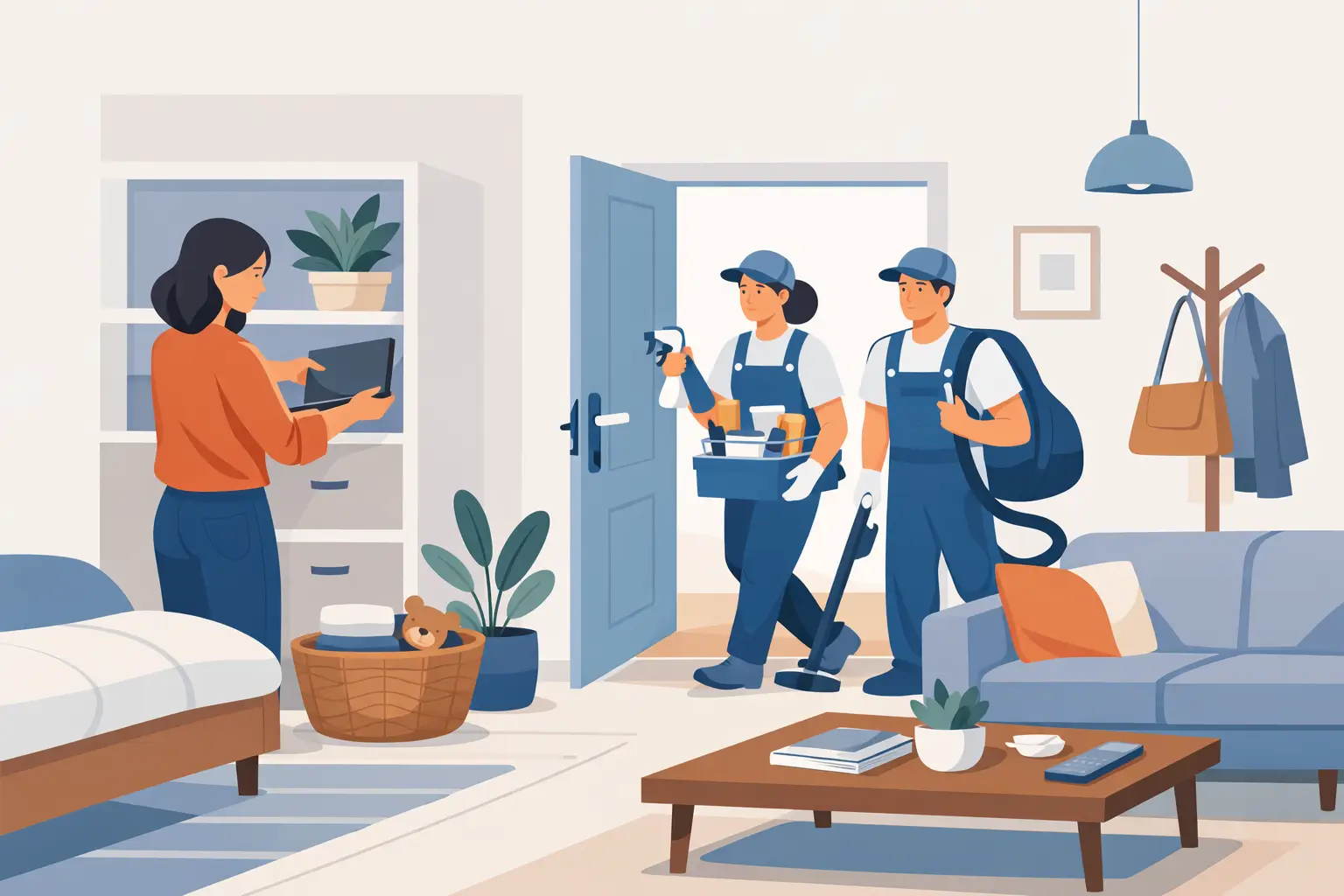
A professional clean should make your week easier, not create another long to-do list the night before. Knowing how to prepare for cleaners is less about making your home spotless before they arrive and more about making sure their time is spent on the work that delivers the biggest difference.
A little preparation helps your cleaning team move efficiently, protects your privacy and makes it easier to maintain the result between visits. Whether you have booked a one-off clean, a move-out service or regular weekly or fortnightly support, these practical steps set everyone up for a smooth appointment.
How to prepare for cleaners before they arrive
Start by thinking about the service you have booked and the rooms you most want refreshed. A standard house clean usually focuses on cleaning tasks such as bathrooms, kitchens, floors, dusting and tidying visible surfaces. If you need extra attention in a particular area, such as inside cupboards, oven cleaning, heavy soap build-up or interior windows, raise it before the appointment rather than assuming it is included.
Clear communication is one of the simplest ways to avoid disappointment. Let the cleaning company know about access arrangements, parking limitations, fragile items, allergies, pets or any areas that should not be entered. If your priorities have changed since your last visit, a short note can help your regular cleaner focus on what matters most that day.
You do not need to clean before cleaners come. However, putting away household clutter allows them to spend less time moving items and more time properly cleaning the surfaces underneath. The difference can be significant in busy kitchens, bathrooms, bedrooms and living spaces.
Put away personal and valuable items
Professional cleaners are trained to respect your home, but it is still sensible to store jewellery, cash, important documents, prescription medication and sentimental belongings in a secure place. This is not about mistrust. It is simply a practical part of preparing any home for visitors and gives you greater peace of mind.
Personal items can also make cleaning harder than it needs to be. Clear bathroom benches of cosmetics and grooming products, put laundry into baskets, and remove paperwork from desks and dining tables. Your cleaner can then wipe, vacuum and mop without needing to decide where each item belongs.
If you work from home, consider putting confidential documents and devices away before the appointment. A cleaner can clean around a workstation, but a clear desk makes the job faster and helps protect sensitive information.
Make floors and surfaces accessible
Pick up items from the floor where possible, especially toys, shoes, charging cables, pet bowls and small furniture that can be safely moved. Vacuums and mops work best when there is a clear path through the room.
This does not mean you need to reorganise your entire house. Focus on the areas included in the service and tackle anything that would prevent access. If a bedroom floor is covered in clothes or a kitchen bench is full of dishes and appliances, the cleaner may need to work around those items. A quick reset beforehand lets the cleaning time go towards a better result.
For recurring cleaning, a simple household routine helps. Spend five or ten minutes the evening before putting things back in their usual place. It keeps the appointment straightforward and helps you enjoy the benefits of a consistently clean home.
Give your cleaning team the information they need
The best clean is a collaborative one. Your team brings the equipment, training and attention to detail, while you provide the practical information only a resident or property manager would know.
Explain any tricky points before the visit. Perhaps the bathroom door sticks, the hot water system needs time to warm up, the balcony tap is not working, or a certain light switch controls the kitchen exhaust fan. These small details prevent delays and help keep the service running on schedule.
If there are delicate surfaces in your home, mention them clearly. Natural stone, unsealed timber, specialty finishes and antique pieces may require particular care or different products. It is always better to flag this in advance than to leave a cleaner guessing.
Be specific about priorities
Every household has a different definition of the most important clean. For a family with young children, sanitised bathroom surfaces and freshly vacuumed floors may come first. For a busy professional, a clear kitchen and dust-free living area might make the greatest difference. Tenants preparing for an inspection may need attention on marks, skirting boards and kitchen grease.
Choose two or three priorities and communicate them clearly. Asking for everything to receive extra attention within a limited appointment can create unrealistic expectations, particularly in a large home or one that has not been cleaned recently. If the property needs a more intensive reset, a deep clean or after-renovation clean may be the better fit.
Plan access, pets and parking
Reliable access matters. If you will be home, let the team know where to park and how to enter. If you will be out, confirm the agreed key, lockbox, concierge or alarm arrangements ahead of time. Make sure your mobile is available in case the cleaner needs to contact you about an unexpected issue.
In apartment buildings, access can take longer than people expect. Provide details about visitor parking, loading zones, lifts, intercoms and building entry. In some cases, cleaners may need instructions for collecting a fob or checking in with building management.
Pets deserve a little planning too. Many pets are friendly, but even calm animals can become unsettled by unfamiliar equipment, vacuum noise or people moving through the home. Secure anxious pets in a comfortable room, arrange for them to be out of the property, or let the cleaning team know what to expect. Also mention any areas containing pet litter, cages or feeding stations so they can work safely around them.
Decide what to do with dishes and laundry
You do not need to empty your whole kitchen before a cleaner arrives, but a sink overflowing with dishes can limit access to the bench and sink. If washing dishes is not part of your booked service, loading the dishwasher or stacking dishes neatly will help your cleaner focus on cleaning the kitchen itself.
The same applies to laundry. A basket of clean clothes waiting to be folded is perfectly normal, but clothes scattered across floors and beds make it difficult to vacuum, dust and change linen if that has been arranged. If you would like bed linen changed, leave fresh sheets out where they can be easily found and let the team know which beds are included.
These details are especially useful for regular services. A consistent system means your cleaner can work efficiently each visit, while you receive predictable results without having to explain the basics again.
Prepare realistically for a first clean
A first clean often takes longer than a recurring visit because the team is bringing the home up to a maintainable standard. Built-up dust, shower scale, cooking residue and neglected corners take time to address properly. Being open about the condition of the property helps the company allocate the right amount of time and the right type of service.
Avoid rushing through a pre-clean just to make the home look presentable. Instead, use that time to declutter, secure personal items and identify your priorities. A caring cleaning team is there to take work off your hands, not judge how busy life has been.
For move-in or move-out cleaning, check your lease requirements or property manager’s expectations before booking. Some properties require specific areas to be addressed, such as inside the oven, rangehood filters, windows, carpets or marks on walls. Confirming the scope early helps ensure the service matches the handover checklist.
What not to do before cleaners arrive
There is no need to spray every surface with products before the appointment. Mixing cleaning chemicals can be unsafe, and fresh product on surfaces may make it difficult for the team to assess what needs attention. If you have used a particular treatment for mould, pests or stains, simply tell the cleaner what was applied and when.
It is also best not to leave vague instructions for unusual tasks without checking they are included. A note saying “please clean inside everything” can mean very different things to different people. Clear, reasonable instructions protect your time and help your cleaning team deliver the standard you expect.
Finally, do not feel you need to stay out of the way completely if you are home. A quick welcome, a walk-through of priorities and a chance to answer access questions can be helpful. After that, give the team room to work safely and efficiently.
A well-prepared home is not a perfect home. It is a home where your cleaner can get straight to the work that saves you time, reduces stress and leaves your space feeling genuinely cared for.